Giclée- eller lerretsprint av museumskvalitet med rask produksjon og fleksible valgmuligheter for etterbehandling. ( Kjøp håndmalt maleri Bytt til digitalt bilde)
Velg mellom våre forhåndsdefinerte størrelser som bevarer kunstverkets opprinnelige proporsjoner.

Skriv inn ønsket bredde og høyde for å tilpasse trykket til din ramme eller vegg. Et trykk kan kun beskjæres, aldri skaleres opp utover motivets opprinnelige størrelse, noe som betyr at et format med andre proporsjoner vil føre til tap av deler av bildet. Vi sender deg en digital mockup for godkjenning før vi starter trykkeprosessen. Bildet som vises på denne siden viser ikke den faktiske beskjæringen — det er kun mockuppen som viser dette.
Verdensomspennende levering () på 2 uker i stedet for standard 4/5 uker. (8 November)
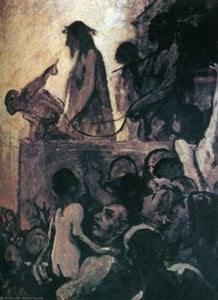
Ratapoil
Størrelse på reproduksjon
The photograph captures a pivotal moment – a frozen dance of energy and emotion rendered in the enduring medium of bronze. This exquisite reproduction offers an intimate encounter with "Ratapoil," a sculpture by the visionary artist Honoré Daumier, born in Marseille in 1808 and tragically lost in 1879. More than just a depiction of a figure, it’s a window into the social anxieties and artistic fervor that defined mid-19th century France, a period meticulously documented through Daumier's keen eye for detail and his unflinching portrayal of human experience.
Honoré Daumier was a revolutionary figure in the world of art, challenging conventional notions of beauty and truth. His work wasn't confined to idealized forms; instead, he sought to capture the raw essence of everyday life, often focusing on the marginalized and oppressed. “Ratapoil,” as evidenced by its connection to Daumier’s painting of the same name, embodies this commitment. The sculpture depicts a woman in a dynamic pose, likely engaged in dance or performance – an act that speaks volumes about freedom, expression, and perhaps even defiance within the constraints of societal expectations. Daumier's training under Alexandre Lenoir instilled in him a deep understanding of classical techniques, particularly the dramatic use of light and shadow—a hallmark of Rubens’ work—which he masterfully employs here to heighten the emotional impact of the piece.
The outstretched arms and flowing drapery of “Ratapoil” are not merely decorative elements; they are imbued with symbolic meaning. They suggest a yearning for freedom, an embrace of movement, or perhaps even a theatrical performance—a deliberate act of self-expression in a world often governed by rigid rules. The sculpture’s stark white background further amplifies these emotions, creating a powerful contrast that draws the viewer's eye directly to the figure's dynamic pose and expressive gestures. The work resonates with a timeless quality, evoking both classical beauty and Daumier’s characteristic realism – a potent combination that continues to captivate audiences today.
"Ratapoil" er definert av en Neutrals-palett med White (#f0f2f1) som den dominerende fargen.
Fargene i "Ratapoil" har en Luminous luminans.
Det originale verket "Ratapoil" av Honoré Daumier er et Bronze med målene 1 x 19 cm. Teknikk og størrelse beskriver det originale objektet.


1808 - 1879 , Frankrike

Discover the enduring allure of bronze sculptures at WahooArt.com. From classical lost-wax casting to modern metal masterpieces, explore museum-quality artworks designed to elevate luxury interiors. Expert curation, authenticity guaranteed, and worldwide shipping for discerning collectors.

Discover the enduring elegance of bronze sculpture. From ancient Roman strength to Art Deco sophistication, explore our expert guide on collecting, casting techniques, and integrating timeless metal masterpieces into your fine art collection.

Discover the enduring allure of bronze sculpture. From the intricate lost-wax process to Neoclassical masterpieces, our expert guide offers connoisseurs deep insights into evaluating patina, historical significance, and integrating metal fine art into sophisticated collections.
 Send
Send Del
Del
 Vis detaljer
 Utskriftsvennlig guide

 Last ned bilde
 Liknende objekter
 Lysbildefremvisning
 Spørsmål og svar
 Statistikk


 Vis hele teksten






































 Glassalternativet er kun tilgjengelig i størrelser under 110 cm