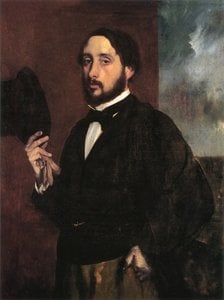
A Life Immersed in Movement
Edgar Degas, født Hilaire-Germain-Edgar De Gas i Paris i 1834, var en kunstner av fascinerende motsetninger. Selv om han ofte ble gruppert sammen med impresjonistene – Monet, Renoir og andre som revolusjonerte maleriet på slutten av det 19. århundre – nektet han aktivt å bli stemplet som sådan, og identifiserte seg heller som en realist. Denne forpliktelsen var knyttet til hans metidige observasjon av verden rundt ham og en dedikasjon til å skildre den med ærlighet. Degas’s tidlige liv var komfortabelt velstående; faren hans var bankier, og moren hans kom fra en kreolsk familie i New Orleans. Denne bakgrunnen ga ham tilgang til utdanning og kunstnerisk opplæring, selv om han ofte misbilliget akademiske restriksjoner. Han meldte seg først inn på Lycée Louis-le-Grand, men sin sanne utdannelse begynte da han begynte å kopiere verk i Louvre, finslipte sine ferdigheter og tente en livslang lidenskap for klassisk kunst. Likevel var Degas’s vei ikke en av streng overholdelse av tradisjon; den var preget av konstant spørsmål og omvurdering av kunstneriske normer. Han besaatte et uavhengig sinn som ville definere hele hans karriere.
Beyond Impressionism: A Unique Artistic Vision
Mens samtidige som Monet jaget de flyktige effektene av lys utendørs, arbeidet Degas i stor grad innenfor grensene til sitt atelier, konstruerte scener nøye fra observasjon og minne. Hans motivvalg var definitivt moderne – et avvik fra de historiske eller mytologiske temaene som foretrakk mange akademiske malere. Han fant inspirasjon i hverdagen til parisere: vaskekjerringer, kabaretsangere, hattmakere og, mest berømt, dansere. Det er denne fascinasjonen for ballett som definerer mye av hans verk. Degas malte ikke bare vakre ballerinaser; han fanget den nådeløse virkeligheten av deres yrke – de utallige repetisjonene, den fysiske belastningen, de flyktige øyeblikkene av grasiøsitet midt i en verden av hardt arbeid. Hans komposisjoner er ofte ukonvensjonelle, plasserer figurer på uventede måter og bruker asymmetriske arrangementer for å skape en følelse av dynamikk og umiddelbarhet. Han var en mester i å fange bevegelse, ikke gjennom utviskede linjer eller tåkelagte effekter, men gjennom presis observasjon og nøye gjengivelse av form. *Dancer, A Group of Dancers*, og *Women Combing Their Hair* er eksempler på denne dedikasjonen til å skildre det menneskelige legemet i bevegelse og avsløre kompleksitetene i moderne liv. Han var ikke interessert i overfladisk skjønnhet; han søkte å avsløre sannheten under overflaten.
Influenser og Kunstnerisk Utvikling
Degas’s kunstneriske reise ble formet av en rekke forskjellige påvirkninger. Hans tidlige opplæring la vekt på klassiske prinsipper, spesielt arbeidet til Jean-Auguste-Dominique Ingres, hvis vekt på håndverk og presis form etterlot seg et varig inntrykk. Likevel beundret Degas også realistene, som Gustave Courbet, som utfordret akademiske konvensjoner og fremmet skildringen av moderne liv. Et avgjørende øyeblikk i hans utvikling kom gjennom hans tilknytning til Camille Pissarro, en ledende impresjonist som introduserte ham for andre kunstnere og oppmuntret ham til å eksperimentere med nye teknikker. Han ble fascinert av japanske trykk –
Ukiyo-e – som påvirket hans bruk av asymmetriske komposisjoner, flate perspektiver og dristige mønstre. Han omfavnet også fotografi, anerkjente dets potensial som et verktøy for å studere bevegelse og fange flyktige øyeblikk i tid. Denne villigheten til å inkorporere forskjellige påvirkninger i sitt arbeid er det som skiller Degas fra andre og bidrar til den unike karakteren av hans kunst. Han var ikke redd for å låne fra forskjellige kilder, syntetiserte dem til noe helt nytt.
Hovedverk og Arv
Edgar Degas døde i Paris i 1917, og etterlot seg et verk som fortsatt fanger publikums oppmerksomhet og inspirerer dem i dag. Hans innovative tilnærming til komposisjon, hans mesterskap i håndverk og hans ærlige skildring av moderne liv har hatt en dyptgripende innvirkning på kunsthistorien. Han banet vei for fremtidige generasjoner av kunstnere som søkte å bryte med tradisjonelle konvensjoner og utforske nye måter å representere verden rundt dem. Hans innflytelse kan sees i arbeidet til Pablo Picasso og Henri Matisse, blant andre. Museer over hele verden – inkludert Musée d'Orsay og Musée de l’Orangerie i Paris – huser betydelige samlinger av hans malerier, pasteller, skulpturer og trykk, og sikrer at hans arv vil vare for kommende generasjoner. Degas var ikke bare en maler av dansere eller hesteværinger; han var en skarp observatør av menneskelig natur, en mester i form og bevegelse, og en ekte innovatør som omdefinerte mulighetene for kunst.
- En mester i linje: Degas’s ekstraordinære håndverk satte ham fra hverandre.
- Moderne liv som motiv: Han fokuserte på moderne parisiske scener, og brøt med tradisjonen.
- Innflytelse på fremtidige kunstnere: Hans arbeid hadde en dyptgripende innvirkning på Picasso og Matisse.



 Forhåndsvisning
 Kjøp håndlaget maleri
 Send
Send Del med andre
 Vis detaljer
 Veiledning

 Last ned bildet
 Liknende objekter
 Røntgenundersøkelse
 Lysbildefremvisning
 Statistikk


 Vis hele teksten






































 Glassalternativet er kun tilgjengelig i størrelser under 110 cm