

Giclée- eller lerretsprint av museumskvalitet med rask produksjon og fleksible valgmuligheter for etterbehandling. ( Kjøp håndmalt maleri Bytt til digitalt bilde)





























Velg mellom våre forhåndsdefinerte størrelser som bevarer kunstverkets opprinnelige proporsjoner.

Skriv inn ønsket bredde og høyde for å tilpasse trykket til din ramme eller vegg. Et trykk kan kun beskjæres, aldri skaleres opp utover motivets opprinnelige størrelse, noe som betyr at et format med andre proporsjoner vil føre til tap av deler av bildet. Vi sender deg en digital mockup for godkjenning før vi starter trykkeprosessen. Bildet som vises på denne siden viser ikke den faktiske beskjæringen — det er kun mockuppen som viser dette.
Verdensomspennende levering () på 2 uker i stedet for standard 4/5 uker. (9 November)
untitled (98)
Størrelse på reproduksjon
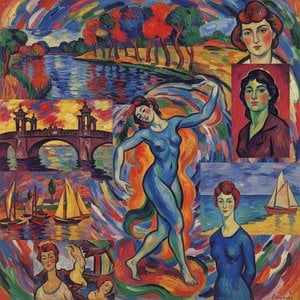
The painting, simply titled “untitled (98),” offers a glimpse into Henri Matisse's masterful exploration of color and form—a deceptively serene portrait that speaks volumes about the artist’s artistic philosophy. Executed sometime between 1947 and 1950 during his prolific Parisian period, this work exemplifies Matisse’s signature style: bold, simplified shapes rendered in vibrant hues against a muted backdrop. It is not merely a depiction of a woman seated comfortably; it is an embodiment of Matisse’s belief that color alone could convey emotion and create a palpable atmosphere. The scene presents a portrait of a woman sitting in a chair with her head resting on her arm, appearing deeply relaxed or perhaps even lost in sleep. Nearby, a dining table holds various items such as cups and vases, while books are scattered throughout the room, some near the woman and others further away. The presence of two cats—one close to the woman and another tucked further back—adds an element of domestic warmth and companionship, reinforcing the painting's overarching theme of serenity.
Matisse’s technique in this period is characterized by his pioneering “cut-out” painting method. Rather than meticulously blending pigments on canvas, he painstakingly cut shapes from colored paper or cardboard, gluing them onto a white surface to achieve an astonishing luminosity and textural richness. This approach deliberately rejects illusionistic realism, prioritizing expressive color over accurate representation. The dominant shades—warm yellows, oranges, and reds—contrast sharply with the cool blues and greens of the room setting, creating a visual dialogue that draws the eye inward. Notice how Matisse uses overlapping planes of color to suggest depth without resorting to traditional perspective; it is an ingenious device that reinforces the painting's feeling of stillness.
Beyond its formal qualities, “untitled (98)” is laden with symbolic significance. The woman seated in her chair represents domestic tranquility—a refuge from the anxieties of the outside world. Her posture, with her head resting on her arm, suggests vulnerability and acceptance. The surrounding objects—the cups, vases, and books—contribute to an atmosphere of erudition and contemplation, suggesting a life of quiet intellectual pursuit. This painting emerged during a period marked by significant artistic upheaval in the aftermath of World War II. While many of his contemporaries sought to grapple with existential anxieties through dramatic gestures, Matisse opted for a quieter response: a celebration of beauty and harmony amidst the turmoil of the time. This deliberate choice reflects his humanist conviction that art could offer solace and inspiration, reminding viewers of the enduring power of joy.
Ultimately, this artwork succeeds as a powerfully emotive piece. Its luminous color palette evokes feelings of warmth, comfort, and optimism—a welcome antidote to the darkness of wartime Europe. The painting’s deliberate lack of detail invites viewers to focus on the interplay of color and form, prompting introspection and fostering a sense of calm contemplation. For the collector or interior designer, this work serves as more than just a visual element; it is a balm for the soul. It is a testament to Matisse’s ability to distill complex emotions into deceptively simple visual elements, leaving an indelible impression on anyone who encounters it—a reminder that true beauty resides not in grand spectacle but in quiet grace.
I Henri Matisse sitt kunstnerskap befinner "untitled (98)" seg innenfor fauve-stilen, sammen med temaene color exploration, domestic tranquility, symbolic presence, matisse style.
Den Serene atmosfæren i "untitled (98)" av Henri Matisse passer perfekt til det anbefalte rommet: et Living Room.
Historisk sett er "untitled (98)" et fauve-verk fra den bredere Modern-epoken.

1869 - 1954 , Frankrike

Finn ro og inspirasjon i kunsten! Utforsk topp 10 malerier fra Monet, Van Gogh & Renoir som skaper fredfull stemning. Lær om kunsthistorie og farger. Museumskvalitet reproduksjoner på WahooArt.no – Oppdag mesterverk online!
Opplev fauvismens revolusjonerende farger! Utforsk 10 mesterverk av Matisse, Derain og andre. Lær om historien bak disse ikoniske maleriene og finn din perfekte kunst til hjemmet på WahooArt.com – museumskvalitet reproduksjoner & inspirasjon.
Oppdag fauvismens 10 mest ikoniske malerier! Lær historien bak Matisse, Derain og andre ekspresjonistiske mestere. Finn kunsttrykk av høy kvalitet & inspirasjon til ditt hjem på WahooArt.com.

Utforsk 25 ikoniske malerier av Henri Matisse! Oppdag historien bak fauvismens fargerike mesterverk, fra 'The Dance' til 'Red Studio'. Finn kunsttrykk og reproduksjoner i museumskvalitet for din interiørdesign på WahooArt.com.

Opplev Hermitage Museums 25 mest ikoniske kunstverk! Rembrandt, Leonardo da Vinci & Vermeer – lær historien bak mesterklassikerne. Finn inspirasjon til hjemmet og kjøp museumskvalitets reproduksjoner på WahooArt.com.
 Forhåndsvisning
 Send
Send Del
Del
 Vis detaljer
 Utskriftsvennlig guide

 Last ned bilde
 Liknende objekter
 Røntgenundersøkelse
 Lysbildefremvisning
 Spørsmål og svar
 Statistikk

 Vis hele teksten









 Glassalternativet er kun tilgjengelig i størrelser under 110 cm


