


x


 Bestill trykk Kjøp digitalt bilde
 Send
Send
 Details
 Legg til i favoritter
 Last ned bildet
 Liknende objekter
 X-Ray
X-Ray
 Lysbildefremvisning
Håndmalt olje på lerret i din valgte størrelse og ramme, laget på bestilling av våre kunstnere.





























Velg mellom våre forhåndsdefinerte størrelser som bevarer kunstverkets opprinnelige proporsjoner.

Du kan angi egne mål for å tilpasse en spesifikk ramme eller plass. Dersom den valgte størrelsen ikke samsvarer med originalbildets proporsjoner, vil vi enten beskjære kunstverket eller utvide maleriet med ytterligere håndmalte elementer. En digital mockup vil bli sendt til din godkjenning før produksjonen starter.
Vennligst merk at forhåndsvisningen på skjermen ikke gjenspeiler den faktiske beskjæringen eller utvidelsen. Kun mockuppen vil vise den endelige komposisjonen nøyaktig.
Selv om tilpassede størrelser er tilgjengelige, anbefaler vi å velge et mål fra den forhåndsdefinerte listen for å bevare de originale proporsjonene.
Verdensomspennende levering () på 3–4 uker i stedet for standard 5 uker. (1 July). Ingen kompromisser med kvaliteten.


The bulgarian blouse
Størrelse på reproduksjon
Henri Matisse's "The Bulgarian Blouse," painted in 1920, isn’t merely a portrait; it’s an immersion into the artist’s revolutionary approach to color and form. This captivating work, currently residing within The Fitzwilliam Museum in Cambridge, England, offers a glimpse into a pivotal moment in Matisse's career – a period where he deliberately moved away from the strictures of academic painting and embraced a vibrant, almost ecstatic use of hue. Initially created as a study for a larger canvas, “The Bulgarian Blouse” retains an intimate quality, drawing the viewer into the subject’s gaze with remarkable immediacy. The woman depicted, her identity somewhat enigmatic, is presented against a bold, simplified red background – a deliberate choice by Matisse to heighten the impact of the figure and the intense colors she wears.
The painting's style firmly places it within the Fauvist movement, a radical artistic current that emerged in France around 1905. Fauvism, derived from the French word "fauves" meaning “wild beasts,” was characterized by its rejection of naturalistic representation and its emphasis on color as an independent expressive element. Matisse, along with André Derain and Maurice de Vlaminck, were among the key figures who spearheaded this movement. “The Bulgarian Blouse” exemplifies this approach perfectly; the colors aren’t meant to mimic reality but rather to convey emotion and atmosphere. The blouse itself is a riot of pinks, blues, greens, and yellows – a deliberate orchestration of hues that creates a sense of joyous energy and vitality.
Matisse’s technique in “The Bulgarian Blouse” is deceptively simple. He employs broad, flat areas of color—a hallmark of Fauvist painting—to define shapes and forms. The figure's features are rendered with minimal detail, relying instead on the interplay of color to suggest volume and presence. Notice how the red background doesn’t recede into darkness; it actively pushes forward, intensifying the brilliance of the woman’s attire. The simplification of form is crucial here; Matisse wasn’t interested in meticulously recreating a likeness but rather in capturing the essence of his subject through pure color and shape. The upward gaze of the woman adds to the painting's dynamism, creating a direct connection with the viewer.
Interestingly, the title itself – “The Bulgarian Blouse” – hints at the painting’s origins as a study for a larger work. It suggests that Matisse was initially interested in capturing the intricate patterns and textures of traditional Balkan clothing. However, he quickly realized that the true power lay not in replicating the details but in distilling the essence of these elements into pure color and form. The blouse becomes a vehicle for exploring his core artistic principles – the celebration of color, the simplification of shape, and the pursuit of visual harmony.
While seemingly straightforward, “The Bulgarian Blouse” is rich in symbolic potential. The vibrant colors can be interpreted as representing joy, vitality, and perhaps even a sense of exotic allure. The woman’s serious expression invites contemplation; she isn't simply posing for the viewer but conveying an inner state – one of quiet confidence or perhaps thoughtful observation. The red background, often associated with passion and energy, further amplifies this emotional impact.
Beyond its immediate visual appeal, “The Bulgarian Blouse” offers a window into Matisse’s evolving artistic philosophy. It represents a conscious decision to break free from the constraints of academic tradition and embrace a more personal and expressive style. Reproductions of this work, available through WahooArt.com, allow viewers to experience the full intensity of Matisse's color palette and his masterful command of composition – bringing a touch of Fauvist brilliance into any space.
WahooArt.com offers meticulously crafted hand-painted reproductions of “The Bulgarian Blouse,” ensuring that you experience the painting’s vibrant colors and dynamic composition with unparalleled fidelity. Whether you're an art enthusiast, a collector seeking to expand your collection, or simply someone looking for a striking piece of artwork to enhance your interior design, this reproduction captures the essence of Matisse’s genius. The high-quality materials and expert craftsmanship guarantee that your reproduction will be a treasured addition to your home for years to come.


1869 - 1954 , Frankrike
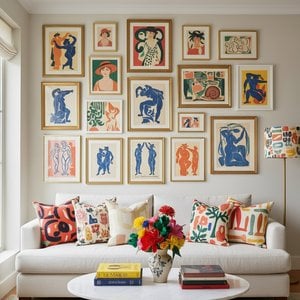
Utforsk 25 ikoniske malerier av Henri Matisse! Oppdag historien bak fauvismens fargerike mesterverk, fra 'The Dance' til 'Red Studio'. Finn kunsttrykk og reproduksjoner i museumskvalitet for din interiørdesign på WahooArt.com.

Explore the fascinating relationship between color & emotion in art history. Discover how master artists like Matisse & Gauguin used vibrant hues to evoke feelings and cultural meanings. A deep dive for classic art enthusiasts.

Explore the revolutionary art of André Derain, co-founder of Fauvism. Discover his bold use of color, evolution from radical expressionism to classicism, and lasting influence on modern art history. Learn more at WahooArt.

Explore the revolutionary art of Henri Matisse! Discover his bold use of color, Fauvist origins, and lasting impact on modern painting. A comprehensive guide for art enthusiasts.

Explore the revolutionary world of Fauvism! Discover the bold colors & expressive power of Matisse, Derain & Vlaminck. Learn about this pivotal art movement's history and lasting impact on modern painting.


Hold deg oppdatert med de siste kunstnyhetene, eksklusive tilbud og dekorasjonsideer.
Fortell oss om prosjektet ditt, så vil våre kunsteksperter gi deg 3 personlige kunstforslag.
Vi velger ut 3 alternativer kun for deg – helt gratis!
 Del med andre









 Les mer om dette
 Glassalternativet er kun tilgjengelig i størrelser under 110 cm


