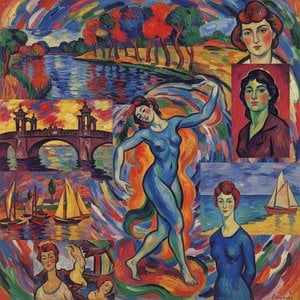
En Pioner i Fargens Tjeneste: Henri Matisse og Modernismens Ånd
Henri Émile Benoît Matisse, født 31. desember 1869 i den lille nordfranske byen Le Cateau-Cambrésis, var ikke forutbestemt til et liv dypt forankret i pigment og form. Etter avsluttet skolegang begynte han å studere jus i Paris, men hans vei tok en dramatisk vending etter et blindtarmbetennelses anfall i 1889. Sengeliggende oppdaget han en skjult lidenskap tent av den enkle handlingen å male med et sett kunstmateriell moren hadde gitt ham. Dette var ikke bare en tidsfordriv; det var en åpenbaring – et vendepunkt som ledet ham bort fra juridiske dokumenter og inn i en verden der farge skulle bli hans språk og lerretet hans domene. Oppvokst i Bohain-en-Vermandois, som sønn av kornhandlere, virket Matisse i utgangspunktet lite tilbøyelig til å omfavne bohemens livsstil, men frøet var sådd, pleiet av rekonvalesens og blomstret til en livslang dedikasjon. Han meldte seg inn ved Académie Julian, senere ved École Nationale des Beaux-Arts, hvor han studerte under William-Adolphe Bouguereau og Gustave Moreau, absorberte klassiske teknikker som skulle danne grunnlaget for hans fremtidige nyskapninger. Tidlige arbeider gjenspeilet denne akademiske bakgrunnen, demonstrerte dyktighet, men manglet den særegne stemmen som snart skulle definere ham.
Gjennombruddet med Fauvismen og Fargenes Revolusjon
Et avgjørende øyeblikk kom i 1896 under et besøk til Belle-Île med australske maleren John Russell. Dette møtet viste seg å være transformativt. Russell introduserte Matisse for Impressionismens livlige verden, og viktigst av alt, for Vincent van Goghs emosjonelt ladede lerret. Virkningen var dypgripende. Van Goghs ekspressive bruk av farge knuste Matisses tidligere tilbakeholdne palett, og presset ham mot en mer subjektiv tilnærming. Han begynte å bevege seg bort fra jordfarger, omfavnet nyanser som resonerte med følelser snarere enn streng representasjon. Denne utforskningen kulminerte i fremveksten av Fauvismen rundt 1905 – en bevegelse der Matisse ble en ledende skikkelse. Navnet selv, som betyr «ville dyr», var opprinnelig nedsettende, gitt av en kritiker til gruppens sjokkerende livlige og ikke-naturalistiske malerier utstilt på Salon d'Automne.
Matisse, sammen med kunstnere som André Derain og Maurice de Vlaminck, fremmet intens farge som et selvstendig ekspressive element, forenklet former for å forsterke dens virkning. Maleriet
The Gourds (1905) er et eksempel på denne stilen – en eksplosjon av rødt, grønt og gult brukt med en frihet som ignorerte tradisjonelt perspektiv og mimetisk nøyaktighet. Nøkkelkjennetegn inkluderte intenst mettede farger, forenklede former, uttrykksfulle penselstrøk og en bevisst avvisning av konvensjonell representasjon til fordel for emosjonell resonans.
Modningen og Dekorative Harmoni
Etter den første entusiasmen rundt Fauvismen gjennomgikk Matisses stil en subtil, men betydelig utvikling. Selv om han aldri forlot sin kjærlighet til farge, ble hans arbeid mer raffinert, med helling mot en dekorativ estetikk som fremhevet flatere former og intrikate mønstre. Han utforsket temaer som fritid, hjemmeliv og menneskeskikkelsen i rolige omgivelser, skapte komposisjoner som føltes både harmoniske og emosjonelt resonante. En flytting til Nice på den franske rivieraen i 1917 påvirket denne endringen ytterligere, preget hans arbeid med en følelse av ro og klassisk balanse. Han begynte å fokusere på å skape miljøer – malerier, skulpturer og dekorative objekter – som omsluttet betrakteren i en atmosfære av skjønnhet og ro. Denne perioden så ham eksperimentere med forskjellige media, inkludert keramikk og tekstiler, utvidet hans kunstneriske visjon utover det tradisjonelle lerretet. Han malte ikke bare scener; han konstruerte verdener designet for å fremkalle en bestemt emosjonell respons.
Senere År: Innovasjon Gjennom Begrensning
Etter hvert som svekkende helse begrenset Matisses evne til å male på konvensjonell måte, begav han seg ut på et ekstraordinært nytt kapittel i sin kunstneriske reise – skapelsen av papirklippskollasjer, eller *découpage*. Fra rundt 1947 ble disse verkene født ut av nødvendighet. Sengeliggende kunne han ikke stå og male fysisk, men han kunne fortsatt manipulere papir med saks. Det som begynte som en praktisk løsning utviklet seg til en banebrytende kunstnerisk teknikk. Han ville male store ark med papir i livlige farger, deretter klippe dem ut i former – organiske former, blader, figurer – og arrangere dem på lerretet, skape komposisjoner som var både dynamiske og bedragerisk enkle. Disse *découpage*-verkene var ikke bare erstatninger for maleri; de representerte en ny måte å tenke om farge, form og komposisjon. De fortsatte hans livslange utforskning av disse elementene, viste en vedvarende kunstnerisk visjon selv i møte med fysiske begrensninger.
- Papirklippsteknikken tillot ham å oppnå en renhet i form og farge som var vanskelig å oppnå med maling.
- Disse verkene refererte ofte til tidligere temaer og motiver fra hans malerier, men presentert dem på en frisk og nyskapende måte.
- De demonstrerte hans evne til å tilpasse seg og utvikle seg som kunstner gjennom hele karrieren.
En Varig Arv: Matisses Innvirkning På Moderne Kunst
Henri Matisse døde i Nice i 1954, etterlot seg et omfattende arbeid som fortsetter å inspirere og fascinere publikum over hele verden. Hans innvirkning på kunstverdenen er ubestridelig; han utfordret konvensjonelle forestillinger om representasjon, fremmet den ekspressive kraften i farge og banet vei for fremtidige generasjoner av kunstnere. Ofte ansett sammen med Pablo Picasso som en av de mest innflytelsesrike figurene i det 20. århundres kunst, formet Matisse modernismen fundamentalt. Hans arv strekker seg utover selve kunstverkene hans – den omfatter en filosofi som feirer glede, skjønnhet og fargens transformative potensial. Han malte ikke bare det han så; han skapte en emosjonell opplevelse for betrakteren, inviterte dem til å dele hans visjon om en verden badet i lys og livlige nyanser.
Matisses innflytelse kan sees i utallige verk av kunstnere på tvers av ulike disipliner, som befester hans plass som en sann mester i moderne kunst – en maler som våget å se verden ikke slik den er, men slik den kunne være, fylt med farge, harmoni og grenseløs mulighet.



 Forhåndsvisning
 Kjøp håndlaget maleri
 Send
Send Del med andre
 Vis detaljer
 Veiledning

 Last ned bildet
 Liknende objekter
 Røntgenundersøkelse
 Lysbildefremvisning
 Statistikk

 Vis hele teksten






































 Glassalternativet er kun tilgjengelig i størrelser under 110 cm