


Håndmalt olje på lerret i din valgte størrelse og ramme, laget på bestilling av våre kunstnere. ( Kjøp trykk Kjøp bilde)





























Velg mellom våre forhåndsdefinerte størrelser som bevarer kunstverkets opprinnelige proporsjoner.

Du kan angi egne mål for å tilpasse en spesifikk ramme eller plass. Dersom den valgte størrelsen ikke samsvarer med originalbildets proporsjoner, vil vi enten beskjære kunstverket eller utvide maleriet med ytterligere håndmalte elementer. En digital mockup vil bli sendt til din godkjenning før produksjonen starter.
Vennligst merk at forhåndsvisningen på skjermen ikke gjenspeiler den faktiske beskjæringen eller utvidelsen. Kun mockuppen vil vise den endelige komposisjonen nøyaktig.
Selv om tilpassede størrelser er tilgjengelige, anbefaler vi å velge et mål fra den forhåndsdefinerte listen for å bevare de originale proporsjonene.
Verdensomspennende levering () på 3–4 uker i stedet for standard 5 uker. (6 September). Ingen kompromisser med kvaliteten.


not identified (20)
Størrelse på reproduksjon
In the vast, vibrant tapestry of Henri Matisse’s oeuvre, certain works act as quiet anchors, offering a moment of profound stillness amidst the swirling colors of the Fauvist revolution. “Not Identified” (1920) is precisely such a masterpiece. It presents a deceptively simple scene: a doorway that serves not merely as an architectural element, but as a threshold between the known and the infinite. Through this frame, we glimpse a luminous window bathed in diffused daylight, where the sky peeks through like a whispered promise. The composition is anchored by a sense of domestic tranquility, featuring a solitary chair and the subtle presence of a figure that seems caught in a moment of quiet observation. It is an invitation to pause, to breathe, and to look through the lens of Matisse’s unique, emotive vision.
The painting captures a delicate balance between interior intimacy and exterior vastness. The doorway, with its clean white frame, acts as a visual stabilizer, directing the viewer's gaze upward toward the heavens. There is a rhythmic harmony in the arrangement—the placement of the chair, the empty cabinet above the door, and the soft interplay of light—that suggests a carefully orchestrated stage for human experience. For the collector or interior designer, this piece offers a sophisticated focal point that brings a sense of airy openness and contemplative peace to any space, acting as a "window" that expands the perceived boundaries of a room.
To understand this work is to understand Matisse’s revolutionary departure from academic realism. Moving away from the heavy shadows and meticulous anatomical precision of his predecessors, Matisse embraced a palette that prioritized expressive force over literal representation. In “Not Identified,” we encounter a masterful orchestration of earthy tones—warm ochre, soft beige, and muted pale greens. These colors are not merely descriptive; they are atmospheric. They work in concert with the brilliant, light-filled backdrop of the window to create a sense of depth through temperature and tone rather than traditional shading.
The technique reflects the artist's transition toward a more streamlined, decorative elegance. The flatness of the forms emphasizes the intrinsic beauty of the pigments themselves, a hallmark of the Fauvist spirit where color is liberated from its duty to mimic reality. This stylistic choice creates a surface that is both modern and timeless. For those seeking a high-quality reproduction, this emphasis on color and clean lines ensures that the artwork retains its striking impact, whether placed in a contemporary minimalist setting or a classic, richly textured interior.
Beyond the technical brilliance lies the emotional soul of the piece. Matisse’s journey—from an aspiring lawyer to a pioneer of modern art—was fueled by a desire to capture the essence of joy and serenity. “Not Identified” embodies this pursuit. It does not demand attention through shock or chaos; instead, it earns it through a gentle, persistent beauty. The painting evokes a sense of nostalgia and longing, reminding us of those quiet afternoons spent watching the light shift across a room, lost in thought.
Owning a piece that echoes Matisse’s vision is an opportunity to surround oneself with the philosophy of l'art pour l'art—art for art's sake. It is a celebration of the beauty found in simplicity and the profound emotional weight of a single, well-placed color. As a reproduction, this work serves as more than mere decoration; it is an atmospheric element that invites introspection, making it an invaluable acquisition for anyone looking to infuse their environment with culture, history, and a sense of transcendent calm.

1869 - 1954 , Frankrike
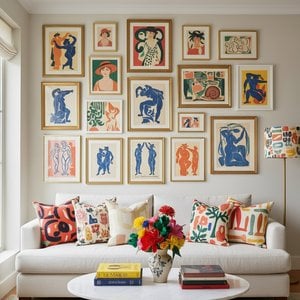
Utforsk 25 ikoniske malerier av Henri Matisse! Oppdag historien bak fauvismens fargerike mesterverk, fra 'The Dance' til 'Red Studio'. Finn kunsttrykk og reproduksjoner i museumskvalitet for din interiørdesign på WahooArt.com.
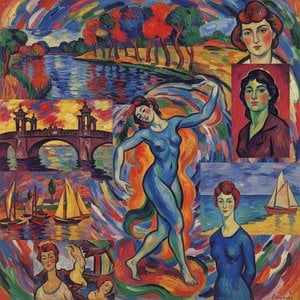
Oppdag fauvismens 10 mest ikoniske malerier! Lær historien bak Matisse, Derain og andre ekspresjonistiske mestere. Finn kunsttrykk av høy kvalitet & inspirasjon til ditt hjem på WahooArt.com.
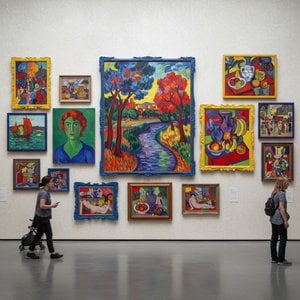
Opplev fauvismens revolusjonerende farger! Utforsk 10 mesterverk av Matisse, Derain og andre. Lær om historien bak disse ikoniske maleriene og finn din perfekte kunst til hjemmet på WahooArt.com – museumskvalitet reproduksjoner & inspirasjon.
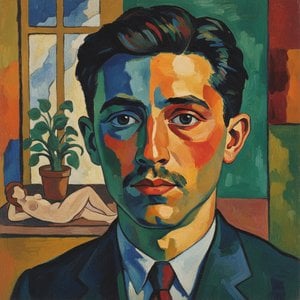
Explore the revolutionary art of Henri Matisse! Discover his bold use of color, Fauvist origins, and lasting impact on modern painting. A comprehensive guide for art enthusiasts.

Explore the revolutionary Fauvism movement & Henri Matisse's bold use of color! Discover key characteristics, iconic artworks, and its lasting impact on modern art history with WahooArt.

 Forhåndsvisning
 Send
Send Del med andre
 Vis detaljer

 Last ned bildet
 Liknende objekter
 Røntgenundersøkelse
 Lysbildefremvisning

 Vis hele teksten







 Glassalternativet er kun tilgjengelig i størrelser under 110 cm


