A Study in Dignified Intensity: Unveiling Holbein’s Self-Portrait
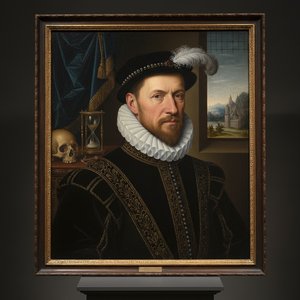
Hans Holbein the Younger's Self-Portrait is more than simply a depiction of an artist; it’s a meticulously crafted window into the soul of a Renaissance man. Painted circa 1530, during a period of profound artistic and intellectual ferment in Europe, this work exemplifies Holbein’s unparalleled ability to capture not just physical appearance but also the complex emotions simmering beneath the surface. The painting immediately commands attention with its subject's direct gaze – a look that is both stern and intensely thoughtful, inviting the viewer into an intimate dialogue across centuries.
- Subject & Composition: The portrait presents Holbein himself in a three-quarter pose, a favored technique of the era designed to create a sense of immediacy and connection. His carefully rendered features – the strong jawline, the neatly trimmed beard and mustache, the intelligent eyes – are hallmarks of his masterful realism.
- Technical Brilliance: Holbein’s mastery of oil paint is immediately apparent in the subtle gradations of light and shadow that define the textures of his clothing and skin. The use of sfumato, a technique perfected by Leonardo da Vinci, softens edges and creates an almost ethereal quality, particularly around the eyes and mouth.
The Renaissance Ideal: Holbein’s Artistic Philosophy
Holbein was deeply influenced by the humanist ideals of the Northern Renaissance, which emphasized observation, reason, and the celebration of human potential. Unlike earlier portraiture that often prioritized idealized beauty, Holbein sought to represent his subjects with unflinching honesty – a characteristic that would become synonymous with his name. This self-portrait is a testament to this philosophy; it’s not an attempt to present an unattainable ideal but rather a genuine reflection of the artist's own character and intellect.
The inclusion of the decorative wall behind Holbein adds another layer of meaning. Such backgrounds were common in Renaissance portraits, often serving as symbolic markers of wealth, status, and learning. The intricate design suggests a connection to the burgeoning interest in classical antiquity that was shaping artistic and intellectual life during this period.
Symbolism & Context: A Window into Tudor England
Painted shortly before his appointment as court painter to Henry VIII, this self-portrait offers a glimpse into Holbein’s trajectory. His arrival in England marked a pivotal moment in both his career and the history of portraiture. The presence of the two books – one at the top left, the other at the bottom right – subtly reinforces the image of Holbein as a learned man, deeply engaged with intellectual pursuits. These objects were not merely props; they were carefully chosen symbols that spoke to his status and interests.
The overall mood of the portrait is one of quiet dignity and self-assurance. It’s a powerful statement from an artist who would go on to create some of the most iconic portraits in Western art history, including those of Henry VIII and Thomas More. Holbein's ability to capture not just likeness but also personality makes this self-portrait a truly remarkable achievement.
Collecting & Appreciation: A Timeless Masterpiece
A hand-painted reproduction of Hans Holbein the Younger’s Self-Portrait is more than simply an image; it's an investment in art history. Each detail – from the subtle nuances of color to the precise rendering of texture – faithfully recreates the original painting’s power and beauty. This artwork would be a stunning addition to any collection, offering a unique opportunity to own a piece of Renaissance genius. Its timeless appeal makes it equally suitable for both private residences and commercial spaces, adding an element of sophistication and intellectual depth to any environment.



 Forhåndsvisning
 Kjøp håndlaget maleri
 Send
Send Del med andre
 Vis detaljer

 Last ned bildet
 Liknende objekter
 Røntgenundersøkelse
 Lysbildefremvisning
 Stats
Stats
 Vis hele teksten






































 Glassalternativet er kun tilgjengelig i størrelser under 110 cm