ForhåndsvisningForhåndsvisning Se i ARSe i AR Bytt til trykk Bytt til trykkBytt til digitalt bilde Bytt til digitalt bilde SendSend
Vis detaljerVis detaljer Legg til i favoritter Legg til i favoritter Last ned bildetLast ned bildet Liknende objekterLiknende objekter RøntgenundersøkelseRøntgenundersøkelse LysbildefremvisningLysbildefremvisning StatistikkStatistikk

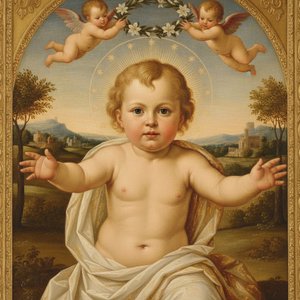
Madonna and Child

Explore Hans Baldung Grien's 'Madonna and Child' (1516). A poignant blend of Gothic & Renaissance styles, capturing motherhood’s vulnerability & divine grace with masterful detail.

Oppdag Hans Baldung (1485-1545), tysk maler & trykker. Utforsk uttrykksfulle portretter, allegorier og unike skildringer av trolldom & mytologi – en fascinerende blanding av farge, fantasi & reformasjon.

Håndlaget oljereproduksjon

Håndmalt olje på lerret i din valgte størrelse og ramme, laget på bestilling av våre kunstnere. (Bytt til trykk Bytt til trykkBytt til digitalt bilde Bytt til digitalt bilde)

P118B $10
P118H $10
P118W $10
P438Z $10
P508JH $12
P508YH $12
P805H $10
P805Z $10
P919BZ $10
P919G $10
P919XJ $10
P959ZH $10
P968JZ $12
W106C $8
W218G $10
W218JH $8
W218Y $10
W307PJ $10
W316G $10
W316PJ $8
W316Y $10
W398PJ $8
W4111J $10
W500HY $15
W500JH $15
W692G $12
W849H $8
W940BG $15
W953PJ $8

Standardformat
skreddersydd
CM
INCH

Velg mellom våre forhåndsdefinerte størrelser som bevarer kunstverkets opprinnelige proporsjoner.

bredde
høyde

Du kan angi egne mål for å tilpasse en spesifikk ramme eller plass. Dersom den valgte størrelsen ikke samsvarer med originalbildets proporsjoner, vil vi enten beskjære kunstverket eller utvide maleriet med ytterligere håndmalte elementer. En digital mockup vil bli sendt til din godkjenning før produksjonen starter.
Vennligst merk at forhåndsvisningen på skjermen ikke gjenspeiler den faktiske beskjæringen eller utvidelsen. Kun mockuppen vil vise den endelige komposisjonen nøyaktig.
Selv om tilpassede størrelser er tilgjengelige, anbefaler vi å velge et mål fra den forhåndsdefinerte listen for å bevare de originale proporsjonene.

Eksempler på hva som kan endres: Erstatt ansikt med bilde av kunden; Legg til kjæledyr (f.eks. bytt ut katt med hund); Inkluder en skjult melding i bakgrunnen; Endre bakgrunnslandskap eller elementer.
Etter bestilling vil WahooArt.com-teamet sende e-post til kunden for instruksjoner og sende et utkast (mockup) som forhåndsvisning.

Verdensomspennende levering () på 3–4 uker i stedet for standard 5 uker. (14 September). Ingen kompromisser med kvaliteten.

why_choose_icon
Gratis ekspressfrakt over hele verden
why_choose_icon
Lerretsduk av høykvalitets lin
why_choose_icon
Full forsikring under transport
why_choose_icon
Garanti for refusjon av toll og importavgifter
why_choose_icon
Garantert korrekt fargegjengivelse
why_choose_icon
100 dagers returrett (kun ved mangler)
why_choose_icon
100% pengene tilbake-garanti
why_choose_icon
Rabatt ved flere kjøp

Totalpris for bestilling

$ 272

reproduction

Madonna and Child

Teknikk for reproduksjon

Størrelse på reproduksjon

-

Endelig pris

$ 272

Kort om verket

  • Movement: Northern Renaissance
  • Influences: Robert Campin
  • Subject or theme: Religious iconography
  • Title: Madonna and Child
  • Location: Staatliche Kunsthalle Düsseldorf
  • Artistic style: Late Gothic influence
  • Dimensions: 37 x 48 cm

Kunstighetsquiz

Det er kun ett riktig svar på hvert spørsmål.

Spørsmål 1:
What artistic movement is most closely associated with Hans Baldung Grien’s style in ‘Madonna and Child’?
Spørsmål 2:
The painting 'Madonna and Child' was created in which year?
Spørsmål 3:
What is a key characteristic of Baldung’s portrayal of Mary compared to typical depictions of the Virgin in his era?
Spørsmål 4:
What technique did Baldung primarily use in creating ‘Madonna and Child’?
Spørsmål 5:
The painting includes several children. What does this detail suggest about the scene?

A Tender Encounter in the Heart of Bavaria

In the quiet, luminous depths of Hans Baldung Grien’s 1516 masterpiece, Madonna and Child, we encounter more than a mere religious icon; we enter a profound meditation on the sanctity of life and the vulnerability of love. Set against the backdrop of the burgeoning High Renaissance in Bavaria, this painting serves as a breathtaking bridge between the structured traditions of the Northern German Gothic and the expressive, psychological complexities of the emerging Mannerist movement. The scene is one of intimate devotion, where the Virgin Mary cradles her infant son with a tenderness that feels startlingly human. Unlike the distant, idealized figures often found in contemporary Italian works, Baldung presents a Mary whose presence is palpable, her maternal instinct rendered with an emotional resonance that transcends the boundaries of time and medium.

The composition draws the viewer into a nurturing sanctuary, where the central figures are surrounded by a soft, atmospheric warmth. As one gazes upon the painting, the eye is led through a delicate arrangement of figures—other children linger near the mother, their presence adding layers of familial depth to the divine narrative. Small, symbolic details are woven into the fabric of the scene, such as the subtle placement of an apple or a book, which serve as quiet reminders of the theological weight carried by the Christ child. These elements do not merely decorate; they anchor the spiritual significance of the moment, inviting collectors and enthusiasts to contemplate the intersection of the earthly and the divine.

Mastery of Light and Texture

Technically, Baldung’s work is a triumph of oil on panel, showcasing a level of meticulous craftsmanship that remains awe-inspiring centuries later. The artist utilized sophisticated layering and glazing techniques to achieve a remarkable luminosity, allowing light to seem as though it is emanating from within the skin of the holy figures themselves. This brilliance is particularly evident in the rendering of Mary’s drapery, where intricate folds and deep shadows create a sense of weight, movement, and tactile richness. The use of chiaroscuro—the dramatic interplay between light and shadow—is employed not just for structural depth, but to heighten the emotional impact of the scene, casting a soft glow upon the serene expression of the infant Jesus.

For the discerning interior designer or art lover, this painting offers an unparalleled sense of prestige and soulful elegance. The way Baldung manipulates texture—from the softness of a child's cheek to the heavy, woven quality of liturgical cloth—provides a visual feast that commands attention in any curated space. A high-quality reproduction of this work brings with it a sense of historical gravity and an atmosphere of peace, making it an ideal centerpiece for those seeking to infuse their surroundings with classical beauty and intellectual depth.

A Legacy of Expression and Emotion

To understand this painting is to understand the unique spirit of Hans Baldung Grien, an artist who dared to move beyond the polished perfection of his peers to embrace a more expressive, sometimes unsettling, psychological truth. His ability to blend the meticulous detail of the Northern tradition with the dramatic tension of Mannerism creates a work that is both comforting and deeply moving. The Madonna and Child stands as a testament to a period of immense cultural transformation, capturing the very essence of humanist thought through the lens of maternal grace.

Whether viewed as a historical artifact or a stunning piece of decorative art, the painting continues to resonate with its ability to evoke empathy. It invites the viewer to pause, to breathe, and to reconnect with the universal themes of protection, faith, and the enduring bond between parent and child. Owning a reproduction of such a significant work is not merely an acquisition of decor; it is an invitation to live alongside a masterpiece that celebrates the most profound aspects of the human experience.


Om kunstneren

A Swabian Enigma: The Life and Early Influences of Hans Baldung Grien

Hans Baldung, for all time distinguished as Hans Baldung Grien due to his penchant for wearing green attire, emerged from an unexpectedly scholarly lineage. Unlike many Renaissance artists who followed established family crafts, Baldung was the first male in generations not destined for university studies. His father, Johann Baldung, a respected jurist serving the Bishopric of Strasbourg, envisioned a similar path for his son. Yet, young Hans chose the brush and burin, embarking on an artistic journey that would set him apart as one of the most distinctive and enigmatic figures of the German Renaissance. This decision wasn’t a rejection of his upbringing, but rather a redirection of intellectual curiosity—a characteristic that permeated his entire oeuvre. His early training commenced around 1500 in the Upper Rhineland with an artist from Strasbourg, laying the groundwork for his technical skills before he sought out more prominent masters to hone his craft. This initial period instilled within him a foundation of draftsmanship and composition, preparing him for the rigorous artistic environment that awaited him in Nuremberg.

Under Dürer’s Wing and Forging an Individual Style

The pivotal moment in Baldung's development arrived in 1503 when he became a workshop apprentice to Albrecht Dürer in Nuremberg. This period proved profoundly formative, exposing him to the meticulous detail, intellectual rigor, and innovative printmaking techniques that defined Dürer’s style. The two artists developed a close relationship; Baldung even managed Dürer's workshop during his master’s sojourn to Venice. However, while deeply influenced by Dürer—evident in early works showcasing precise draftsmanship and Northern realism—Baldung quickly began to forge his own artistic identity. He absorbed the lessons of the Renaissance masters but infused them with a uniquely German sensibility, characterized by expressive color, imaginative compositions, and an increasingly unsettling psychological depth. This divergence from Dürer’s more classical approach would become a hallmark of Baldung's mature style. His time in Venice, overseeing Dürer’s affairs, also exposed him to the burgeoning Italian Renaissance art scene, broadening his artistic horizons and subtly influencing his palette and compositional choices. He returned from Italy with a heightened sense of color and a willingness to experiment with spatial arrangements that set him apart from his contemporaries.

A Master of Many Mediums: Themes and Techniques

Hans Baldung Grien was an artist of remarkable versatility, proficient in painting, printmaking—particularly woodcuts and engravings—drawing, tapestry design, and even stained glass work. His paintings often feature small-scale works brimming with puzzling allegories and mythological narratives, rendered with a vibrant palette and a distinctive sense of spatial ambiguity. He excelled at portraiture, capturing the likenesses of his patrons with both realism and psychological insight. However, it is perhaps for his woodcuts that Baldung is most widely recognized today. These prints are characterized by their dramatic compositions, intricate detail, and often macabre subject matter. A recurring theme throughout his work is a fascination with witchcraft, death, and the supernatural—a reflection of the anxieties and beliefs prevalent in 16th-century Germany. His depictions of witches are particularly striking, portraying them not as stereotypical hags but as complex, even alluring figures, embodying both fear and fascination. *The Bewitched Groom*, for example, is a chillingly evocative work that encapsulates this preoccupation with the darker side of human experience. Baldung’s technique in woodcut was masterful; he exploited the medium's capacity for stark contrasts and intricate detail to create images that were both visually arresting and psychologically unsettling.

Reformation Currents and Lasting Legacy

Baldung’s career unfolded during a period of immense religious and political upheaval, marked by the rise of the Protestant Reformation. While not overtly aligned with any particular faction, his work often reflects the changing spiritual landscape of Germany. His monumental high altar for the city of Münster, completed in 1531, is a testament to this engagement, showcasing support for the reformation movement through its iconography and stylistic choices. In 1545, Baldung died in Strasbourg, leaving behind a body of work that continues to captivate and intrigue viewers today. His influence can be seen in the works of later German artists, and his unique blend of Renaissance technique, Northern expressionism, and allegorical complexity secures his place as a significant figure in art history. He remains an artist whose work invites contemplation, challenging us to confront the darker aspects of human nature and the mysteries of the unseen world. His exploration of themes like witchcraft and mortality continues to resonate with contemporary audiences, making him a timeless and compelling figure in the pantheon of Renaissance masters.

Museums and Collections

Baldung’s works can be found in prominent museums across Europe and North America:
  • Gemäldegalerie Alte Meister, Dresden, Germany: This renowned museum houses a significant collection of European paintings from the 15th to the 18th centuries, providing valuable context for understanding Baldung’s artistic milieu.
  • National Gallery of Art, Washington D.C.: The NGA holds several important woodcuts and drawings by Baldung, offering insights into his printmaking techniques and artistic process.
  • The J. Paul Getty Museum, Los Angeles: Features works that showcase the breadth of Baldung’s talent.
  • Kunstmuseum Basel, Switzerland: A museum with a rich collection spanning various periods, offering a broader understanding of Renaissance art in Europe.
These institutions provide opportunities to experience firsthand the captivating artistry and enduring legacy of Hans Baldung Grien.

Hans Baldung Grien

Hans Baldung Grien

1485 - 1545 , Tyskland

Kort om kunstneren

  • Artistic Movement Or Style: Renaissance, Mannerisme
  • Artists Or Movements Influenced By This Artist: ['Senere tyske kunstnere']
  • Artists Who Influenced This Artist: ['Albrecht Dürer']
  • Date Of Birth: c. 1485
  • Date Of Death: 1545
  • Full Name: Hans Baldung Grien
  • Nationality: Tysk
  • Notable Artworks:
    • Bewitched Groom
    • Death & Beauty
  • Place Of Birth: Schwäbisch Gmünd, Tyskland
Utforsk kunstverk organisert etter temaer, stiler og kjennetegn.