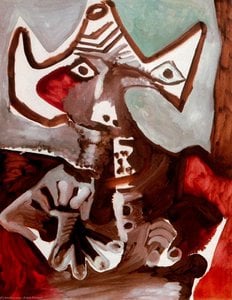
Abhorrence av Július Nemčík, håndmalt oljemaleri-reproduksjon av en mesterkunstner
Forhåndsvisning Se i AR Bytt til trykk Bytt til digitalt bilde Send
Vis detaljer Utskriftsvennlig guide Legg til i favoritter Last ned bilde Liknende objekter Røntgenundersøkelse Lysbildefremvisning Spørsmål og svar Last ned presentasjon Statistikk

Abhorrence Håndmalt oljemalerireproduksjon

Explore the haunting & symbolic art of Gyula Hincz (1904-1986). Dark, surreal paintings evoke themes of superstition, apocalypse & the grotesque. Discover his unique WahooArt vision.

Kunstverket som vises på denne siden er beskyttet av opphavsretten, noe som betyr at vi ikke har juridisk tillatelse til å lage eller selge identiske reproduksjoner. Denne beskyttelsen håndheves i henhold til internasjonale avtaler som for eksempel Bernerkonvensjonen og av nasjonale lover, inkludert de som er fastsatt i Amerikansk lov om opphavsrett – Tittel 17.

Som et respektfullt og lovlig alternativ tilbyr vi skreddersydde, håndmalte kunstverk inspirert av originalen. Våre dyktige og profesjonelle kunstnere studerer nøye originalens stil, stemning og kunstneriske essens for å skape et nytt og unikt verk som vekker den samme følelsen – samtidig som det forblir en original skapelse i seg selv.

Denne metoden er i fullt samsvar med opphavsrettslige regler, da den ikke innebærer kopiering eller duplisering av det beskyttede kunstverket. I stedet er det snakk om en kreativ nytolkning – et nytt maleri som er inspirert av originalen, men ikke identisk med den.

Håndlaget oljereproduksjon

Håndmalt olje på lerret i din valgte størrelse og ramme, laget på bestilling av våre kunstnere. ( Bytt til trykk Bytt til digitalt bilde)

Standardformat
skreddersydd
CM
INCH

Velg mellom våre forhåndsdefinerte størrelser som bevarer kunstverkets opprinnelige proporsjoner.

bredde
høyde

Skriv inn ønsket bredde og høyde for å tilpasse bildet til din ramme eller vegg. Siden dette er håndmalt, kan kunstneren male litt mer rundt motivet eller beskjære det noe dersom du velger et annet format — valget er ditt. Vi sender deg en digital mockup til godkjenning før maleriet påbegynnes. Bildet som vises på denne siden representerer ikke det faktiske resultatet — kun mockuppen viser det endelige uttrykket.

Eksempler på hva som kan endres: Erstatt ansikt med bilde av kunden; Legg til kjæledyr (f.eks. bytt ut katt med hund); Inkluder en skjult melding i bakgrunnen; Endre bakgrunnslandskap eller elementer.
Etter bestilling vil WahooArt.com-teamet sende e-post til kunden for instruksjoner og sende et utkast (mockup) som forhåndsvisning.

Verdensomspennende levering () på 3–4 uker i stedet for standard 5 uker. (13 November). Ingen kompromisser med kvaliteten.

Gratis ekspressfrakt over hele verden
Lerretsduk av lin av høy kvalitet
Full transportforsikring
Garanti for refusjon av toll og importavgifter
Garantert fargegjengivelse
100 dagers returrett ved fabrikasjonsfeil
100% pengene tilbake-garanti
Rabatt ved flere kjøp

Totalpris

Nkr 2584

Abhorrence

Trykkmetode

Størrelse på reproduksjon

-

Totalpris for valgte alternativer

Nkr 2584


Om kunstneren

The Visionary Shadows of Gyula Hincz

In the annals of Central European modernism, few names evoke as much psychological intrigue as Gyula Hincz. Born in Budapest in 1904, Hincz emerged not merely as a painter, but as a cartographer of the subconscious. His journey began within the prestigious halls of the Hungarian Academy of Fine Arts, where he studied under masters such as Gyula Rudnay and János Vasary. Yet, while his formal training provided a foundation in classical technique, his spirit was restless, seeking the frontiers of the avant-garde. By the late 1920s, through pivotal travels to Berlin and encounters with figures like Herwarth Walden and László Moholy-Nagy, Hincz began to weave together a tapestry of influences that would become uniquely his own—a synthesis of Cubism, Futurism, and the burgeoning Surrealist movement.

Hincz’s artistic evolution was marked by an extraordinary ability to absorb diverse global aesthetics. He was a chameleon of style, capable of translating the structural rigor of Cubism and the dynamic energy of Futurism into a deeply personal visual language. His time in Paris in 1926 served as a transformative encounter with Surrealism, an influence that would permeate his work for decades. He did not merely mimic the movement; he internalized its fascination with dreams and the uncanny. This was further enriched by his profound appreciation for Far Eastern art, particularly the delicate precision of Japanese woodcuts and ink paintings, which allowed him to balance grotesque intensity with a refined, almost meditative, graphic clarity.

Symbolism and the Surrealist Landscape

To enter a Hincz canvas is to step into a world where the boundaries between reality and nightmare are perpetually blurred. His work from the Surrealist period is famously characterized by its unsettling motifs and symbolic depth. He often utilized imagery of decay—most notably through the recurring, haunting presence of insects like lice—to serve as potent emblems of human vulnerability and the pervasive anxieties of the modern age. His landscapes were rarely pastoral; instead, they were often desolate, apocalyptic vistas populated by distorted figures engaged in ritualistic, bizarre behaviors that mirrored the fractured psyche of a continent caught between two World Wars.

The emotional weight of his compositions was frequently amplified by a masterful command of color and light. Hincz favored a dramatic palette, where deep blacks and stark whites clashed with visceral reds and ochre yellows to heighten the sense of drama and tension. His technical prowess extended far beyond the oil canvas; he was a gifted printmaker, sculptor, and poster designer whose graphic works possessed a painting-like intimacy. Whether through the meticulous detail of an etching or the bold, expressive strokes of a tempera piece, Hincz maintained a singular focus on the human condition, exploring themes of superstition, mortality, and the darker recesses of social interaction.

Legacy and Artistic Triumph

As his career progressed, Hincz’s work continued to expand in scope and complexity. His later years saw him exploring new thematic territories, including a fascinating series inspired by his travels through Korea, China, and Vietnam, as well as more enigmatic explorations of African themes during the 1960s. Despite the shifting political landscapes of post-war Hungary, Hincz remained a steadfast figure of intellectual and artistic vitality. His contributions to the Hungarian art scene were recognized with the highest honors, including the prestigious Kossuth Prize in 1958 and the Munkácsy Award.

Beyond his individual canvases, Hincz left an indelible mark on the institution of art itself, serving as a teacher at the Hungarian College of Fine Arts and as the director of the Hungarian Academy of Applied Arts. His legacy is defined by a rare versatility:

  • Technical Mastery: An ability to unite Mannerism, Classicism, and modern abstraction into a cohesive style.
  • Cultural Bridge-Building: Bringing the radical manifestos of Parisian Surrealism to the heart of Hungary.
  • Graphic Innovation: Elevating poster design and book illustration to the status of fine art.
Today, Gyula Hincz is remembered not just as a practitioner of a specific movement, but as a visionary who dared to confront the grotesque and the sublime, leaving behind a body of work that continues to haunt and inspire the modern imagination.

Július Nemčík

Július Nemčík

1909 - 1986 , Slovakia

Kort om kunstneren

  • Full Name: Gyula Hincz
  • Nationality: Hungarian
  • Date Of Birth: 1904
  • Date Of Death: 1986
  • Place Of Birth: Budapest, Hungary
  • Notable Artworks:
    • Dream in the Luxembourg Garden
    • The Water of Cleanness
    • The Louse, The Rider of Apocalypse
  • Artistic Movement Or Style: Surrealism Expressionism
  • Artists Who Influenced This Artist:
    • Franz Kafka
    • August Sander