


Håndmalt olje på lerret i din valgte størrelse og ramme, laget på bestilling av våre kunstnere. ( Kjøp trykk Kjøp bilde)





























Velg mellom våre forhåndsdefinerte størrelser som bevarer kunstverkets opprinnelige proporsjoner.

Du kan angi egne mål for å tilpasse en spesifikk ramme eller plass. Dersom den valgte størrelsen ikke samsvarer med originalbildets proporsjoner, vil vi enten beskjære kunstverket eller utvide maleriet med ytterligere håndmalte elementer. En digital mockup vil bli sendt til din godkjenning før produksjonen starter.
Vennligst merk at forhåndsvisningen på skjermen ikke gjenspeiler den faktiske beskjæringen eller utvidelsen. Kun mockuppen vil vise den endelige komposisjonen nøyaktig.
Selv om tilpassede størrelser er tilgjengelige, anbefaler vi å velge et mål fra den forhåndsdefinerte listen for å bevare de originale proporsjonene.
Verdensomspennende levering () på 3–4 uker i stedet for standard 5 uker. (6 September). Ingen kompromisser med kvaliteten.


Friends (Water serpants)
Størrelse på reproduksjon
Gustav Klimt’s “Friends,” completed in 1907, stands as a cornerstone of Austrian Symbolism and embodies the artistic fervor of its era. More than just a depiction of two women embracing—though their intimate connection is undeniably palpable—the painting operates on multiple levels, layering visual richness with profound mythological references and exploring themes of duality and spiritual harmony.
Painted during Klimt’s prolific period at the University of Vienna, commissioned to adorn the Great Hall's ceiling, “Friends” immediately drew controversy. Critics denounced its opulent ornamentation as vulgar and decadent, accusing Klimt of exploiting female nudity for purely sensual gratification. Despite this initial backlash—a testament to the daring artistic vision of the time—the painting endured, securing its place within the canon of Symbolist art.
The painting's symbolism is steeped in classical mythology, specifically referencing Homer’s epic poem “Odysseus.” The two women are positioned as representations of the sirens—mythical creatures who lured sailors off course with irresistible songs—a motif that speaks to the allure of temptation and the struggle between reason and desire. Klimt skillfully juxtaposes smooth, flowing surfaces representing feminine beauty with textured areas symbolizing masculine strength, mirroring Odysseus’s perilous journey home.
Furthermore, the inclusion of birds, fish, and stars contributes to a broader tapestry of symbolic imagery. Birds symbolize aspiration and freedom, while fish represent fertility and regeneration—elements interwoven into Klimt's vision of harmonious union. The scattered stars evoke notions of divine guidance and eternal beauty, elevating “Friends” beyond mere portraiture.
"Friends" transcends its formal constraints to convey a powerful emotional resonance. Despite the criticisms leveled against it during its time, Klimt’s masterpiece continues to captivate viewers with its exquisite craftsmanship and evocative symbolism. The shimmering gold leaf captures the viewer's gaze, inviting contemplation on themes of love, desire, and spiritual transcendence—a testament to Klimt’s enduring legacy as one of Austria’s most celebrated artists.


1862 - 1918 , Østerrike
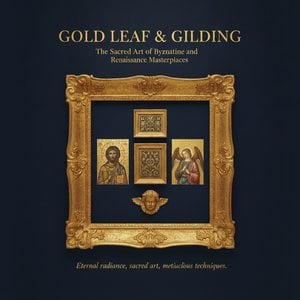
Explore the divine mastery of Byzantine gold leaf and gilding. Discover how ancient artisans used gold ground and mosaics to create celestial light, a timeless legacy of spiritual splendor and technical excellence in sacred art history.

Embark on a visual journey through the world's most radiant masterpieces. Discover how gold leaf, impasto textures, and gilded tones define luxury in fine art, from Byzantine icons to modern abstracts. Explore the eternal allure of gold in curated, museum-quality art collections.

Explore the profound impact of the Vienna Secession movement. Discover how visionaries like Gustav Klimt revolutionized modern art through symbolism, gold leaf, and bold ornamentation in this deep dive into the aesthetic revolution that redefined the visual landscape of Europe.
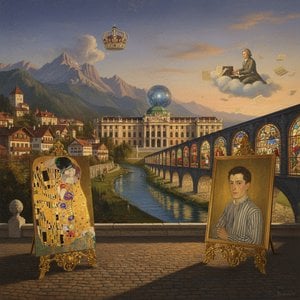
Embark on a sophisticated journey through Austrian art history. Explore the golden brilliance of Gustav Klimt and the elegance of the Vienna Secession through an expert lens, celebrating the enduring soul of Central European masterpieces.

Embark on a sophisticated journey through the splendor of Austrian art. From Gustav Klimt’s golden masterpieces to the elegance of the Viennese Secession, discover the history and symbolism behind Europe's most iconic works for the discerning collector.

 Forhåndsvisning
 Send
Send Del med andre
 Vis detaljer

 Last ned bildet
 Liknende objekter
 Røntgenundersøkelse
 Lysbildefremvisning

 Vis hele teksten







 Glassalternativet er kun tilgjengelig i størrelser under 110 cm


