Om kunstneren
Gustav Klimt: En gyllen epokes mester
Gustav Klimt, født 14. juli 1862 i Baumgarten nær Wien, representerer en av de mest ikoniske skikkelsene innenfor kunsthistorien. Hans navn er synonymt med Jugendstilen og Wiener Secession, men hans kunstneriske reise var langt mer kompleks enn bare dekorative mønstre og forgylling. Klimts liv var preget av både artistisk briljans og personlige utfordringer, noe som gjenspeiles i hans verk som utforsker temaer som kjærlighet, død, seksualitet og den menneskelige psyke med en sjelden intensitet. Familien Klimt levde under beskjedne kår; faren, Ernst Klimt, var gullgraver, et håndverk som skulle komme til å forme Gustavs estetiske sans på subtile, men dyptgripende måter – fascinasjonen for bladgull, den omhyggelige detaljrikdommen og selve overdådigheten. Familien flyttet ofte rundt i Wien, en oppvekst som kanskje bidro til Klimts skarpe observasjonsevne og følsomhet overfor menneskelige erfaringer. Allerede som barn viste han et bemerkelsesverdig tegnetalent, pleiet av faren og en medfødt begavelse som raskt ble åpenbar. I 1876 begynte han på Kunstgewerbeschule Wien (Skolen for anvendt kunst), hvor han fikk formell opplæring i arkitekturmaleri under Ferdinand Laufberger. Dette ga ham et solid teknisk fundament, men eksponerte ham også for de rådende akademiske stilene – stiler Klimt senere skulle utfordre og overskride. Det var her han inngikk et viktig kunstnerisk partnerskap med broren Ernst og Franz von Matsch, et samarbeid som sikret tidlige oppdrag for dekorative veggmalerier og tak, og la grunnlaget for hans fremtidige suksess.
Opprør mot konvensjonene: Wiener Secession
På 1890-tallet ble Klimt stadig mer desillusjonert over det konservative kunstmiljøet i Wien. Han lengtet etter større kreativ frihet, et rom hvor innovasjon kunne blomstre uten tradisjonens begrensninger. Denne lengselen kulminerte i dannelsen av Wiener Secession i 1897, et vendepunkt i østerriksk kunsthistorie. Klimt ble valgt til foreningens første president og ble frontfiguren for en bevegelse som søkte å bryte med de rigide akademiske normene og omfavne nye kunstneriske strømninger som feide over Europa – Jugendstilen, symbolismen og japansk kunst. Secessions eget utstillingsbygg, designet av Joseph Maria Olbrich, ble et symbol på dette opprøret, et tempel dedikert til moderne kunst. Klimts arbeid var sentralt i Secessions ethos, legemliggjorde forkastelsen av konvensjonell estetikk og omfavnelsen av dekorative elementer, dristige farger og symbolsk billedbruk. Hans malerier begynte å utforske temaer som kjærlighet, død og seksualitet med en utenkelig åpenhet, utfordret samfunnsnormer og provoserte både beundring og harme. Han ønsket å skape en *total kunst*, hvor alle kunstarter – maleri, arkitektur, design – samarbeidet for å danne et harmonisk helhetsinntrykk.
Den gyldne perioden: En ny visuell språkdrakt
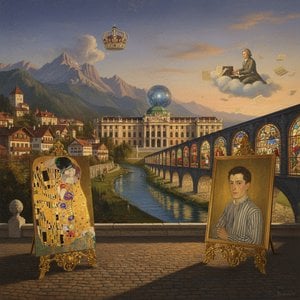
Rundt år 1900 gikk Klimt inn i det som nå er kjent som hans “gyldne periode”, en tid preget av den overdådige bruken av bladgull, inspirert av bysantinske mosaikker og middelalderske illuminerte manuskripter. Denne teknikken forvandlet maleriene hans til skimrende, overjordiske visjoner, fylt med en følelse av åndelig dybde og sensuell lokking. Kysset (1907-1908), kanskje hans mest ikoniske verk, er et fremragende eksempel på denne stilen – et par låst i en omfavnelse, omsluttet av en gyllen aura, kroppene deres utsmykket med intrikate mønstre. I denne perioden produserte Klimt også en rekke fantastiske portretter, inkludert *Portrett av Adele Bloch-Bauer I* (1907), som viste hans evne til å fange ikke bare fysisk likhet, men også den psykologiske kompleksiteten hos sine modeller. Han visket stadig ut grensene mellom maleri og ornamentikk, integrerte dekorative elementer i komposisjonene sine for å skape en harmonisk fusjon av form og innhold. Påvirkningen fra japansk kunst – *Japonismen* – var særlig tydelig i hans flate perspektiv, vektlegging av linjer og bruk av dekorative mønstre. Klimt brukte gull ikke bare som et visuelt element, men også som en måte å formidle en følelse av det sublime, det hellige og det uoppnåelige.
Kontroverser, inspirasjoner og varig arv
Klimts karriere var ikke uten kontroverser. I 1900 mottok han et prestisjefylt oppdrag om å male takmalerier for den store hallen i Universitetet i Wien, som skulle representere Filosofi, Jurisprudence og Teologi. Imidlertid ble disse verkene – spesielt *Filosofi* – ansett for å være provoserende og til og med pornografiske av konservative kritikere, noe som førte til offentlig opprør og til slutt fikk Klimt til å avslå ytterligere offentlige oppdrag. Denne hendelsen markerte et vendepunkt i hans karriere, presset ham mot mer privat patronage og ga ham større kunstnerisk frihet. Gjennom hele livet var Klimt påvirket av en rekke forskjellige artister og stiler – fra Hans Makarts historiemalerier til den dekorative kunsten i Bysants og Japan. Han hentet også inspirasjon fra symbolismen, utforsket temaer som mytologi, allegori og det underbevisste. Gustav Klimt fortsatte å male flittig frem til sin død 6. februar 1918, av et slag under spanskesykeepidemien. Hans senere verk utforsket mer abstrakte former og landskap, noe som demonstrerte en kontinuerlig kunstnerisk utvikling. Han er nå anerkjent som en av de viktigste figurene i østerriksk kunsthistorie, en ledende eksponent for Wiener Secession, og et varig symbol på Jugendstilens eleganse. Hans malerier oppnår høye priser på auksjoner, og hans innflytelse fortsetter å resonere i samtidskunsten og designet. Klimts arbeid utfordrer oss til å se skjønnhet i det uventede, å omfavne sensualitet og å utforske de dypeste lagene av den menneskelige erfaringen.



 Forhåndsvisning
 Bytt til trykk
 Send
Send Del med andre
 Vis detaljer

 Last ned bildet
 Liknende objekter
 Røntgenundersøkelse
 Lysbildefremvisning
 Statistikk


 Vis hele teksten






































 Glassalternativet er kun tilgjengelig i størrelser under 110 cm