En Florentinsk Reise: Giovanni da Milanos Liv og Kunst
Giovanni da Milano, et navn som klinger mykt i italiensk renessansekunsts annaler, representerer et avgjørende øyeblikk – en bro mellom den grasiøse lyrikken i gotisk kunst og den spirende naturalismen som skulle definere renessansen. Født Giovanni di Jacopo di Guido da Caversaccio i Lombardia rundt 1346, utfoldet hans kunstneriske reise primært innenfor det pulserende kulturelle landskapet i Firenze under en tid med enorme endringer og innovasjon. Selv om livet hans ble tragisk forkortet av døden i 1369, etterlot han seg et relativt lite, men dyptgripende verk som er ubestridelig viktig for utviklingen av italiensk maleri. De tidligste dokumenterte sporene av hans tilstedeværelse dukker opp i florentinske arkiver fra 17. oktober 1346, hvor han er listet som Johannes Jacobi de Commo blant utenlandske malere bosatt i Toscana – et bevis på den magnetiske tiltrekningen Firenze utøvde på kunstnere som søkte nye muligheter og et blomstrende kunstmiljø. Denne flyttingen antyder en bevisst streben etter fremgang, forlate sine lombardiske røtter for å fordype seg i sentrum av kunstnerisk innovasjon.
Giotto’s Ekkos: Stil og Innflytelser
Giovanni da Milanos stil er uatskillelig knyttet til Giotto di Bondones, den revolusjonære kunstneren som allerede hadde begynt å bryte ned konvensjonene i middelalderens maleri tiår tidligere. Han var ikke bare en kopist; snarere absorberte han Giottos innovasjoner – vektleggingen av naturalistisk representasjon, emosjonell uttrykksfullhet og romlig dybde – og filtrerte dem gjennom sin egen kunstneriske følsomhet. Hans malerier viser et klart forsøk på å bevege seg bort fra de stiliserte figurene og flate perspektivene i gotisk kunst, og heller strebe etter en større grad av realisme i fremstillingen av menneskelige former og formidle ekte følelser gjennom ansiktsuttrykk og gester. Dette søket er tydelig i den nøye modelleringen av draperier, de subtile nyansene av lys og skygge, og den generelle følelsen av vekt og volum som kjennetegner figurene hans. Han arbeidet ikke i isolasjon; Giovanni samarbeidet med andre fremtredende kunstnere på sin tid, inkludert Giottino – Giottos egen sønn – og sønnene til Taddeo Gaddi, noe som ytterligere eksponerte ham for banebrytende kunstneriske tilnærminger og bidro til hans stilistiske utvikling. Disse samarbeidene fremmet et dynamisk utvekslingssted av ideer som formet hans unike visjon. Selv om han var dypt gjeldende Giotto, avslører Giovanni også hint av Sienese innflytelse, spesielt i sin delikate bruk av farger og raffinerte detaljer, noe som antyder et bredere engasjement med de ulike kunstneriske strømmene som sirkulerte i hele Italia.
Mesverker og Kunstnerisk Arv
Til tross for en kort karriere, etterlot Giovanni da Milano seg flere betydelige verk som viser hans utviklende stil og tekniske ferdigheter.
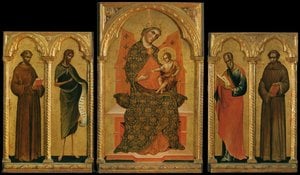
Ognissanti Polyptyk, spesielt de laterale panelene, som befinner seg i Galleria degli Uffizi i Firenze, står som et utmerket eksempel på hans modne arbeid. Den nøye oppmerksomheten på detaljer innenfor denne religiøse konteksten er slående, og demonstrerer hans evne til å gi hellige emner en følelse av menneskelig verdighet og emosjonell resonans. Andre bemerkelsesverdige verk inkluderer
Madonna and Child with Donors, et fantastisk tidlig renessansemesterverk som eksemplifiserer naturalisme og fromhetsskjønnhet i lombardisk kunst, og den hjerteskjærende
St Francis of Assisi, preget av sin rolige komposisjon, jordnære toner og symbolske dybde.
Coronation of the Virgin, et maleri som viser intrikate detaljer og symbolsk skjønnhet, befester ytterligere hans plass i kunstlandskapet fra den perioden. Hans fresker i Rinuccini-kapellet i Santa Croce, Firenze – spesielt de som skildrer scener fra jomfru Marias liv og Maria Magdalenas liv – avslører en mesterlig kommando over narrativ komposisjon og uttrykksfull figurering.
En Overgangsfigur
Giovanni da Milanos historiske betydning ligger i hans rolle som en avgjørende overgangsfigur innenfor den proto-renessansen. Han var ikke en revolusjonær som Giotto, men han syntetiserte dyktig eksisterende kunstneriske tradisjoner samtidig som han subtilt presset grensene mot større naturalisme og emosjonell dybde. Han banet vei for senere renessansekunstnere ved å demonstrere kraften i observasjon, viktigheten av menneskelige følelser og potensialet til maleri for å formidle komplekse fortellinger. Hans arbeid legemliggjør det utviklende kunstlandskapet i 1400-tallets Italia – en periode preget av en økende interesse for klassisk antikk, et fornyet fokus på humanisme og en gradvis overgang fra de rigide konvensjonene i middelalderkunsten. Selv om livet hans var tragisk kort, lever Giovanni da Milanos arv videre som et bevis på kraften i kunstnerisk innovasjon og den varige appellen til skjønnhet, tro og menneskelig uttrykk. Hans malerier fortsetter å fange seere med sin delikate nåde, emosjonelle intensitet og dype åndelige resonans, og gir et innblikk i et avgjørende øyeblikk i vestlig kunsts historie.
Videre Utforskning
- Museum San Giovanni in Siena: Huser en imponerende samling som inkluderer verk av Giovanni da Milano sammen med kunstnere som Lorenzo Ghiberti og Domenico di Pace Beccafumi.
- The Metropolitan Museum of Art: Viser "Madonna and Child with Donors", og gir innsikt i hans stil og teknikk.
- Web Gallery of Art (WGA): Gir en omfattende biografi og tilgang til digitaliserte bilder av hans kunstverk.



 Forhåndsvisning
 Bytt til trykk
 Send
Send Del med andre
 Vis detaljer
 Veiledning

 Last ned bildet
 Liknende objekter
 Røntgenundersøkelse
 Lysbildefremvisning
 Statistikk


 Vis hele teksten






































 Glassalternativet er kun tilgjengelig i størrelser under 110 cm