Forhåndsvisning Se i AR Kjøp håndlaget maleri Bytt til digitalt bilde Send
Vis detaljer Legg til i favoritter Last ned bildet Liknende objekter Røntgenundersøkelse Lysbildefremvisning Statistikk

Warwick Castle

Admire Canaletto's masterful depiction of Warwick Castle’s renovation project – a vibrant panorama showcasing Capability Brown’s landscape enhancements and the bustling activity of the era.

"NorwegianMetaDescription": "Canaletto var en italiensk maler kjent for sine fantastiske vedute-malerier av Venezia og London. Hans nøyaktige detaljer og bruk av kamera obscura gjør ham til en viktig figur i 1800-tallets kunst."

Giclée / Kunsttrykk

Giclée- eller lerretsprint av museumskvalitet med rask produksjon og fleksible valgmuligheter for etterbehandling. ( Kjøp håndlaget maleri Bytt til digitalt bilde)

P118B $10
P118H $10
P118W $10
P438Z $10
P508JH $12
P508YH $12
P805H $10
P805Z $10
P919BZ $10
P919G $10
P919XJ $10
P959ZH $10
P968JZ $12
W106C $8
W218G $10
W218JH $8
W218Y $10
W307PJ $10
W316G $10
W316PJ $8
W316Y $10
W398PJ $8
W4111J $10
W500HY $15
W500JH $15
W692G $12
W849H $8
W940BG $15
W953PJ $8

Standardformat
skreddersydd
CM
INCH

Velg mellom våre forhåndsdefinerte størrelser som bevarer kunstverkets opprinnelige proporsjoner.

bredde
høyde

Du kan oppgi egne mål for å tilpasse en spesifikk ramme eller et bestemt område. Dersom den valgte størrelsen ikke samsvarer med det originale bildets proporsjoner, vil vi enten beskjære kunstverket eller utvide bildet med en speilet eller ensfarget kant. En digital mockup vil bli sendt til din godkjenning før produksjonen starter.
Vennligst merk at forhåndsvisningen på skjermen ikke gjenspeiler den faktiske beskjæringen eller utvidelsen. Kun mockuppen vil vise den endelige komposisjonen nøyaktig.
Selv om tilpassede størrelser er tilgjengelige, anbefaler vi å velge et mål fra den forhåndsdefinerte listen for å bevare de originale proporsjonene.

Verdensomspennende levering () på 2 uker i stedet for standard 4/5 uker. (17 September)

why_choose_icon
Gratis ekspressfrakt over hele verden
why_choose_icon
Lerretsduk av høykvalitets lin
why_choose_icon
Full forsikring under transport
why_choose_icon
Garanti for refusjon av toll og importavgifter
why_choose_icon
Garantert korrekt fargegjengivelse
why_choose_icon
100 dagers returrett (kun ved mangler)
why_choose_icon
100% pengene tilbake-garanti
why_choose_icon
Rabatt ved flere kjøp

Totalpris for bestilling

$ 68

reproduction

Warwick Castle

Giclée / Kunsttrykk

Størrelse på reproduksjon

-

Endelig pris

$ 68

Kort om verket

  • Medium: Oil on canvas
  • Influences: Capability Brown
  • Title: Warwick Castle
  • Dimensions: 37 3/4 × 56 1/4 × 3 1/2 inches (95.9 × 142.9 × 8.9 cm)
  • Artistic style: Topographical
  • Year: 1749
  • Subject or theme: Castle Architecture; Landscape Gardening

Kunstighetsquiz

Det er kun ett riktig svar på hvert spørsmål.

Spørsmål 1:
What is the title of the artwork depicted?
Spørsmål 2:
In what year was this painting created?
Spørsmål 3:
Which artist is credited with creating this work?
Spørsmål 4:
What element suggests the castle was once used for transportation or defense in the scene?
Spørsmål 5:
Canaletto is known for developing a signature style of painting, which is best described as:

A Glimpse into English Grandeur: Warwick Castle by Canaletto

To gaze upon this depiction of Warwick Castle is to be transported across the centuries, standing at the confluence of medieval might and Rococo elegance. Painted in 1749, this work captures more than just stone and mortar; it encapsulates a moment in time when history was both preserved and presented for admiration. Canaletto, the master chronicler of Italian light and grand vistas, brought his unparalleled skill to document this magnificent English landmark. The sheer scale suggested by the many towers and turrets speaks to centuries of strategic importance, making the castle itself a monumental subject worthy of such detailed artistic reverence.

The Artistry of Topographical Mastery

Canaletto’s signature style shines through with breathtaking clarity. While he is perhaps most famous for his luminous portrayals of Venice, his ability to render architectural grandeur in any setting remains evident here. Observe the meticulous detail applied to the stonework; every angle and curve seems captured with scientific precision, yet it breathes with life. The composition is masterfully balanced, drawing the eye from the foreground activity—the strolling figures suggesting leisurely promenade—back towards the imposing bulk of the castle itself. This technical brilliance allows the viewer to appreciate both the solid permanence of the architecture and the ephemeral nature of human life passing before it.

Life in the Courtyard: Narrative and Atmosphere

What elevates this piece beyond mere architectural record is the vibrant sense of narrative woven throughout the scene. The inclusion of several people meandering through the grounds suggests a day of pleasure, perhaps during a grand festival or royal visit. Further enhancing this liveliness are the birds soaring in the azure sky, their flight adding a delicate, airy counterpoint to the heavy stone below. Even the presence of a boat upon the water hints at the castle's enduring connection to its surrounding waterways—a vital artery for both defense and daily commerce. It is a scene brimming with implied sound: the murmur of conversation, the cry of gulls, and the gentle lapping of water against ancient foundations.

A Timeless Echo for Modern Spaces

For the collector or designer seeking to infuse a space with depth, history, and unparalleled artistry, this reproduction offers profound resonance. It speaks to an appreciation for enduring beauty—the kind that withstands the passage of time. Imagine this piece gracing a drawing-room or library; it acts as a sophisticated conversation starter, inviting contemplation on eras past. Canaletto’s ability to marry documentary accuracy with romantic atmosphere ensures that the artwork feels both scholarly and deeply emotional, making it a centerpiece that anchors any grand interior design scheme.


Om kunstneren

Early Life and Artistic Foundations

Giovanni Antonio Canal, more widely known as Canaletto, emerged from the vibrant heart of Venice in 1697 – a city steeped in art, trade, and a unique blend of grandeur and everyday life. Born into a family deeply rooted in artistic tradition, his father, Bernardo Canal, was a skilled painter specializing in theatrical scene settings, providing young Giovanni with an early introduction to the world of visual representation. Artemisia Barbieri, his mother, further nurtured his creative spirit. Canaletto’s initial training wasn't within the formal confines of an academy but rather under the tutelage of his father, absorbing fundamental artistic principles and techniques. This formative period instilled in him a deep appreciation for observation, composition, and the skillful rendering of light and shadow – skills that would later define his distinctive style. Crucially, Canaletto’s early exposure to theatrical design ignited within him an interest in capturing dynamic scenes and portraying human activity with remarkable detail, laying the groundwork for his future success as a veduta painter.

The Roman Years and the Influence of Pannini

Following his apprenticeship, Canaletto embarked on a significant journey to Rome in 1718. This period proved pivotal in shaping his artistic development. He found himself profoundly influenced by Giovanni Paolo Pannini, a celebrated Venetian artist known for his meticulously detailed depictions of cityscapes – the *vedute*. Pannini’s approach, characterized by an emphasis on accurate perspective and a keen eye for capturing the nuances of urban life, served as a powerful model for Canaletto. He spent several years working alongside Pannini, learning to translate complex architectural forms and bustling street scenes onto canvas with remarkable precision. This immersion in Pannini's style instilled within Canaletto a dedication to topographical accuracy and a systematic approach to his work – a characteristic that would become synonymous with his name.

The Rise of the Veduta Painter in Venice

Upon returning to Venice, Canaletto swiftly established himself as a leading veduta painter, quickly gaining recognition for his ability to capture the essence of the city’s iconic landmarks and everyday scenes. Unlike earlier Venetian artists who primarily focused on religious or mythological subjects, Canaletto turned his attention to the urban landscape – the canals, palaces, bridges, and bustling streets that defined Venice's unique character. His paintings weren’t merely representations of these locations; they were carefully constructed compositions designed to evoke a sense of atmosphere, perspective, and the vibrant energy of Venetian life. He became particularly renowned for his depictions of public ceremonies and festivals, skillfully capturing the movement and excitement of crowds gathered in grand squares and along the canals.

Collaboration and Travel: The English Period

Canaletto’s success extended beyond Venice, attracting the attention of wealthy European collectors, most notably Joseph “Consul” Smith, an influential British merchant and art connoisseur. In 1740, Canaletto traveled to England, where he spent several years painting a series of stunning views of London and other prominent sites, including Warwick Castle and Alnwick Castle. This period marked a significant shift in his artistic style, as he adapted his techniques to suit the English landscape and incorporated elements of British architecture and social life into his compositions. His collaboration with his nephew, Bernardo Bellotto, who accompanied him on these journeys, further enriched his output, creating a cohesive body of work that showcased both their individual talents and shared artistic vision. The patronage of wealthy English collectors ensured Canaletto’s continued success and allowed him to refine his craft, solidifying his reputation as one of the most celebrated veduta painters of his time.

Legacy and Artistic Significance

Canaletto's legacy extends far beyond his own lifetime. His meticulous attention to detail, innovative use of perspective, and ability to capture the atmosphere of Venice profoundly influenced subsequent generations of artists, particularly those interested in landscape painting. His work is now celebrated in museums around the world, including the National Gallery in London, where it stands as a testament to his artistic skill and enduring appeal. Canaletto’s paintings offer a unique window into 18th-century Venice – a city brimming with life, commerce, and cultural richness. His legacy continues to inspire artists and art lovers alike, reminding us of the power of observation, composition, and the ability to capture the beauty and complexity of the world around us.

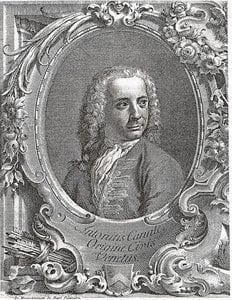
Canaletto

Canaletto

1697 - 1768 , Italia

Kort om kunstneren

  • Artistic Movement Or Style: Vedute Venezia
  • Artists Or Movements Influenced By This Artist: ['Giovanni Paolo Pannini']
  • Artists Who Influenced This Artist: ['Luca Carlevaris']
  • Date Of Birth: 18. oktober 1697
  • Date Of Death: 19. april 1768
  • Full Name: Giovanni Antonio Canal
  • Nationality: Italiensk
  • Notable Artworks:
    • Stenhuggerens gård
    • Regatta Canal Grande
    • Eton College
  • Place Of Birth: Venezia, Italia
Utforsk kunstverk organisert etter temaer, stiler og kjennetegn.