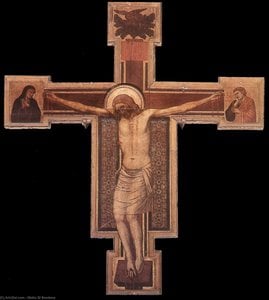
The Altar Cross by Gian Lorenzo Bernini: A Testament to Baroque Drama
Gian Lorenzo Bernini’s “Altar Cross,” crafted in 1657-61 and currently residing within the Treasury of St. Peter's Basilica, is more than just a religious object; it’s a breathtaking embodiment of the High Renaissance’s dramatic shift into the Baroque era. This magnificent bronze sculpture transcends its functional purpose as an altar piece, transforming into a dynamic tableau of faith, suffering, and divine grace. Bernini, already establishing himself as Rome's foremost sculptor, masterfully utilizes texture, movement, and emotional intensity to create a work that continues to captivate viewers centuries after its creation.
The sculpture depicts the crucified Christ, rendered with an unprecedented level of realism and pathos. The figure’s body, sculpted from gleaming bronze, is not idealized but rather imbued with the raw physicality of pain. Bernini meticulously captures the subtle details – the clenched muscles, the contorted limbs, the downward gaze – conveying a profound sense of agony while simultaneously radiating an aura of serene acceptance. Crucially, he avoids the static representation often found in earlier Christian art; Christ’s body appears to be caught mid-movement, as if enduring his final moments with agonizing intensity. This dynamism is further emphasized by the dramatic lighting within the Treasury, which casts long shadows and highlights the contours of the sculpture, intensifying its emotional impact.
A Masterclass in Baroque Technique
Bernini’s skill as a sculptor is immediately apparent in the sheer virtuosity displayed throughout the “Altar Cross.” He employs a technique known as *terrecotta*, using a clay-based material that he then fired to create a durable bronze. This method allowed him to achieve an astonishing level of detail and surface texture, particularly evident in the folds of Christ’s drapery and the intricate carvings on the cross's arms. The use of *lost wax casting* – a process where a wax model is created and then melted out to leave a mold into which molten bronze is poured – ensured that every curve and contour was perfectly rendered. Bernini wasn’t simply sculpting; he was manipulating metal with an almost alchemical precision, transforming cold, hard material into a vessel for profound emotion.
Furthermore, the sculpture's composition is brilliantly conceived. The cross itself isn’t merely a structural element but becomes an integral part of Christ’s body, visually merging with his limbs and torso. The small figures adorning the arms – angels or cherubs – are not static additions but seem to be caught in moments of empathetic sorrow, mirroring Christ's suffering. This interwoven design creates a powerful sense of unity and reinforces the sculpture’s central theme: the shared experience of pain and redemption.
Historical Context and Patronage
Bernini’s “Altar Cross” was commissioned during a period of immense artistic and political upheaval in Rome. The papacy, under Pope Alexander VII (and later Urban VIII), was actively engaged in commissioning monumental works of art to glorify the Church and assert its power. Bernini, as the papal sculptor, was at the heart of this artistic renaissance. His work served not only as religious iconography but also as a potent symbol of Rome’s enduring legacy and spiritual authority. The commission itself reflects the growing emphasis on emotional engagement within Christian art – a departure from the more austere styles of the preceding era.
The sculpture's placement within St. Peter's Basilica, specifically in the Treasury, further underscores its significance. The Treasury, traditionally used to store the Church’s wealth and sacred objects, provided an ideal setting for this dramatic centerpiece. It speaks to the intersection of faith, power, and artistic expression that defined Baroque Rome.
Symbolism and Emotional Resonance
Beyond its technical brilliance, the “Altar Cross” is rich in symbolic meaning. The crucifixion itself represents Christ’s sacrifice for humanity's sins – a central tenet of Christian belief. The downward gaze of Christ symbolizes humility and acceptance of his fate. The outstretched arms evoke the image of a loving embrace, offering salvation to all who believe. The angels or cherubs represent divine compassion and support. Bernini doesn’t simply depict a historical event; he conveys an emotional truth – the profound sorrow and ultimate hope associated with Christ's sacrifice. The sculpture invites contemplation on themes of suffering, redemption, and the enduring power of faith, making it a timeless masterpiece that continues to resonate with viewers today.



 Forhåndsvisning
 Bytt til trykk
 Send
Send Del med andre
 Vis detaljer

 Last ned bildet
 Liknende objekter
 Røntgenundersøkelse
 Lysbildefremvisning
 Statistikk


 Vis hele teksten