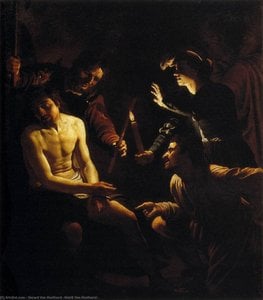
**en pioner innen nederlandsk sjangermaleri**
gerard ter borch, en fremtredende skikkelse i den nederlandske gullalderen, etterlot seg et uutslettelig spor i kunstverdenen med sine sjangermalerier. født i desember 1617 og bortgangen den 8. desember 1681, var ter borchs liv et vitnesbyrd om hans kunstneriske dyktighet.
**tidlig liv og påvirkninger**
ter borchs tidlige liv er ikke godt dokumentert, men det er kjent at han reiste omfattende gjennom europa, inkludert london, germany, frankrike, spania og italia. denne eksponeringen utvidet hans kunstneriske horisonter og preget hans unike stil. hans søster,
gesina ter borch, forfulgte også en karriere innen malerkunsten, noe som ytterligere befestet familiens kunstneriske tilbøyeligheter.
**bemmerkelsesverdige verk og bragder**
- **
the letter**: et mesterverk som viser ter borchs ferdighet i å fange tekstur og lys. - **
the gallant conversation**: gravert av johann georg wille, eksemplifiserer dette verket kunstnerens evne til å formidle nyanserte følelser. - **
man on horseback (1634)**: et tidlig verk som demonstrerer ter borchs fremvoksende talent. - **
adrian pauw's arrival in münster (1646)**: et betydningsfullt verk som fremhever kunstnerens narrative evner.
**museer og samlinger som inneholder ter borchs arbeid**
-
the hermitage: med seks av hans verk kan det skilte med en av de største samlingene. -
berlin museum: inneholder seks verk som viser ter borchs internasjonale appell. -
getty center: tre av hans malerier er en del av denne anerkjente samlingen.
**arv og betydning**
ter borchs innflytelse på nederlandske malere som gabriel metsu, gerrit dou, eglon van der neer og johannes vermeer er godt dokumentert. hans innovative tilnærming til sjangermaleriet har gjort ham til en sentral skikkelse i kunsthistorien.
gerard ter borchs varige ettermæle er et vitnesbyrd om hans innovative tilnærming til sjangermaleriet, som har påvirket generasjoner av kunstnere og sikret hans plass i kunsthistoriens annaler.



 Forhåndsvisning
 Bytt til trykk
 Send
Send Del med andre
 Vis detaljer

 Last ned bildet
 Liknende objekter
 Røntgenundersøkelse
 Lysbildefremvisning
 Statistikk


 Vis hele teksten






































 Glassalternativet er kun tilgjengelig i størrelser under 110 cm