Giclée- eller lerretsprint av museumskvalitet med rask produksjon og fleksible valgmuligheter for etterbehandling. ( Kjøp håndmalt maleri Bytt til digitalt bilde)





























Velg mellom våre forhåndsdefinerte størrelser som bevarer kunstverkets opprinnelige proporsjoner.

Skriv inn ønsket bredde og høyde for å tilpasse trykket til din ramme eller vegg. Et trykk kan kun beskjæres, aldri skaleres opp utover motivets opprinnelige størrelse, noe som betyr at et format med andre proporsjoner vil føre til tap av deler av bildet. Vi sender deg en digital mockup for godkjenning før vi starter trykkeprosessen. Bildet som vises på denne siden viser ikke den faktiske beskjæringen — det er kun mockuppen som viser dette.
Verdensomspennende levering () på 2 uker i stedet for standard 4/5 uker. (10 November)
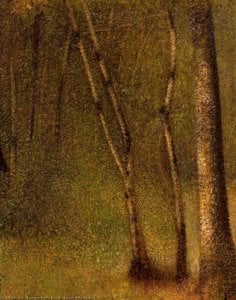
Man Dining
Størrelse på reproduksjon
Georges Pierre Seurat (1859-1891) stands as a monumental figure in the artistic landscape of late 19th century France, irrevocably altering perceptions of painting through his pioneering exploration of Pointillism. More than just a technique—though undeniably revolutionary—Pointillism represented a profound intellectual commitment to scientific principles and an unwavering dedication to capturing optical reality. Seurat’s brief but impactful career wasn't merely about applying pigment; it was about fundamentally reshaping how artists understood the relationship between perception and representation.
Seurat’s intellectual framework was inseparable from his artistic practice. He meticulously studied the work of Henri Poincaré, a mathematician who championed the idea that color perception is not simply how objects appear but rather how they are interpreted by the eye—a concept central to Pointillism's theoretical underpinning. This dedication to scientific rigor distinguishes Seurat’s approach from many of his contemporaries and underscores his conviction that art could benefit from incorporating insights into sensory experience.
“Man Dining” exemplifies Seurat’s early experiments with Pointillism, demonstrating a willingness to challenge established artistic conventions. While he would later refine the technique—particularly in monumental canvases like ‘A Sunday on La Grande Jatte’—this smaller study remains a testament to his foundational understanding of optical mixing and his unwavering commitment to capturing the essence of visual perception. It stands as an enduring symbol of Seurat's transformative contribution to modern art.
The artwork’s subdued palette and textured surface lend themselves beautifully to interior design projects seeking a calming, contemplative aesthetic. Consider incorporating reproductions in spaces where tranquility is valued—perhaps alongside complementary shades of grey or earthy tones—to evoke the same sense of quiet observation that characterizes Seurat's masterpiece.
En forhåndsvisning av "Man Dining" av Georges Seurat er tilgjengelig på kunstverkets Se kunstverket i et rom-side.
Anbefalt bruk av et trykk av "Man Dining" er Accent.
Georges Seurat er også kjent under navnene Georges Pierre Seurat, Surah, Suu-Rah.

For å forstå den moderne malerkunstens bane, må man betrakte det korte og intense livet til Georges Seurat. Han ble født i Paris, Frankrike, den 2. desember 1859, som sønn av Ernestine Faivre og Antoine Chrysostome Seurat, en mann som hadde gått fra å være embetsmann til å bli eiendomsspesulant i Champagne. Denne bakgrunnen ga stabiliteten som var nødvendig for hans raske og disiplinerte vei mot toppen av den parisiske kunstscenen. Han malte ikke bare; han konstruerte en helt ny måte å se på, som utfordret de spontane impulsene til hans forgjengere.
Karrieren hans var en spurt, ikke et maraton. Han døde i Paris, Frankrike, den 29. mars 1891, bare 31 år gammel. Denne for tidlige slutten etterlot et kunstnerskap som føles konsentrert og gjennomtenkt, uten den utstrakte og løse utviklingen man ser hos mange av hans samtidige. Selv hans siste, ufullstendige arbeider, slik som The Circus, avslører et sinn opptatt av lysets strukturelle mekanikk og den sosiale orden. Han erstattet det flyktige blikket med en kalkulert og permanent presisjon.
Inntrykket etter hans korte liv måles gjennom den enorme tettheten av hans tekniske nyvinninger. Han beveget kunsten bort fra øyeblikkets emosjonelle spontanitet og mot en systematisk, nesten matematisk anvendelse av farge. Hans tilstedeværelse i det nittende århundrets historie defineres av denne nektelsen mot å stole på intuisjonen alene. Han søkte en logikk i lerretet som forblir synlig i hvert eneste pigmentpunkt han etterlot seg.
Georges Seurats livsreise tok sin begynnelse i Paris, der familien flyttet til Boulevard de Magenta kort tid etter hans fødsel. Oppveksten ble formet av et stabilt miljø takket være hans far, Antoine Chrysostome Seurat, en tidligere juridisk embetsmann som hadde gått over til eiendomsspesulasjon. Denne bakgrunnen ga den unge kunstneren tilgang til den formelle utdannelsen som var nødvendig for å utfordre de etablerte normene i det sene 1800-tallet. Han stolte ikke på ren intuisjon; hans kunstneriske utvikling ble bygget på et fundament av rigorøs og systematisk trening.
Den formelle utdannelsen startet ved École Municipale de Sculpture et Dessin, hvor han studerte under billedhuggeren Justin Lequien. Denne tidlige eksponeringen for skulptur bidro sannsynligvis til den strukturelle, nesten relieffaktige kvaliteten man ser i hans senere komposisjoner. Innen 1878 hadde han beveget seg inn i de øvre sjikt av fransk kunstutdanning ved å melde seg på det prestisjetunge École des Beaux-Arts. I denne perioden studerte han under Henri Lehmann, en tid som inngav ham de tradisjonelle teknikkene og den komposisjonelle disiplinen som han senere skulle dekonstruere gjennom vitenskapelig analyse.
Georges Seurat erstattet sine forgjengeres spontane og intuitive penselstrøk med en kalkulert og systematisk tilnærming til lyset. Han utviklet punktillismen, en metode definert ved påføringen av små, distinkte prikker med ren farge på lerretet. Dette var ikke et dekorativt valg, men et funksjonelt ett. Ved å benytte divisjonisme, separerte han lokal farge i individuelle prikker og overlot det optiske blandingsarbeidet til betrakterens eget øye. Denne prosessen, som han betegnet som kromoluminarisme, behandlet farge som en vitenskap snarere enn bare en følelse. Han søkte å rekonstruere synets fysikk gjennom den presise plasseringen av pigment.
Hans presisjon strakte seg helt inn i det forberedende arbeidet. Han benyttet ofte conté-kritt på papir med grov overflate for å kartlegge komposisjonene sine. Denne disiplinerte metoden sikret at hver eneste prikk i hans monumentale hovedverk var en del av en større, matematisk orkestrert struktur. De resulterende overflatene besitter en rytmisk og vibrerende kvalitet som springer ut av spenningen mellom de individuelle fargepunktene og det helhetlige bildet de danner på retina. Hans kunstneriske virke står igjen som en studie i hvordan teknisk strenghet kan diktere den visuelle persepsjonen.
Georges Seurats visjon hvilte på en streng, matematisk tilnærming til lyset. Han forkastet sine forgjengeres spontane og emosjonelle penselstrøk til fordel for en systematisk rekonstruksjon av synsinntrykket. Denne metoden forvandlet lerretet til et sted for optisk beregning snarere enn bare ren observasjon. Hans kunst søkte å fange scenens essensielle, uforanderlige struktur gjennom en presis anvendelse av fargeteori. Han malte ikke bare et landskap; han konstruerte en visuell opplevelse basert på hvordan det menneskelige øyet prosesserer lys og pigment.
Hans storslåtte komposisjoner vitner om denne hengivenheten til orden. A Sunday Afternoon on the Island of La Grande Jatte (1884-1886) benytter en monumental skala for å presentere en scene av parisisk fritidsliv gjennom en tett mosaikk av prikker. Dette verket fungerer som et manifest for neo-impresjonismen, der flytende bevegelse erstattes av en følelse av permanent, skulpturell stillhet. På samme måte viser Bathers at Asnières (1884) hans tidlige evne til å forene klassiske, friseaktige figurer med den moderne, industrielle virkeligheten ved Seinen. Disse maleriene beviser at hans interesse lå i skjæringspunktet mellom vitenskapelig presisjon og det samtidige liv.
Selv hans siste, ufullstendige forsøk avslører en dyp fascinasjon for spenningen mellom bevegelse og struktur. The Circus (1890–91) bruker en neo-impresjonistisk stil for å skildre energien i et offentlig skuespill, men forblir likevel forankret i hans karakteristiske kontroll over formen. I Young Woman Powdering Herself (1889-1890) anvendte han teknikken sin på et enkelt motiv, hvor han utforsket menneskelig forfengelighet gjennom en høyst konstruert setting. Hans kunstneriske virke var en konstant streben etter å finne en logikk i lyset som det flyktige blikket i impresjonismen ikke kunne tilby.
Georges Seurats innvirkning på den moderne kunstens bane er målbar gjennom de radikale skiftene hans metoder tvang frem i påfølgende kunstretninger. Ved å erstatte sine forgjengeres intuitive penselstrøk med en systematisk og vitenskapelig tilnærming til farge og lys, utvidet han grensene for hva et maleri kunne oppnå. Denne intellektuelle strengheten flyttet kunsten bort fra ren representasjon og mot en strukturert analyse av persepsjon. Hans insistering på den optiske blandingen av pigmenter endret selve mekanikken i hvordan en betrakter samhandler med et lerret.
Ringvirkningene av hans tekniske innovasjoner strakte seg langt utenfor den ny-impresjonistiske sirkelen. Fauvistene adopterte hans vektlegging av dristige, ikke-naturalistiske farger, mens kubistene trakk veksler på hans evne til å dekonstruere former til geometriske komponenter. Selv de abstrakte ekspresjonistene, med sitt fokus på gestens rå energi, står i gjeld til måten han frigjorde fargen fra de tradisjonelle blandingsmetodenes begrensninger. Han beviste at kunst kunne være både en rigorøs intellektuell streben og en metode for å fange selve essensen av det moderne liv.
Noen av hans mest sentrale verk inkluderer:

1859 - 1891 , Frankrike

Explore the scientific brilliance of Seurat and Signac. Discover how Pointillism revolutionized color through optical mixing and light, offering a profound look into the Neo-Impressionist movement for true art connoisseurs and collectors.

Explore the vibrant evolution of Post-Impressionism. From Seurat's revolutionary Pointillism to the emotional depth of masters, discover how this movement redefined modern art history through color, structure, and unparalleled creative expression.
 Forhåndsvisning
 Send
Send Del
Del
 Vis detaljer
 Utskriftsvennlig guide

 Last ned bilde
 Liknende objekter
 Røntgenundersøkelse
 Lysbildefremvisning
 Spørsmål og svar
 Statistikk
 Vis hele teksten









 Glassalternativet er kun tilgjengelig i størrelser under 110 cm