Om kunstneren
En Livskraft Smidd av Smerte og Lidenskap
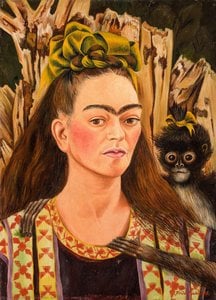
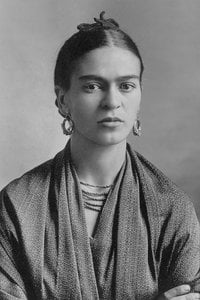
Magdalena Carmen Frida Kahlo y Calderón, kjent for verden som Frida Kahlo, var mer enn bare en kunstner; hun var en naturkraft, et trotsig sinn hvis liv ble uatskillelig vevd inn i hennes kunst. Født 6. juli 1907 i Coyoacán, Mexico by, var hennes eksistens preget av fysisk lidelse og emosjonell turbulens – erfaringer som til slutt drev den intense personlige og symbolske billedbruken hun er feiret for. Hennes far, Guillermo Kahlo, en tysk-meksikansk fotograf, fremmet hennes intellektuelle nysgjerrighet og kunstneriske anlegg fra tidlig alder. Men Fridas barndom ble skyggelagt av sykdom; da hun var seks år gammel, fikk hun polio, noe som ga henne en permanent halt og påvirket hennes fysiske utvikling. Dette tidlige møtet med sårbarhet og begrensning ville bli et tilbakevendende tema i hennes arbeid, forme hennes perspektiv på kroppen, smerte og motstandskraft. Selv før den ødeleggende ulykken som definerte mye av hennes kunstneriske bane, hadde Frida en skarp bevissthet om sin egen fysiske kropp og dens iboende skjørhet.
Den Knuste Kroppen, Den Blomstrende Kunsten
I 1925 forandret Fridas liv uopprettelig da hun ble involvert i en grusom bussekollision som etterlot henne med katastrofale skader – brudd på ryggraden, bekkenet og benet, blant annet. Innestengt til en langvarig periode med restitusjon, ofte sengeliggende og innhyllet i gipsbandasjer, vendte hun seg innover, fant trøst og uttrykk gjennom maling. Hennes mor sørget for et staffeli som var tilpasset bruk mens hun lå ned, og forvandlet begrensningene i hennes fysiske funksjonshemming til et rom for kunstnerisk utforskning. Det var i denne perioden at Frida begynte å utforske selvportretter med nådeløs intensitet. Ufør til å ferdes ut i verden, vendte hun blikket innover, dokumenterte nøye sitt eget bilde som et middel til å forstå og konfrontere sin smerte, både fysisk og emosjonell. Disse tidlige verkene var ikke bare representasjoner av hennes likhet; de var viscerale utforskninger av identitet, sårbarhet og den utholdende kraften i menneskelig ånd. Ulykken var ikke bare en tragedie; det var en katalysator som låste opp hennes kunstneriske potensial, tvang henne til å konfrontere sin egen dødelighet og finne mening i lidelse.
En Turbulent Forbindelse og Kunstnerisk Oppblomstring
Fridas liv tok et annet avgjørende sving i 1929 da hun giftet seg med den anerkjente meksikanske muralisten Diego Rivera. Deres forhold var en lidenskapelig, men turbulent affære, preget av intens kjærlighet, utroskap, kunstnerisk rivalisering og perioder med separasjon og forsoning. Til tross for den emosjonelle turbulensen, viste Rivera seg å være en betydningsfull innflytelse på Fridas kunstneriske utvikling. Han oppmuntret hennes unike visjon, ga konstruktiv kritikk samtidig som han anerkjente kraften og originaliteten i arbeidet hennes. Under hans veiledning, og gjennom sin egen nådeløse eksperimentering, begynte Fridas stil å ta form, blande elementer av meksikansk folkekunst, realisme og surrealisme til et distinkt visuelt språk. Hennes malerier ble stadig mer symbolske, utforsket temaer som identitet, menneskekroppen, smerte, død og kompleksiteten i kvinneopplevelsen. Hun unnlot ikke å skildre sin egen lidelse; snarere omfavnet hun den som et sentralt tema i sitt arbeid, forvandlet personlig traume til universelle uttalelser om menneskelig tilstand.
Symboler for Lidelse, Motstandskraft og Identitet
Frida Kahlo er kanskje best kjent for sine selvportretter, som er preget av deres nådeløse ærlighet og symbolske dybde. Verk som De to Fridas (1939), en kraftfull skildring av hennes doble identitet etter skilsmissen fra Rivera, viser hennes evne til å eksternalisere indre konflikt gjennom slående visuelle metaforer. Selvportrett med tornekjede og kolibri (1940) er fylt med symbolikk – torneene representerer smerte, kolibrien symboliserer håp og motstandskraft, og den svarte katten en varsler om ulykke. Den ødelagte søylen (1944), en hjerteskjærende skildring av hennes fysiske lidelse, viser Frida med åpnet overkropp for å avsløre en smuldrende jonisk søyle i stedet for ryggraden hennes, holdt sammen av stropper og gjennomboret av spiker. Selv Henry Ford Hospital (1932), en rå og dypt personlig skildring av aborten hennes, demonstrerer hennes vilje til å konfrontere tabubelagte emner med nådeløs ærlighet. Disse maleriene er ikke bare representasjoner av smerte; de er handlinger av trots, påstander om selvstendighet overfor motgang.
En Varig Arv
Frida Kahlos innflytelse strekker seg langt utover kunstens rike. Hun var en kulturell ikon som utfordret tradisjonelle kjønnsroller og samfunnets forventninger gjennom sitt liv og arbeid. Hennes omfavnelse av meksikansk kultur og identitet bidro til å øke dens profil på den internasjonale scenen, og hennes nådeløse skildring av smerte resonnerte med publikum over hele verden, noe som gjorde henne til et symbol på motstandskraft og styrke. Hun ble en viktig figur for Chicanos i USA, som representerte deres kulturelle arv og kamper. Selv om hun motsto å bli kategorisert som surrealist, deler arbeidet hennes likheter med bevegelsens utforskning av det underbevisste og drømmelignende bilder. I dag feires Frida Kahlo som en av de viktigste kunstnerne på 1900-tallet, hvis arv fortsetter å inspirere generasjoner til å omfavne sine identiteter, konfrontere motgang og uttrykke seg autentisk. Hennes kunst er et vitnesbyrd om den utholdende kraften i menneskelig ånd til å finne skjønnhet og mening selv i de mørkeste tider.



 Forhåndsvisning
 Switch to Print
 Send
Send Del med andre
 Vis detaljer

 Last ned bildet
 Liknende objekter
 Røntgenundersøkelse
 Lysbildefremvisning
 Stats
Stats


 Vis hele teksten






































 Glassalternativet er kun tilgjengelig i størrelser under 110 cm