


 Acrylic On CanvasWallArtRenaissance
 1515
1515 180.0 x 120.0 cm
 Gallerie dell’Accademia
Giclée- eller lerretsprint av museumskvalitet med rask produksjon og fleksible valgmuligheter for etterbehandling. ( Kjøp håndlaget maleri Kjøp bilde)





























Velg mellom våre forhåndsdefinerte størrelser som bevarer kunstverkets opprinnelige proporsjoner.

Du kan oppgi egne mål for å tilpasse en spesifikk ramme eller et bestemt område. Dersom den valgte størrelsen ikke samsvarer med det originale bildets proporsjoner, vil vi enten beskjære kunstverket eller utvide bildet med en speilet eller ensfarget kant. En digital mockup vil bli sendt til din godkjenning før produksjonen starter.
Vennligst merk at forhåndsvisningen på skjermen ikke gjenspeiler den faktiske beskjæringen eller utvidelsen. Kun mockuppen vil vise den endelige komposisjonen nøyaktig.
Selv om tilpassede størrelser er tilgjengelige, anbefaler vi å velge et mål fra den forhåndsdefinerte listen for å bevare de originale proporsjonene.
Verdensomspennende levering () på 2 uker i stedet for standard 4/5 uker. (7 September)


Seven caricatures
Størrelse på reproduksjon
Francesco Melzi’s “Seven Caricatures” stands as a poignant testament to the Renaissance fascination with human anatomy and psychological observation—a rare pen and ink study executed in 1515, capturing the essence of character through exaggerated features. Housed at the Gallerie dell'Accademia in Venice, Italy, this artwork transcends mere visual representation; it’s an invitation into a profound contemplation of humanity itself.
Francesco Melzi’s contribution to art history isn’t defined by grand canvases or revolutionary innovations. Instead, he secured Leonardo da Vinci’s legacy—a devoted pupil who meticulously documented and preserved the genius of his mentor. This dedication is palpable in “Seven Caricatures,” where Melzi skillfully employs a technique rooted in anatomical study, mirroring Da Vinci's own groundbreaking explorations.
The High Renaissance, flourishing during Melzi’s lifetime, prioritized humanist ideals—a shift away from medieval dogma toward an appreciation for human intellect and physicality. This intellectual climate fueled artists like Melzi to dissect the human form, striving to capture not just its appearance but also its inner workings. The resulting sketches are imbued with a palpable sense of concentration; each caricature is rendered with painstaking detail, reflecting the artist’s unwavering commitment to accuracy.
Beyond mere technical prowess lies a deeper symbolic resonance. Melzi's deliberate exaggeration—the oversized nose, diminutive mouth—isn’t simply playful distortion; it serves as a conduit for conveying complex emotions and psychological states. Consider the first figure: its prominent chin speaks volumes about confidence and self-assuredness, while the fifth embodies melancholy and introspection. These caricatures tap into universal human experiences – ambition, vanity, sorrow – mirroring Da Vinci's own explorations of emotion.
Comparing Melzi’s work to Da Vinci’s “Study of a Rider” reveals striking similarities in stylistic approach and conceptual underpinning. Both artists prioritized anatomical precision alongside expressive rendering—a hallmark of Renaissance art that sought to elevate observation beyond mere imitation. The subtle shading employed by Melzi creates depth and dimensionality, mirroring Da Vinci's masterful manipulation of chiaroscuro.
For those seeking inspiration or contemplating acquiring a high-quality reproduction, “Seven Caricatures” offers more than just an aesthetically pleasing image; it embodies the spirit of the Renaissance—a celebration of human intellect and artistic mastery. To delve deeper into Melzi’s oeuvre and Leonardo da Vinci's enduring influence, visit WahooArt.com’s page on the artist.


1491 - 1570 , Italia
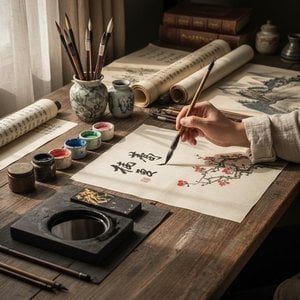
Embark on a sophisticated exploration of ink wash painting and Sumi-e. Uncover the profound historical lineages, Zen philosophies, and technical mastery behind this timeless medium in our authoritative guide for fine art enthusiasts.

Elevate your artistic practice with this expert guide to mastering the line. Discover advanced techniques in graphite, charcoal, and contour drawing designed for art students seeking technical precision and expressive depth in their fine art studies.

Explore the profound artistry of graphite drawing. Discover professional techniques for mastering depth, texture, and detail through a lens of art history, from classical sketches to modern masterpieces. Elevate your understanding of the pencil medium with our expert guide.

Discover the sophisticated mastery of graphite drawing. Explore expert techniques for achieving profound depth, intricate texture, and hyper-realistic detail through the alchemy of carbon, curated for the discerning art enthusiast and professional collector.

Embark on a profound journey through the soul of Chinese calligraphy. Explore the historical mastery of ink, brush, and script, from ancient Zhuanshu to elegant running script, and discover how this timeless art form reflects the enduring spirit of classical East Asian aesthetics.

 Forhåndsvisning
 Send
Send Del med andre
 Vis detaljer

 Last ned bildet
 Liknende objekter
 Røntgenundersøkelse
 Lysbildefremvisning
 Vis hele teksten







 Glassalternativet er kun tilgjengelig i størrelser under 110 cm


