Livet til Fernand Léger
Historien om Fernand Léger begynner i landsbyen Argentan, som ligger i Orne-regionen i Nedre Normandie. Han trådte inn i denne verden den 4. februar 1881 som enebarn. Hans tidlige år ble formet av stillheten på den franske landsbygda og nærværet til hans mor, Marie-Adèle Daunou. Hans far, en mann som livnærte seg som kveghandler, gikk bort mens Fernand fremdeles var en liten gutt, noe som overlot oppveksten til moren i et hjem preget av hennes gudfryktighet og en viss selvoppofrende natur.
Denne oppveksten i det landlige landskapet i Normandie ga en jordnær kontrast til livet han senere skulle leve i de yrende sentrene for fransk kultur. Mens røttene hans var knyttet til jorden og det fysiske ved et landbruksliv, ble hans ånd trukket mot det moderne livets kompleksitet. Han ville etter hvert utvide sin rekkevidde langt utenfor Argentans grenser og bli en mann med mange disipliner. Han begrenset seg ikke til lerretet, men søkte i stedet å uttrykke sin visjon gjennom skulptur og filmens levende bilder.
Hans liv var en konstant bevegelse mellom ungdommens organiske teksturer og byens strukturerte, mekaniske rytmer. Denne dualiteten definerte selve hans eksistens mens han navigerte gjennom skiftene i et århundre i endring. Hans vei var aldri enkel, men preget av spenningen mellom barndommens tradisjonelle verden og den raske, industrielle pulsen i fremtiden som han til slutt skulle bidra til å definere gjennom sin kunst.
Tidlig liv, familie og utdanning
Røttene til hans visjon ble plantet i det landlige landskapet i Argentan, i Orne-regionen i Nedre Normandie, Frankrike. Han ble født inn i en verden preget av kvegdrift, og hans tidlige år ble formet av jordens fysiske realitet og de stødige rytmene i et landlig liv. Denne forankringen i den håndfaste, arbeidende verden ville forbli et lavmælt nærvær under overflaten av hans senere, mer komplekse utforskinger. Som eneste sønn ble han oppdratt av en mor som var både gudfryktig og beskjeden, og hans vei ble i begynnelsen styrt mot arkitekturens strukturerte disiplin. Fra 1897 til 1899 viet han seg til dette tekniske håndverket, hvor han lærte rommets logikk og nødvendigheten av presis tegning.
Innen 1900 ble dragningen fra byen for sterk til å ignoreres, og han flyttet til Paris. Han forsørget seg selv ved å arbeide som arkitektonisk tegner, en rolle som krevde et skarpt øye for linjer og proporsjoner. Selv om hans formelle utdanning innen arkitektur ga et fundament av strukturell forståelse, begynte hjertet hans å vandre mot lerretet. Han søkte opptak ved den prestisjetunge École des Beaux-Arts, men institusjonen ga ham ikke status som offisielt innrullert student. Uten å la seg knekke, fulgte han skolegangen som en uformell student, hvor han absorberte mesternes lærdom mens han navigerte i utkanten av det akademiske etablissementet. Denne studietiden, selv om den noen ganger beskrives som en søkende fase, var avgjørende for å finpusse den tekniske ferdigheten han til slutt skulle bruke til å demontere og gjenoppbygge verden i sitt eget bilde.
Innflytelsen fra Cézanne og kubismen
Et dyptgående skifte inntraff i 1907 da kunstneren kom over Cézannes retrospektive utstilling på Salon d'Automne. Dette møtet fungerte som en katalysator som trakk ham bort fra ungdommens myke impresjonisme og mot en mer strukturell måte å se verden på. Han begynte å se forbi tingenes overflate, og søkte i stedet etter den underliggende geometrien som definerer vår virkelighet. Innen 1909 hadde hans tilstedeværelse i de kreative kretsene i Paris vokst betydelig, gjennom møter med skikkelser som Alexander Archipenko, Jacques Lipchitz, Marc Chagall og Robert Delaunay. Disse møtene var ikke bare sosiale sammenkomster; de var kollisjoner av nye ideer som bidro til å forme retningen for hans utviklende visjon.
Etter hvert som årene gikk, befant han seg i bane rundt Puteaux-gruppen, en kunstnerkrets også kjent som Section d'Or. Sammen med Jean Metzinger og Henri Le Fauconnier utforsket han de matematiske og strukturelle mulighetene i dette nye visuelle språket. Han lot seg ikke nøye med å bare følge stiene som andre hadde lagt, men søkte i stedet å finne sin egen vei gjennom de fragmenterte planene og de overlappende formene som definerte denne epoken. Denne perioden med intens eksperimentering ledet frem til hans første store utstilling på Salon des indépendants i 1911, hvor han presenterte Nudes in the Forest.
- Nudes in the Forest (1911)
Krig og den mekaniske perioden
Kaoset fra den store krigen rev kunstneren bort fra atelierene i Paris og inn i frontens harde realiteter. Fra 1914 til 1917 tjenestegjorde Fernand Léger i den franske hæren, og tilbrakte to utmattende år i Argonne. Denne konflikten var ikke bare en kulisse i hans liv, men en transformativ kraft som endret selve hans oppfatning av form. I 1916 var han nær ved å miste livet i et sennepsgassangrep, noe som tvang ham inn i en restitusjonsfase mens verden rundt ham ble omformet av den industrielle ødeleggelsens rå kraft. Selv under en kort permisjon i samme år, følte han en uimotståelig trang til å male, noe som resulterte i Soldier with a Pipe. Dette verket fanget en følelse av den nye virkeligheten, der den menneskelige skikkelsen begynte å anta egenskapene til maskinene som dominerte slagmarken.
Innen 1917 hadde et tydelig skifte festet seg i hans kreative ånd, noe som markerte begynnelsen på det som senere skulle kalles hans mekaniske periode. Han fant en merkelig, rytmisk skjønnhet i verktøyene og teknologien knyttet til moderne krigføring og industri. De glatte, rørformede figurene og presisjonen i mekaniske deler ble hans nye visuelle språk. Han betraktet ikke disse objektene som kalde eller upersonlige; i stedet omfavnet han deres styrke og deres evne til å organisere det moderne livets kaos. Krigen hadde skrellet bort de myke kantene fra hans tidligere arbeid og erstattet dem med en skarp, strukturell klarhet som speilet stålet og stemplene i en tid i endring.
Teknikk og stil
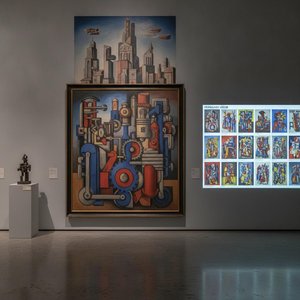
Penselstrøkene hans beveget seg med en rytmisk, nesten industriell presisjon, i en evig søken etter å fange pulsen i en tid i endring. Han vendte ryggen til fortidens myke, utviskede skygger og valgte i stedet å bygge opp sine komposisjoner gjennom et språk preget av robust, geometrisk styrke. Dette banet vei for utviklingen av en personlig form for kubisme, som kritikere identifiserte som "tubisme". I denne stilen ble verden gjenskapt gjennom rørformede, kjegleformede og kubiske former, noe som skapte en følelse av volum som føltes både massivt og dynamisk. Han malte ikke bare objekter; han søkte å avdekke deres essensielle, strukturelle logikk.
Fargene han valgte var like selvsikre som formene de fylte. Han foretrakk en palett dominert av primærfarger, ofte avbrutt av skarpt svart og hvitt, noe som bidro til å definere de skarpe grensene i motivene hans. I stedet for å støtte seg på tradisjonell illusjonisme, påførte han malingen i dristige, flate fargeplan. Han benyttet ofte en tykk impasto, en teknikk som fremhevet mediets fysiske tilstedeværelse på lerretet. Denne teksturelle tilnærmingen sørget for at verkene hans føltes jordnære og materielle, som en speiling av de maskinene og urbane strukturene han beundret så høyt. Figurene hans antok ofte strømlinjeformede, mekaniske trekk, noe som visket ut skillet mellom den organiske menneskekroppen og den ingeniørkunstneriske presisjonen i den moderne tidsalderen.
- Nudes in the Forest (1910)
- The Woman in Blue (1912)
- Soldier with a Pipe (1916)
- The Mechanic (1920)
De senere år og hans bortgang
De skiftende tidevannene av globale konflikter trakk til slutt kunstneren bort fra hans parisiske kretser og over Atlanterhavet. Mellom 1940 og 1945 levde han i USA, en periode som tilbød et nytt perspektiv på den moderne verden som han så lenge hadde forsøkt å oversette til lerretet. Denne tiden i utlandet ga et avbrekk i hans lange evolusjon, et øyeblikk av overgang før hans endelige hjemkomst til den franske jord.
Ved returen til hjemlandet gjennomgikk hans personlige liv en betydelig endring. I februar 1952 giftet han seg med Nadia Khodasevich. Dette ekteskapet markerte et siste kapittel i hans liv, et liv levd midt i en vedvarende produksjon av hans mangfoldige verker, fra storslåtte veggmalerier til delikate glassmalerier. Selv i alderdommen forble hans anerkjennelse urokkelig på den internasjonale scenen. I 1955 vant han Grand Prix ved Biennalen i São Paulo, en høy ære som kom i det samme året som hans bortgang. Han døde den 17. august 1955 i Gif-sur-Yvette, Frankrike.
Arv og innflytelse
Fernand Léger etterlot seg et avtrykk som strakte seg langt utover sin egen tids avantgarde-kretser. Ved å bygge bro mellom abstrakt kunst og figurativ representasjon, tilbød han kunstnere en måte å engasjere seg i den moderne verden på, uten å helt forlate det menneskelige motivet. Hans tilnærming åpnet for en dialog mellom geometriens strukturelle logikk og den gjenkjennelige tilstedeværelsen av mennesker og objekter. Denne evnen til å finne et mellompunkt mellom det rent konseptuelle og det håndfaste, bidro til å forme retningen for mye av den kunsten som fulgte i hans fotspor.
Hans dristige forenkling av form og fascinasjon for masseproduksjonens estetikk fungerte som en forløper for popkunst-bevegelsen. Han så en særskilt skjønnhet i maskinæraens repetitive og funksjonelle natur, et perspektiv som senere skulle resonnere hos en ny generasjon skapere. Kunstnere som Roy Lichtenstein og Andy Warhol trakk en tydelig linje fra hans eksperimenter med dristige konturer og mekanisk bildebruk til deres egne utforskinger av populærkulturen. Han var med på å forberede det visuelle språket for en epoke som til slutt ville feire nettopp de industrielle og kommersielle elementene han en gang søkte å oversette til lerretet.
Hvor du kan se verkene i dag
For å møte den fysiske tilstedeværelsen av hans visjon, kan man reise til Sør-Frankrike, nærmere bestemt til Biot i Alpes-Maritimes. Her ligger Musée national Fernand Léger, et sted som er fullstendig dedikert til studiet og bevaringen av hans kreative virke. Museet holder til i Mas Saint-André, en villa som en gang tilhørte kunstneren selv. Innenfor disse veggene og i de omkringliggende hagene finner hans polykrome keramiske skulpturer sin naturlige ramme, noe som lar betrakteren se hvordan formene hans samspiller med lyset og rommet i det middelhavske landskapet.
Utover dette spesialiserte fristedet er hans lerreter og skulpturer bevart i en rekke betydningsfulle institusjoner. Musée d'Art et d'Histoire i Frankrike forvalter en samling av hans verker, noe som sikrer hans plass i den bredere fortellingen om fransk kunst. Disse samlingene muliggjør en kontinuerlig utforskning av hvordan han oversatte maskinæraens energi til statiske, men likevel pulserende, visuelle former. Reisende som søker hans spesifikke estetikk, kan finne spor av ham i flere store samlinger, inkludert:
Hans innflytelse lever også videre i andre kunstneres verker, men den primære måten å vitne hans direkte hånd på, er gjennom disse etablerte institusjonene. Enten man betrakter de dristige, sylindriske formene i en museumssal eller ser skulpturene hans i en hages stillhet, møtes betrakteren av den samme strukturelle klarheten som definerte hans livsverk. Hans arv forblir forankret på disse spesifikke stedene, hvor de tunge, mekaniske rytmene i maleriene hans er bevart for dem som søker sannheten i hans geometri.


 Forhåndsvisning
 Send
Send Del
Del
 Vis detaljer
 Utskriftsvennlig guide

 Last ned bilde
 Liknende objekter
 Røntgenundersøkelse
 Lysbildefremvisning
 Spørsmål og svar
 Statistikk


 Vis hele teksten
 Bytt til trykk





































 Glassalternativet er kun tilgjengelig i størrelser under 110 cm