x
Kjøp et høyoppløselig, forbedret digitalt bilde som er langt bedre enn forhåndsvisningen på nettet.
Hver fil er omhyggelig klargjort av våre egne spesialister ved hjelp av avanserte verktøy og profesjonell manuell retusjering. Vi sørger for at hvert bilde har eksepsjonell klarhet, presis fargegjengivelse og fine detaljer.
Den endelige filen leveres via e-post innen 72 timer, optimalisert for umiddelbar bruk i profesjonelle, redaksjonelle og trykte miljøer. Dette er den samme kvaliteten som benyttes av ledende designstudioer, utgivere og gallerier.
Last ned en høyoppløselig fil for personlig bruk, utskrift og kreative prosjekter.
Når du velger WahooArt.com, får du ikke bare et bilde – du mottar et profesjonelt forbedret digitalt kunstverk, skapt med presisjon og med en garantert tilfredshetsgaranti. Her er alt som automatisk følger med din bestilling:
Din høyoppløselige digitale bildefil sendes til din e-post innen 72 timer etter bestilling – klar til umiddelbar bruk.
Ditt kunstverk blir profesjonelt optimalisert ved hjelp av avanserte AI-verktøy og manuell redigering, noe som sikrer maksimal detaljrikdom, klarhet og fargegjengivelse.
Har du ved et uhell slettet eller mistet filen din? Ingen bekymring – vi sender den på nytt når som helst, helt gratis.
Nyt ditt kunstverk umiddelbart uten toll, avgifter eller leveringskostnader – digitale nedlastinger er alltid avgiftsfrie.
Vi sikrer at ditt digitale bilde gjenspeiler de originale fargene så nøyaktig som mulig ved hjelp av profesjonelle verktøy og fargehåndtering.
Hvis du ikke er fornøyd med ditt digitale bilde, vil vi revidere det eller refundere 100% innen 60 dager – uten spørsmål.
Ikke fornøyd? Få full refusjon innen 60 dager etter at du har mottatt din digitale fil – uten spørsmål.
Kjøp 3 bilder, spar 10% - Kjøp 5, spar 15% - Kjøp 10+, spar 20%. Ideelt for kreative prosjekter, gallerier og byråer.
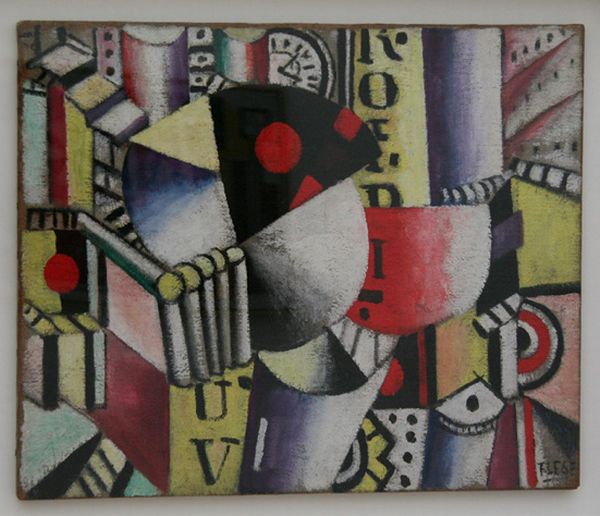
Fernand Léger's Clock is a pivotal work exemplifying his signature “Tubism” – a dynamic offshoot of Cubism that celebrates the machine age. More than a mere depiction, this painting constructs a visual vocabulary reflecting modernity’s energy and inherent contradictions.
The composition immediately intrigues with its playful yet enigmatic arrangement. At its heart is a bird, rendered not through naturalistic detail but as an assemblage of geometric forms. Dominating the bird’s chest is a prominent clock – a potent symbol representing time's relentless march, industrial progress, and perhaps even the constraints imposed by modern life. Adding to this fascinating juxtaposition, the bird clutches a baseball bat within its beak, hinting at leisure, American cultural influences, and a distinctly sporty spirit filtering into Léger’s artistic vision. Surrounding these central motifs are fragmented representations of everyday objects – a cup, bowl, and vase – all broken down into their essential geometric components.
Léger masterfully employs a limited yet impactful palette, primarily utilizing bold reds and stark blacks. This high-contrast color scheme amplifies the painting’s visual impact and reinforces its sense of mechanical precision. The application of paint is notably flat, deliberately eschewing traditional modeling techniques in favor of clearly defined planes and shapes. This flatness contributes to the artwork's overall feeling of being a constructed image rather than a mimetic representation of reality. The deliberate simplification of forms and rejection of conventional perspective are hallmarks of Léger’s unique Cubist approach.
Born in 1881, Fernand Léger lived through – and actively engaged with – the rapid industrialization and technological advancements of the early 20th century. He diverged from purely analytical Cubism (as pioneered by Picasso and Braque) towards a more accessible style that embraced the beauty and dynamism of machines and modern life. Clock, likely created between 1920-1930, embodies this aesthetic perfectly. It reflects Léger’s fascination with the energy and rhythm of the machine age, elevating commonplace objects to heroic forms.
Clock evokes a complex emotional response – a blend of optimism and underlying tension. The bold colors and dynamic composition convey vitality and progress. However, the fragmented nature of the imagery and the prominent presence of the clock can also be interpreted as representing the alienation and fragmentation experienced in modern society. The baseball bat introduces an element of human activity and leisure, perhaps suggesting a desire to escape or find joy within this mechanized world. The painting invites viewers to contemplate the intricate relationship between humanity, technology, and the passage of time.
Clock would make a striking statement in various settings:
To best showcase the artwork, consider framing it with a simple black frame that doesn’t compete with its strong visual elements. Placement should allow for ample viewing distance and appropriate lighting to highlight the richness of the colors and textures. Clock is not merely a decorative piece; it's an intellectual statement – a window into the heart of modernity.
1881 - 1955 , Frankrike
Fortell oss om prosjektet ditt, så vil våre kunsteksperter gi deg 3 personlige kunstforslag.
Vi velger ut 3 alternativer kun for deg – helt gratis!