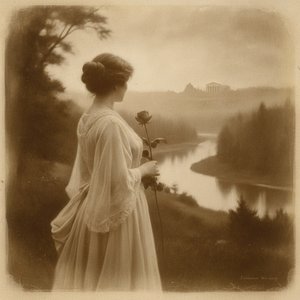
Kunstnerbiografi
En kronikør av det gamle Paris: Livet og arven etter Eugène Atget
Født som Jean-Eugène-Auguste Atget i 1857, i den stille byen Libourne i Frankrike, begynte fotografen som skulle bli synonym med «det gamle Paris» sitt liv under en skygge av tap. Som foreldreløs i den tidlige alderen på syv år, etter begge foreldrenes død, ble unge Eugène oppdratt av sine morsbesteforeldre i Bordeaux. Denne tidlige erfaringen med rotløshet og kanskje en spirende følelse av forgjengelighet kan subtilt ha formet hans senere kunstneriske drivkraft – en tvangsmessig trang til å dokumentere en verden han følte var i ferd med å glippe mellom fingrene. Hans opprinnelige ambisjoner lå langt unna fotografiet; Atget søkte mot skuespillerfaget og meldte seg på dramaskole, men fant veien avbrutt av obligatorisk militærtjeneste. Et påfølgende forsøk på en teaterkarriere med en omreisende tropp ble avbrutt av problemer med stemmebåndene, noe som tvang ham til å revurdere sin retning. Det var rundt 1887, etter disse tidlige tilbakeslagene, at han vendte seg mot den fremvoksende fotografiske kunsten, og begynte i utgangspunktet å produsere bilder for salg til kunstnere og håndverkere – idylliske landskap og scener ment som referansemateriale.
Den systematiske visjonen: Dokumentasjonen av et Paris i ferd med å forsvinne
Et avgjørende skifte fant sted rundt 1897, noe som markerte den sanne begynnelsen på Atgets unike livsverk. Han la ut på en systematisk dokumentasjon av «det gamle Paris», et prosjekt som skulle oppta ham i nesten tre tiår. Dette var ikke bare pittoresk turisme; det var en nesten antropologisk bragd, drevet av et ønske om å bevare den fysiske strukturen i en by som gjennomgikk en rask modernisering. Bevæpnet med et stort format belgkamera av tre og ved bruk av tørrplater av glass (18x24 cm), registrerte Atget nitidig de smale smugene, de eldgamle gårdsrommene, de praktfulle palassene og det yrende gatelivet som definerte det historiske hjertet av Paris. Han var ikke interessert i kunstnerisk utsmykning eller dramatisk komposisjon; hans tilnærming var fundamentalt dokumentarisk, en streben etter objektiv representasjon. Fra 1906 og utover brakte denne dedikasjonen ham oppdrag fra institusjoner som Musée Carnavalet og Bibliothèque Historique de la Ville de Paris, noe som sementerte hans rolle som en offisiell kronikør av Paris' historie. Han fotograferte ikke bare storslåtte monumenter, men også de hverdagslige detaljene – utstillingsvinduer, gateforhandlere, filleoppkastere, til og med prostituerte – og skapte slik et omfattende portrett av bylivet i all sin kompleksitet.
En unik estetikk: Atmosfære og tidens gang
Atgets fotografier besitter en særpreget estetikk som sprang ut av like deler teknisk nødvendighet og kunstnerisk intensjon. De lange eksponeringstidene som utstyret krevde, resulterte ofte i en eterisk kvalitet der bevegelser ble uklare og skapte en drømmeaktig atmosfære. Dette var ikke en mangel, men snarere et definerende kjennetegn som ga bildene hans en følelse av tidløshet og melankoli. Han fanget ofte scener med få mennesker til stede, eller figurer som fremstod som gjenferd på grunn av de lange eksponeringene, noe som la vekt på rom og stemning fremfor skarpe detaljer. Komposisjonene hans er ofte preget av en bevisst mangel på dramatisk fokus; i stedet presenterer han et vidstrakt utsyn som inviterer betrakteren til å vandre gjennom scenen og absorbere dens atmosfære. Denne tilnærmingen handlet ikke om å fange et flyktig øyeblikk, men snarere om å formidle stedets vedvarende nærvær – tyngden av historien som ligger innebygd i Paris' steiner og gater. Han søkte ikke å tolke, men å registrere.
Forsinket anerkjennelse og varig innflytelse
Til tross for hans dedikasjon og det enorme omfanget av hans arbeid – anslått til 8 500 negativ – mottok Atget påfallende lite anerkjennelse i sin levetid. Kun en håndfull unge kunstnere gjenkjente geniet i hans metode. Det var først etter hans død i 1927 at arven hans begynte å utfolde seg, i stor grad takket være innsatsen til den amerikanske fotografen Berenice Abbott. Da hun innså betydningen av arbeidet hans, kjøpte Abbott Atgets arkiv og fremmet bildene hans utrettelig gjennom utstillinger og publikasjoner. Senere donerte hun en betydelig del av samlingen sin til Museum of Modern Art (MoMA) i 1968, noe som sikret bevaring og tilgjengelighet for fremtidige generasjoner. Atgets bilder resonnerte dypt hos surrealistene, som verdsatte deres stemningsfulle atmosfære, følelse av mystikk og evnen til å avdekke den skjulte poesien i hverdagslivet. I dag feires Eugène Atget som en pioner innen dokumentarfotografi, en livsviktig kronikør av Paris' historie og en inspirasjon for fotografer over hele verden. Hans arbeid fortsetter å tilby uvurderlig innsikt i det urbane landskapet og det sosiale livet i Paris på slutten av 1800- og begynnelsen av 1900-tallet – et vitnesbyrd om kraften i tålmodig observasjon og den vedvarende skjønnheten i en by i endring.



 Se i rommet
 Bestill håndmalt reproduksjon
 Del som digitalt kort
 Del
Del
 Detaljer
 Studentguide

 Last ned
 Liknende objekter
 Røntgen
 Lysbildefremvisning
 Besøksstatistikk

 Les mer






































 Glassalternativet er kun tilgjengelig i størrelser under 110 cm