


 Contemporary Realism
 1915
1915 39.0 x 31.0 cm
 Ben Uri Gallery and Museum
Håndmalt olje på lerret i din valgte størrelse og ramme, laget på bestilling av våre kunstnere. ( Kjøp trykk Kjøp bilde)
Velg mellom våre forhåndsdefinerte størrelser som bevarer kunstverkets opprinnelige proporsjoner.

Du kan angi egne mål for å tilpasse en spesifikk ramme eller plass. Dersom den valgte størrelsen ikke samsvarer med originalbildets proporsjoner, vil vi enten beskjære kunstverket eller utvide maleriet med ytterligere håndmalte elementer. En digital mockup vil bli sendt til din godkjenning før produksjonen starter.
Vennligst merk at forhåndsvisningen på skjermen ikke gjenspeiler den faktiske beskjæringen eller utvidelsen. Kun mockuppen vil vise den endelige komposisjonen nøyaktig.
Selv om tilpassede størrelser er tilgjengelige, anbefaler vi å velge et mål fra den forhåndsdefinerte listen for å bevare de originale proporsjonene.
Verdensomspennende levering () på 3–4 uker i stedet for standard 5 uker. (7 September). Ingen kompromisser med kvaliteten.


Samaritan High Priest
Størrelse på reproduksjon

In the delicate, swirling lines of the Art Nouveau movement, few voices resonate with as much cultural depth and spiritual longing as that of Ephraim Moses Lilien. Born in 1874 in Drohobych, Poland, under the name Maurycy Lilien, this multifaceted creator—a photographer, painter, illustrator, and engraver—did not merely participate in the aesthetic trends of his era; he transformed them. His life was a profound journey through the heart of European fine arts and the burgeoning spirit of Jewish national identity. Educated at the prestigious Academy of Fine Arts in both Vienna and Krakow, Lilien possessed a technical mastery that allowed him to bridge the gap between classical academic training and the avant-garde decorative styles of the early twentieth century.
Lilien’s artistic evolution was deeply intertwined with his personal convictions and his travels. His work serves as a visual chronicle of a period marked by intense political and cultural shifts. Between 1906 and 1918, his excursions to Ottoman Palestine provided him with a direct connection to the landscapes and people that would become central motifs in his oeuvre. This period of exploration allowed him to infuse his Art Nouveau sensibilities with an authentic, lived experience of the Jewish homeland, creating a visual language that was simultaneously modern and ancient.
The true brilliance of Lilien lies in his ability to weave the organic, flowing ornamentation of Art Nouveau into the sacred iconography of Judaism. His compositions often feature the sinuous curves and botanical motifs characteristic of the period, yet these elements are repurposed to tell stories of faith, heritage, and hope. He was a master of the graphic medium, using engraving and illustration to create works that were both aesthetically exquisite and ideologically potent.
Among his most enduring contributions to the art world are:
As a pioneering Zionist artist, Lilien’s impact extends far beyond the boundaries of traditional art history. He was instrumental in creating a new visual vocabulary for a people seeking to redefine their place in the modern world. By blending the contemporary European aesthetic with Jewish themes, he provided a sense of dignity and modernity to Zionist imagery, paving the way for future generations of artists to explore similar intersections of identity and style.
Though his life was tragically short, ending in Badenweiler, Germany, in 1925, his artistic footprint remains indelible. Today, his works are preserved in esteemed institutions such as the Kunstsammlungen und Museen Augsburg, serving as a testament to his role as a bridge-builder between cultures and eras. To study the work of Ephraim Moses Lilien is to witness the birth of a modern Jewish aesthetic, a beautiful confluence of decorative elegance and profound historical purpose.
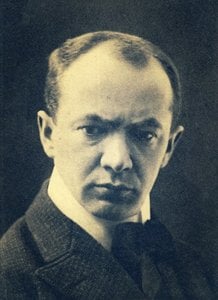
1874 - 1925 , Poland

Master the nuances of Giclée printing with our expert guide. Discover how pigment-based inks and museum-grade substrates create fade-resistant, high-fidelity art reproductions designed for discerning collectors seeking unparalleled quality and longevity.

Explore the profound mastery of engraving and intaglio printmaking. Delve into the rich history, technical precision of the burin, and the enduring legacy of fine art techniques that shaped the world's most iconic masterpieces.
Forvandle dine mest dyrebare bilder til eksklusive kunsttrykk av museumskvalitet. Vi tilbyr profesjonell Giclée-trykking, luksuriøs innramming og global levering. Skap et tidløst mesterverk som speiler din personlige historie med WahooArts uovertrufne håndverk og presisjon.

 Forhåndsvisning
 Send
Send Del med andre
 Vis detaljer

 Last ned bildet
 Liknende objekter
 Røntgenundersøkelse
 Lysbildefremvisning
 Vis hele teksten




































 Glassalternativet er kun tilgjengelig i størrelser under 110 cm


