x
ForhåndsvisningForhåndsvisning Se i ARSe i AR Kjøp trykk Kjøp trykkKjøp håndlaget maleri Kjøp håndlaget maleri SendSend
Vis detaljerVis detaljer Legg til i favoritter Legg til i favoritter Last ned bildetLast ned bildet Liknende objekterLiknende objekter RøntgenundersøkelseRøntgenundersøkelse LysbildefremvisningLysbildefremvisning

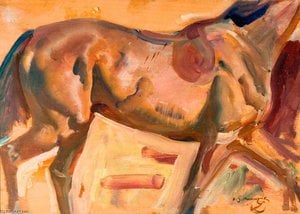
The Undefeated Asteroid

Edward Troye’s "The Undefeated Asteroid" (1864) showcases astonishing anatomical detail of a bay horse meticulously groomed by enslaved men in antebellum Virginia, revealing a poignant social commentary through masterful realism and scientific observation – discover this significant equine artwork.

Edward Troye (1808-1874): Swiss artist famed for accurate horse paintings – American Great Plains & Southern thoroughbreds. Author of 'Race Horses of America'.

Kjøp et høyoppløselig, forbedret digitalt bilde som er langt bedre enn forhåndsvisningen på nettet.

Hver fil er omhyggelig klargjort av våre egne spesialister ved hjelp av avanserte verktøy og profesjonell manuell retusjering. Vi sørger for at hvert bilde har eksepsjonell klarhet, presis fargegjengivelse og fine detaljer.

Den endelige filen leveres via e-post innen 72 timer, optimalisert for umiddelbar bruk i profesjonelle, redaksjonelle og trykte miljøer. Dette er den samme kvaliteten som benyttes av ledende designstudioer, utgivere og gallerier.

Digitalt bilde

Last ned en høyoppløselig fil for personlig bruk, utskrift og kreative prosjekter. (Kjøp trykk Kjøp trykkKjøp håndlaget maleri Kjøp håndlaget maleri)

Totalbeløp

$ 24.90

Inkludert i alle bestillinger av digitale bilder

Ekspert digital levering, garantert

Når du velger WahooArt.com, får du ikke bare et bilde – du mottar et profesjonelt forbedret digitalt kunstverk, skapt med presisjon og med en garantert tilfredshetsgaranti. Her er alt som automatisk følger med din bestilling:

shipping_icon
Rask digital levering

Din høyoppløselige digitale bildefil sendes til din e-post innen 72 timer etter bestilling – klar til umiddelbar bruk.

canvas_icon
KI-forbedret digital fil

Ditt kunstverk blir profesjonelt optimalisert ved hjelp av avanserte AI-verktøy og manuell redigering, noe som sikrer maksimal detaljrikdom, klarhet og fargegjengivelse.

insurance_icon
Gratis livslang nyutlevering

Har du ved et uhell slettet eller mistet filen din? Ingen bekymring – vi sender den på nytt når som helst, helt gratis.

tax_icon
Ingen importavgifter – noen gang

Nyt ditt kunstverk umiddelbart uten toll, avgifter eller leveringskostnader – digitale nedlastinger er alltid avgiftsfrie.

color_icon
Garantert fargenøyaktighet

Vi sikrer at ditt digitale bilde gjenspeiler de originale fargene så nøyaktig som mulig ved hjelp av profesjonelle verktøy og fargehåndtering.

return_icon
60 dagers tilfredshetsgaranti

Hvis du ikke er fornøyd med ditt digitale bilde, vil vi revidere det eller refundere 100% innen 60 dager – uten spørsmål.

guarantee_icon
100% Penggaranti

Ikke fornøyd? Få full refusjon innen 60 dager etter at du har mottatt din digitale fil – uten spørsmål.

discount_icon
Rabatt ved storkjøp

Kjøp 3 bilder, spar 10% - Kjøp 5, spar 15% - Kjøp 10+, spar 20%. Ideelt for kreative prosjekter, gallerier og byråer.

Kort om verket

  • Artistic style: Realism
  • Title: The Undefeated Asteroid
  • Medium: Oil on Canvas
  • Movement: Romanticism
  • Location: Private Collection
  • Subject or theme: Horse Portraiture
  • Notable elements or techniques: Detailed equine anatomy

The Undefeated Asteroid – A Portrait of Equestrian Dignity

Edward Troye’s “The Undefeated Asteroid,” painted in 1864, transcends mere equine representation; it embodies the spirit of a bygone era and speaks volumes about social dynamics within the American South during the antebellum period. This monumental canvas captures a pivotal moment – the meticulous grooming of a magnificent bay horse by two enslaved men—a scene meticulously rendered with unparalleled realism that continues to fascinate art historians and collectors alike.

A Masterclass in Anatomical Detail

Troye’s artistic prowess lies not just in capturing the beauty of the horse but in achieving an astonishing level of anatomical accuracy. Unlike many artists of his time who prioritized idealized forms, Troye relentlessly pursued truthfulness. He painstakingly dissected musculature, meticulously documented bone structure, and rendered every subtle nuance of equine anatomy with breathtaking precision. This dedication to scientific observation—a hallmark of animalier art—elevates “The Undefeated Asteroid” beyond a simple depiction of animals; it becomes a testament to Troye’s mastery of technique and his unwavering commitment to portraying subjects faithfully. The artist skillfully employed oil paints on canvas, layering thin glazes to build up tonal depth and creating textures that convincingly mimic the feel of horsehair and muscle fibers.

Historical Context: Racehorses and Slavery in Antebellum Virginia

The painting's significance extends far beyond its artistic merits. It exists within a complex sociohistorical framework—the burgeoning popularity of Thoroughbred racing in Virginia during the 1860s, coupled with the pervasive institution of slavery. The horse depicted is owned by John Minor Botts III, a wealthy planter and prominent figure in Richmond society. His stables employed enslaved men who cared for his horses, highlighting the intertwined roles of labor and leisure within the Southern economy. Troye’s portrayal isn't merely aesthetically pleasing; it serves as a visual record of this era—a poignant reminder of the human cost associated with economic prosperity. The inclusion of African American jockeys underscores the racial inequalities prevalent at the time, presenting them not as mere accessories to the horse but as integral participants in its care and success.

Symbolism: Resilience Amidst Oppression

“The Undefeated Asteroid” carries profound symbolic weight. The horse itself represents strength, nobility, and perseverance—qualities mirrored in the dignified postures of Botts’ attendants. Despite their subjugation under oppressive conditions, these men exhibit unwavering dedication to their craft and a palpable respect for their animal companion. Troye's deliberate framing—the stark contrast between the lush foliage surrounding the horse and the barren tree trunks—further amplifies this symbolism. It suggests that beauty and vitality can endure even in environments marked by hardship and deprivation. The gaze of Botts’ men, turned outward with thoughtful contemplation, speaks to a quiet dignity—a refusal to succumb to despair amidst adversity.

Emotional Impact: A Moment Frozen in Time

Ultimately, Troye's masterpiece evokes a powerful emotional response. It compels viewers to confront the uncomfortable realities of slavery while simultaneously appreciating the artistry and skill involved in its creation. The painting’s meticulous detail invites contemplation—encouraging us to consider not only the visual beauty but also the broader narrative it conveys about human dignity and resilience. “The Undefeated Asteroid” remains a hauntingly beautiful reminder of a specific historical moment, forever enshrined in oil paint on canvas as an enduring symbol of artistic excellence and social commentary.

Om kunstneren

Edward Troye: A Life Dedicated to Equine Art

Edward Troye (1808-1874) was a Swiss-born artist who became celebrated for his remarkably accurate and detailed depictions of American horses, particularly those of the Great Plains and Southern thoroughbreds. His work provides invaluable insight into equine history during a period before widespread photography.

Early Life and Origins

Born in Lannes, Switzerland, in 1808, details regarding Troye’s early artistic training remain scarce. He eventually emigrated to the United States, establishing himself as an artist specializing in horses – a subject that would define his career.

Artistic Development and Style

Troye's style is characterized by its meticulous realism and attention to anatomical detail. He wasn’t concerned with romanticizing or idealizing his subjects; instead, he focused on capturing the true essence of each horse – their musculature, conformation, and individual character. His paintings served as both artistic representations and valuable records of breeding lines and physical traits.

Subjects and Themes

  • Thoroughbreds: Troye frequently painted Southern United States thoroughbreds before the American Civil War, documenting prominent racehorses and their lineages.
  • Great Plains Horses: He is equally known for his depictions of horses native to the American Great Plains, capturing their wild spirit and rugged beauty.
  • Portraits: While primarily a horse painter, Troye also created portraits, often incorporating horses into the composition.

Major Achievements and Rediscovery

Troye’s most significant achievement lies in creating a visual record of American equine history during a crucial period. He authored Race Horses of America (1867), further solidifying his commitment to documenting these magnificent animals.

Interestingly, Troye's work remained largely unknown outside a small circle until 1912. Since then, over 300 of his paintings have been rediscovered and photographed, revealing the breadth and depth of his artistic output.

Influences

Information regarding specific artistic influences on Troye is limited. However, his dedication to realism suggests an appreciation for earlier masters who prioritized accurate representation. His work also reflects a growing interest in scientific observation during the 19th century.

Historical Significance

Edward Troye’s paintings are invaluable historical documents. They provide researchers and enthusiasts with detailed visual information about horse breeds, conformation, and breeding practices of the 19th century. His work offers a unique glimpse into a bygone era, preserving the legacy of these magnificent animals for future generations.

Later Life and Legacy

Troye spent his later years residing in Kentucky, near his friend Keen Richards. He passed away from pneumonia on July 25, 1874, and is buried in Georgetown Cemetery with his wife and grandson. Today, his paintings are highly sought after by collectors and museums, ensuring that his artistic legacy continues to thrive.

Edward Troye

Edward Troye

1808 - 1874 , Switzerland

Kort om kunstneren

  • Birth Date: 1808
  • Birth Place: Lannes, Switzerland
  • Death Date: 1874
  • Movement: Animal painting, Historical art
  • Name: Edward Troye
  • Nationality: Swiss
  • Notable Works: Race Horses of America, Portrait of John Hartwell Cocke II of Bremo, The Undefeated Asteroid