
Kunstverket som vises på denne siden er beskyttet av opphavsretten, noe som betyr at vi ikke har juridisk tillatelse til å lage eller selge identiske reproduksjoner. Denne beskyttelsen håndheves i henhold til internasjonale avtaler som for eksempel Bernerkonvensjonen og av nasjonale lover, inkludert de som er fastsatt i Amerikansk lov om opphavsrett – Tittel 17.
Denne metoden er i fullt samsvar med opphavsrettslige regler, da den ikke innebærer kopiering eller duplisering av det beskyttede kunstverket. I stedet er det snakk om en kreativ nytolkning – et nytt maleri som er inspirert av originalen, men ikke identisk med den.
Giclée- eller lerretsprint av museumskvalitet med rask produksjon og fleksible valgmuligheter for etterbehandling. ( Kjøp håndmalt maleri Bytt til digitalt bilde)





























Velg mellom våre forhåndsdefinerte størrelser som bevarer kunstverkets opprinnelige proporsjoner.

Skriv inn ønsket bredde og høyde for å tilpasse trykket til din ramme eller vegg. Et trykk kan kun beskjæres, aldri skaleres opp utover motivets opprinnelige størrelse, noe som betyr at et format med andre proporsjoner vil føre til tap av deler av bildet. Vi sender deg en digital mockup for godkjenning før vi starter trykkeprosessen. Bildet som vises på denne siden viser ikke den faktiske beskjæringen — det er kun mockuppen som viser dette.
Verdensomspennende levering () på 2 uker i stedet for standard 4/5 uker. (8 November)
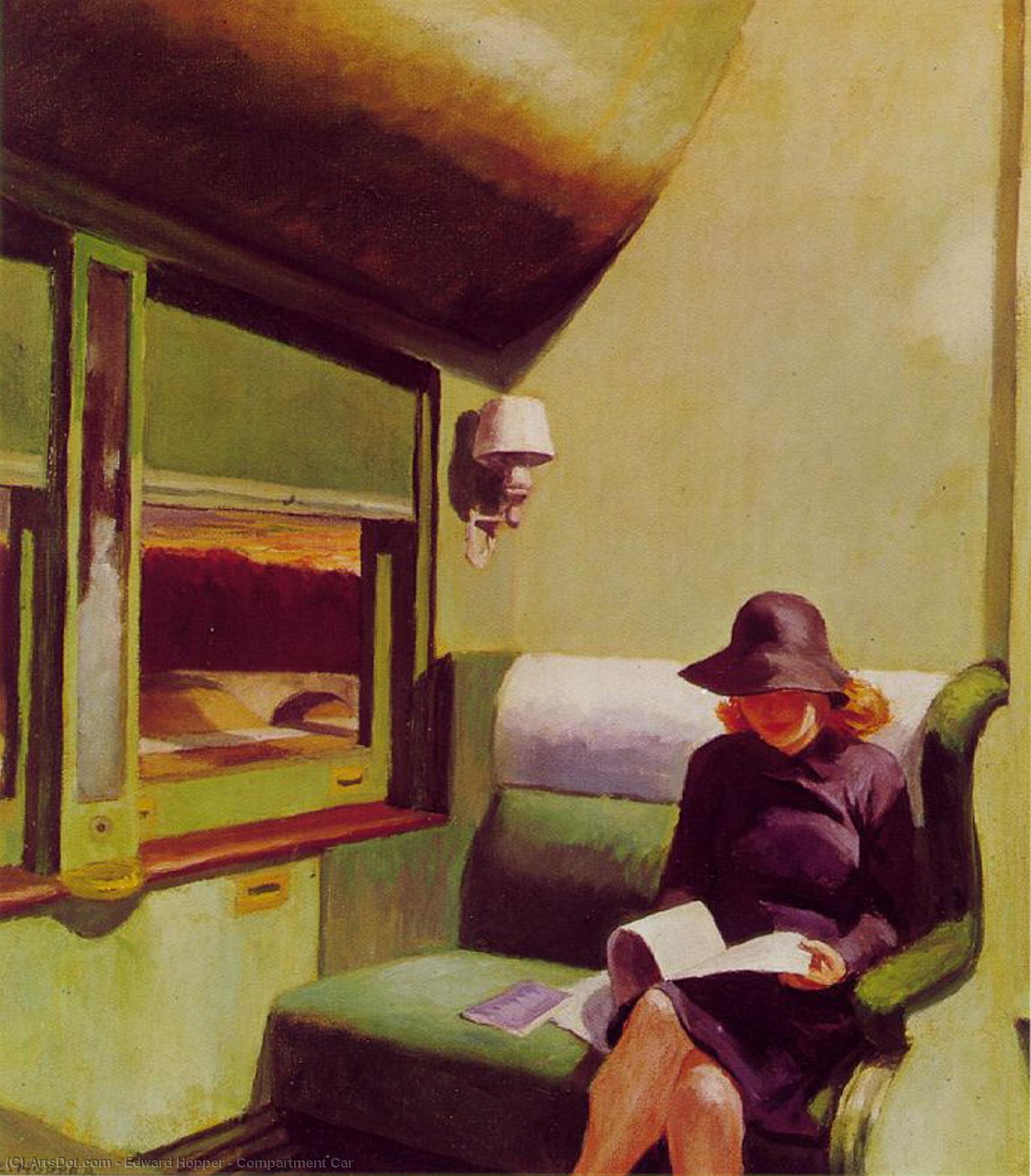
Compartment Car
Størrelse på reproduksjon
Edward Hopper’s “Compartment Car” (1931) is more than just a depiction of a train journey; it’s a meticulously crafted meditation on solitude, urban alienation, and the quiet dramas unfolding within the seemingly mundane moments of modern life. Painted during a period of significant social and technological change in America – the rise of railroads, increased urbanization, and the burgeoning sense of individual detachment – the painting resonates with a profound psychological depth that continues to captivate viewers nearly a century later. Hopper’s masterful use of light and shadow, combined with his precise observation of human form, elevates this scene into a powerful symbol of the anxieties and uncertainties inherent in the modern experience.
Hopper’s genius lies not merely in his technical skill but in his ability to manipulate light and shadow to evoke specific moods and emotions. The dim, diffused natural light filtering through the window creates a sense of mystery and melancholy, casting long shadows that obscure the faces of the other passengers and further emphasize the woman's isolation. This use of chiaroscuro – the dramatic contrast between light and dark – is a hallmark of Hopper’s style and contributes significantly to the painting’s evocative power. The subtle variations in tone create a sense of depth and atmosphere, drawing the viewer into the scene and inviting contemplation.
"Compartment Car" was created during a period of profound social and economic change in America. The rise of industrialization and urbanization had led to increased mobility and a growing sense of alienation, particularly among those who found themselves adrift in the impersonal landscape of modern cities. Hopper's paintings often reflected this mood of disillusionment and uncertainty, capturing the loneliness and isolation that many Americans felt despite their increasing connectedness through technological advancements. Hopper’s work aligns with the broader artistic movement of American Regionalism, which sought to depict the realities of everyday life in America, particularly in urban settings. His focus on ordinary subjects – a diner, a department store, a train compartment – elevated these scenes into powerful statements about the human condition.
“Compartment Car” continues to resonate with viewers today because it taps into universal themes of loneliness, introspection, and the search for meaning in a complex world. Hopper’s ability to capture such profound emotions through seemingly simple imagery is a testament to his artistic genius. This painting exemplifies Hopper's enduring legacy as one of America's most important 20th-century artists, whose work continues to provoke thought and inspire contemplation about the nature of modern life.
"Compartment Car" av Edward Hopper er utført i Acrylic On Canvas. Reproduksjonene har som mål å gjengi utseendet til denne teknikken.
Røntgenvisningen av "Compartment Car" av Edward Hopper finnes på verkets Røntgenstråling-side: en interaktiv undersøkelse av bildet gjennom elleve optiske lag.
Håndmalte kopier av "Compartment Car" av Edward Hopper kan kjøpes på denne nettsiden: en håndmalt oljereproduksjon på linlerret, via siden for Håndmalt oljereproduksjon.

1931 - 1967 , USA

Master the nuances of Giclée printing with our expert guide. Discover how pigment-based inks and museum-grade substrates create fade-resistant, high-fidelity art reproductions designed for discerning collectors seeking unparalleled quality and longevity.

Discover museum-quality Giclée paper prints at WahooArt. Elevate your space with archival, pigment-based reproductions of the world's greatest masterpieces. Affordable, elegant, and designed for lasting beauty. Start curating your timeless art legacy today.

Forvandle dine mest dyrebare bilder til eksklusive kunsttrykk av museumskvalitet. Vi tilbyr profesjonell Giclée-trykking, luksuriøs innramming og global levering. Skap et tidløst mesterverk som speiler din personlige historie med WahooArts uovertrufne håndverk og presisjon.
 Forhåndsvisning
 Send
Send Del
Del
 Vis detaljer
 Utskriftsvennlig guide

 Last ned bilde
 Liknende objekter
 Røntgenundersøkelse
 Lysbildefremvisning
 Spørsmål og svar
 Statistikk

 Vis hele teksten









 Glassalternativet er kun tilgjengelig i størrelser under 110 cm


