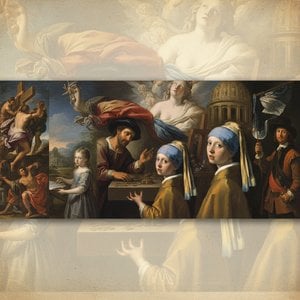
A Symphony of Youth and Nobility
In the soft, golden light of 1651, a moment of pure, unadulterated joy was captured on canvas by the burgeoning hand of David Klöcker Ehrenstrahl. Children Playing is not merely a depiction of pastoral leisure; it is a vibrant window into the aristocratic life of the Swedish Baroque era. The composition breathes with a lively energy, centering on the young Eleonora Sophia, daughter of the powerful Carl Gustaf Wrangel, perched gracefully upon her horse. Beside her, the rhythmic pulse of childhood is felt through her brother, Carl Philip Wragtel, whose focused attention on his drum adds a percussive heartbeat to the visual melody. This masterpiece serves as an intimate glimpse into a world where the innocence of youth meets the structured grandeur of nobility.
The scene unfolds within a sprawling, sun-drenched field, where the boundaries between nature and domesticity blur beautifully. As one wanders through the painting, the eye is led across a tapestry of interaction: at least nine figures, ranging from tender toddlers to watchful adults, weave a narrative of companionship. The presence of three horses—positioned strategically to guide the viewer's gaze from the center to the periphery—adds a sense of movement and scale to the landscape. Ehrenstrahl’s early mastery is evident in how he captures the tactile reality of the scene, from the sheen on the horses' coats to the spirited expressions of children lost in the magic of their surroundings.
Symbolism and the Allegory of Life
Beyond its surface charm, Children Playing functions as a profound allegory of existence. Painted during Ehrenstrahl’s influential stay at the Wrangel residence in Wolgast, the work is deeply layered with meaning. It is often interpreted as a meditation on the life of Eleonora Sophia herself, surrounded by her siblings—both those present in the flesh and those perhaps lost to time. This interplay between the living and the non-living creates a poignant tension, transforming a simple afternoon of play into a reflection on legacy, family lineage, and the fleeting nature of childhood. The painting captures a sense of "memento vivere"—a reminder to live—while subtly acknowledging the weight of the history that surrounds these young heirs.
For the discerning collector or interior designer, this work offers an unparalleled emotional depth. It possesses the ability to anchor a room with its historical gravity while simultaneously infusing a space with warmth and light. The Baroque technique, characterized by its dramatic use of light and shadow and its emphasis on movement, ensures that the piece remains dynamic regardless of the setting. Whether placed in a grand library or a contemporary living space, a high-quality reproduction of this work invites conversation, evoking a sense of nostalgia for a lost era of elegance and the timeless, universal spirit of play.



 Forhåndsvisning
 Bytt til trykk
 Send
Send Del med andre
 Vis detaljer

 Last ned bildet
 Liknende objekter
 Røntgenundersøkelse
 Lysbildefremvisning
 Statistikk


 Vis hele teksten






































 Glassalternativet er kun tilgjengelig i størrelser under 110 cm