x
ForhåndsvisningForhåndsvisning Se i ARSe i AR Kjøp trykk Kjøp trykkKjøp bilde Kjøp bilde SendSend
Vis detaljerVis detaljer Legg til i favoritter Legg til i favoritter Last ned bildetLast ned bildet Liknende objekterLiknende objekter RøntgenundersøkelseRøntgenundersøkelse LysbildefremvisningLysbildefremvisning

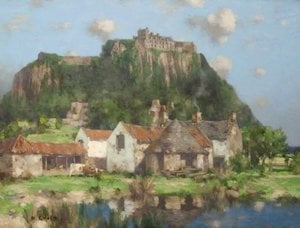
East Linton Mill

David Gauld's 'East Linton Mill' captures the serene beauty of a Scottish village with its picturesque pond and surrounding trees—a testament to his pioneering Glasgow Style and stained glass innovation.

Discover David Gauld (1865-1936), a pivotal Glasgow Boys artist known for oil paintings & stained glass. Influenced by Japanese art & Pre-Raphaelites, his work foreshadowed Art Nouveau. Explore cows, mills, and portraits in Scottish galleries.

Håndlaget oljereproduksjon

Håndmalt olje på lerret i din valgte størrelse og ramme, laget på bestilling av våre kunstnere. (Kjøp trykk Kjøp trykkKjøp bilde Kjøp bilde)

P118B $10
P118H $10
P118W $10
P438Z $10
P508JH $12
P508YH $12
P805H $10
P805Z $10
P919BZ $10
P919G $10
P919XJ $10
P959ZH $10
P968JZ $12
W106C $8
W218G $10
W218JH $8
W218Y $10
W307PJ $10
W316G $10
W316PJ $8
W316Y $10
W398PJ $8
W4111J $10
W500HY $15
W500JH $15
W692G $12
W849H $8
W940BG $15
W953PJ $8

Standardformat
skreddersydd
CM
INCH

Velg mellom våre forhåndsdefinerte størrelser som bevarer kunstverkets opprinnelige proporsjoner.

bredde
høyde

Du kan angi egne mål for å tilpasse en spesifikk ramme eller plass. Dersom den valgte størrelsen ikke samsvarer med originalbildets proporsjoner, vil vi enten beskjære kunstverket eller utvide maleriet med ytterligere håndmalte elementer. En digital mockup vil bli sendt til din godkjenning før produksjonen starter.
Vennligst merk at forhåndsvisningen på skjermen ikke gjenspeiler den faktiske beskjæringen eller utvidelsen. Kun mockuppen vil vise den endelige komposisjonen nøyaktig.
Selv om tilpassede størrelser er tilgjengelige, anbefaler vi å velge et mål fra den forhåndsdefinerte listen for å bevare de originale proporsjonene.

Eksempler på hva som kan endres: Erstatt ansikt med bilde av kunden; Legg til kjæledyr (f.eks. bytt ut katt med hund); Inkluder en skjult melding i bakgrunnen; Endre bakgrunnslandskap eller elementer.
Etter bestilling vil WahooArt.com-teamet sende e-post til kunden for instruksjoner og sende et utkast (mockup) som forhåndsvisning.

Verdensomspennende levering () på 3–4 uker i stedet for standard 5 uker. (27 August). Ingen kompromisser med kvaliteten.

why_choose_icon
Gratis ekspressfrakt over hele verden
why_choose_icon
Lerretsduk av høykvalitets lin
why_choose_icon
Full forsikring under transport
why_choose_icon
Garanti for refusjon av toll og importavgifter
why_choose_icon
Garantert korrekt fargegjengivelse
why_choose_icon
60 dagers returrett (kun ved feil)
why_choose_icon
100% pengene tilbake-garanti
why_choose_icon
Rabatt ved flere kjøp

Totalpris for bestilling

$ 272

reproduction

East Linton Mill

Teknikk for reproduksjon

Størrelse på reproduksjon

-

Endelig pris

$ 272

Kort om verket

  • Location: Glasgow Museums
  • Title: East Linton Mill
  • Artistic style: Impressionism
  • Notable elements or techniques: Detailed depiction of rural landscape
  • Movement: Glasgow Style
  • Medium: Oil on Canvas
  • Artist: David Gauld

Kunstighetsquiz

Det er kun ett riktig svar på hvert spørsmål.

Spørsmål 1:
What is the primary subject matter depicted in ‘East Linton Mill’?
Spørsmål 2:
Who is credited with designing the iconic conical red pantile roof of Preston Mill?
Spørsmål 3:
‘East Linton Mill’ exemplifies which artistic movement's influence?
Spørsmål 4:
In what year was Preston Mill transferred to the care of the National Trust for Scotland?
Spørsmål 5:
What type of material is predominantly used in the construction of Preston Mill’s buildings?

David Gauld’s East Linton Mill: A Testament to Scottish Landscape Painting

The painting “East Linton Mill” by David Gauld (1867–1936) stands as an exemplar of Glasgow Style landscape art, encapsulating the spirit of Victorian Scotland and reflecting a profound engagement with Japanese printmaking traditions alongside Pre-Raphaelite ideals. More than just a depiction of a rural scene—a modest brick building nestled beside a tranquil pond fringed by mature trees—it’s a carefully constructed meditation on beauty, industry, and the harmonious coexistence of man and nature. Gauld's masterful technique—characterized by meticulous detail and subtle tonal gradations—captures not merely what is seen but also how it feels to observe this idyllic corner of East Lothian.
  • Subject Matter: The painting focuses on a picturesque village mill, prominently positioned against the backdrop of a serene lake and surrounding woodland. This deliberate choice aligns with the Glasgow Boys’ fascination for capturing quintessential Scottish landscapes—scenes imbued with atmospheric qualities that evoke emotion and contemplation.
  • Style & Technique: Gauld employed a distinctive Glasgow Style approach, prioritizing tonal harmony and expressive brushwork over photographic realism. He skillfully utilized glazing techniques – applying thin layers of translucent paint over underlying colors – to achieve luminous effects and imbue the canvas with depth and vibrancy. The meticulous rendering of textures—particularly in the stonework of the mill building and the ripples on the lake’s surface—demonstrates Gauld's dedication to capturing the materiality of his subject matter.
  • Historical Context: Created during the late Victorian era, “East Linton Mill” reflects the broader artistic currents of its time. The Glasgow Boys movement championed a Romantic sensibility rooted in Japanese prints and influenced by Pre-Raphaelite artists like John Ruskin and Dante Gabriel Rossetti. These influences encouraged painters to explore themes of spirituality, mythology, and idealized beauty—values that resonate powerfully within Gauld’s composition.
  • Symbolism: The mill itself serves as a potent symbol of Scottish industry and heritage, representing both practical utility and aesthetic grandeur. Its placement beside the lake reinforces the idea of balance – the industrious human endeavor tempered by the restorative power of nature. Furthermore, the dappled sunlight filtering through the trees contributes to an atmosphere of tranquility and serenity, inviting viewers to contemplate the sublime beauty of the natural world.
  • Emotional Impact: Gauld’s painting succeeds in conveying a palpable sense of peace and nostalgia. The muted palette—dominated by earthy tones—creates a mood that is both comforting and contemplative. The artist's careful attention to detail invites viewers into the scene, fostering an emotional connection with its timeless charm. It’s a piece that speaks to the enduring fascination for landscapes that capture the essence of Scottish identity.
Further Research: You can explore “The Mill” at Art UK () and delve into David Gauld’s biography on Wikipedia () to gain deeper insights into his artistic vision and the broader context of Glasgow Style landscape painting. Don't miss the East Linton Library () for local history resources, or consider commissioning a high-quality reproduction from Vancouver Whitecaps () to bring this masterpiece into your home. Finally, Pinterest offers visual inspiration:

Om kunstneren

The Visionary of Glasgow: The Life and Art of David Gauld

In the vibrant, shifting landscape of late nineteenth-century Scotland, few artists captured the intersection of tradition and modernity as gracefully as David Gauld. Born in Glasgow in 1865, Gauld emerged not merely as a painter, but as a pioneer who bridged the gap between the delicate intricacies of graphic design and the monumental presence of stained glass. His journey was one of profound aesthetic evolution, deeply rooted in the artistic ferment of the Glasgow Boys movement, a group that sought to break free from the rigid academicism of the era in favor of more naturalistic, emotive, and experimental approaches.

Gauld’s early creative impulses were shaped by a meticulous eye for detail, a trait honed during his formative years as a lithographer. When he entered the Glasgow School of Art in 1882, he brought with him a burgeoning fascination with the aesthetics of the East. This period was marked by an intense engagement with Japanese prints, whose flattened perspectives and bold, calligraphic lines would forever haunt his compositions. His early public recognition arrived through his evocative pen and ink drawings for The Glasgow Weekly Citizen, works that demonstrated a masterful command of line and a rhythmic, organic sensibility that hinted at the Art Nouveau revolution still on the horizon.

A Synthesis of Light and Line

As Gauld’s career progressed, his artistic medium expanded from the delicate surface of paper to the luminous, translucent medium of stained glass. This transition allowed him to explore the interplay of light and color in a way that few of his contemporaries could match. During his time in Kirkcudbright between 1891 and 1894, Gauld undertook significant commissions for Guthrie and Wells, creating windows that were much more than mere architectural ornaments. These works were tapestries of light, where the organic, flowing forms of the Art Nouveau style met the soulful, symbolic depth of the Pre-Raphaelite tradition.

His technique in glasswork was characterized by a profound understanding of how color interacts with natural illumination. By manipulating texture and pigment, he could evoke a sense of atmosphere that felt both ethereal and grounded. This mastery of medium reflected his broader artistic philosophy: a belief that art should not only represent the world but also transform the space it inhabits. Whether working in oil, ink, or glass, Gauld sought to capture the essence of his subjects—be they the quiet dignity of a portrait or the rugged beauty of the Scottish landscape—through a lens of stylized elegance.

Legacy and Historical Significance

The trajectory of David Gauld’s life was marked by both collaboration and solitary refinement. His associations with other luminaries of the Glasgow School, such as William Stewart Shirreffs and Harrington Mann, placed him at the heart of a transformative period in Scottish art history. Even as his professional relationships shifted and he relocated between Glasgow, Kirkcudbright, and North Berwick, his commitment to innovation remained steadfast. He stood as a vital link between the nineteenth-century fascination with naturalism and the twentieth-century embrace of decorative modernism.

Today, Gauld is remembered as an artist of immense versatility and foresight. His ability to synthesize diverse influences—from the precision of Japanese woodblock prints to the romanticism of the Pre-Raphaelites—allowed him to contribute a unique voice to the Glasgow Style. His legacy lives on in the enduring beauty of his glasswork and the quiet, powerful presence of his paintings, which continue to resonate with an appreciation for craftsmanship, light, and the enduring spirit of Scottish innovation.

David Gauld

David Gauld

1865 - 1936 , United Kingdom

Kort om kunstneren

  • Artistic Movement Or Style: Glasgow Boys; Art Nouveau; Pre-Raphaelites; Japanese influence
  • Artists Or Movements Influenced By This Artist: ['Japanese art']
  • Artists Who Influenced This Artist: ['William Stewart Macgeorge']
  • Date Of Birth: Glasgow, United Kingdom (1865)
  • Date Of Death: 1936
  • Full Name: David Gauld
  • Nationality: Scottish
  • Notable Artworks:
    • St Agnes
    • Music
  • Place Of Birth: Glasgow
Utforsk kunstverk organisert etter temaer, stiler og kjennetegn.