


Kunstverket som vises på denne siden er beskyttet av opphavsretten, noe som betyr at vi ikke har juridisk tillatelse til å lage eller selge identiske reproduksjoner. Denne beskyttelsen håndheves i henhold til internasjonale avtaler som for eksempel Bernerkonvensjonen og av nasjonale lover, inkludert de som er fastsatt i Amerikansk lov om opphavsrett – Tittel 17.
Denne metoden er i fullt samsvar med opphavsrettslige regler, da den ikke innebærer kopiering eller duplisering av det beskyttede kunstverket. I stedet er det snakk om en kreativ nytolkning – et nytt maleri som er inspirert av originalen, men ikke identisk med den.
Giclée- eller lerretsprint av museumskvalitet med rask produksjon og fleksible valgmuligheter for etterbehandling. ( Kjøp håndmalt maleri Bytt til digitalt bilde)





























Velg mellom våre forhåndsdefinerte størrelser som bevarer kunstverkets opprinnelige proporsjoner.

Skriv inn ønsket bredde og høyde for å tilpasse trykket til din ramme eller vegg. Et trykk kan kun beskjæres, aldri skaleres opp utover motivets opprinnelige størrelse, noe som betyr at et format med andre proporsjoner vil føre til tap av deler av bildet. Vi sender deg en digital mockup for godkjenning før vi starter trykkeprosessen. Bildet som vises på denne siden viser ikke den faktiske beskjæringen — det er kun mockuppen som viser dette.
Verdensomspennende levering () på 2 uker i stedet for standard 4/5 uker. (10 November)
Red sky
Størrelse på reproduksjon
Craig R. Barrett’s “Red Sky” isn't merely a painting; it’s an immersion into a profound meditation on time, loss, and the enduring connection between humanity and the vastness of the universe. Born from the crucible of Silicon Valley – where he spent decades shaping technological giants – Barrett unexpectedly turned to art as a means of grappling with larger existential questions. This shift is immediately apparent in “Red Sky,” a work that transcends its striking visual impact to resonate with a deeply considered emotional core. The genesis of this piece, according to Barrett himself, lies not within the frenetic pace of corporate innovation but in a quiet reflection on the First World War and the enduring legacy of human sacrifice.
The painting’s creation coincided with a period of personal introspection for Barrett, fueled by his role as CEO of Intel. Witnessing firsthand the rapid evolution of technology while simultaneously confronting the sobering realities of global conflict prompted him to seek a new language – one that could articulate the paradoxical nature of human existence: our fleeting presence against the backdrop of cosmic eternity. “Red Sky” is thus a distillation of this complex process, an attempt to capture not just the visual spectacle of a storm-ridden sky but also the weight of history and the humbling realization of our place within it.
Technically, “Red Sky” is a masterful exercise in controlled abstraction. Barrett employs a predominantly monochromatic palette – dominated by varying shades of red – to create an atmosphere of intense drama and emotional resonance. The deep crimson hues at the top of the canvas evoke the fiery spectacle of a sunset or storm cloud, while gradually transitioning into darker, more subdued tones towards the bottom. This gradient isn’t simply representational; it symbolizes the cyclical nature of existence—creation and destruction intertwined. The strategic use of white star-like shapes scattered across the red expanse is particularly effective, suggesting both the brilliance of distant stars and the ephemeral nature of human life.
Beyond its technical merits, “Red Sky” is rich with symbolic meaning. The silhouette of the bird-like figure at the bottom – a minimalist representation of an avian form – serves as a poignant reminder of mortality and resilience. It’s not a detailed depiction but rather a suggestion, a fleeting image that invites contemplation about the fragility of life and the enduring spirit of nature. Barrett deliberately avoids overt symbolism, allowing viewers to project their own interpretations onto the work. The reference to the stars, illuminated during World War I, subtly connects the painting to a period of immense human suffering while simultaneously emphasizing the timelessness of the cosmos.
The choice of a brick wall as the backdrop for the painting is also significant. Brick, a material associated with both construction and decay, further reinforces the theme of cyclical destruction and renewal. It grounds the cosmic imagery in a tangible reality, reminding us that even amidst grand narratives of creation and destruction, our lives are lived within the confines of earthly existence.
“Red Sky” is more than just a visually arresting artwork; it’s an invitation to contemplate profound questions about our place in the universe. Barrett's journey from the world of high-tech innovation to the realm of evocative art demonstrates a remarkable capacity for introspection and a willingness to engage with the complexities of human experience. The painting’s enduring power lies not only in its striking aesthetic qualities but also in its ability to evoke a sense of both awe and melancholy, reminding us that even as we confront the inevitability of loss, there is beauty and meaning to be found in the vastness of time and space. It's a testament to the artist’s belief that art can serve as a bridge between the personal and the universal—a way to grapple with our shared humanity and find solace in the enduring rhythms of the cosmos.
Craig R. Barrett skapte "Red sky" innenfor Abstract Expressionism-bevegelsen.
"Red sky" ble laget i Acrylic On Canvas og måler 400 x 90 cm i sin originale form.
Den dominerende fargen i "Red sky" av Craig R. Barrett er White (#fdfdfd).


1939 - , USA

Oppdag Mark Rothkos 25 mest ikoniske malerier! Fordyp deg i abstrakt ekspresjonisme, fargefeltmaling og emosjonell kunsthistorie. Finn inspirasjon til ditt hjem med museumskvalitets reproduksjoner på WahooArt.com.

Master the high-impact world of contemporary abstraction. Discover how bold colors, textures, and modern movements like Abstract Expressionism can transform your space with premium, high-energy art curated for the design-conscious professional.

Oppdag de 10 mest ikoniske verkene fra abstrakt ekspresjonisme! Lær historien bak Jackson Pollock, Mark Rothko og andre mestere. Finn kunsttrykk av høy kvalitet for ditt hjem på WahooArt.com – museumskvalitet & inspirasjon.

Utforsk de 10 mest innflytelsesrike verkene innen geometrisk abstraksjon! Oppdag historiene bak Mondrian, Kandinsky og Malevich. Finn inspirasjon til interiøret med WahooArt.coms eksklusive reproduksjoner – museumskvalitet for ditt hjem. Utforsk samlingen online!
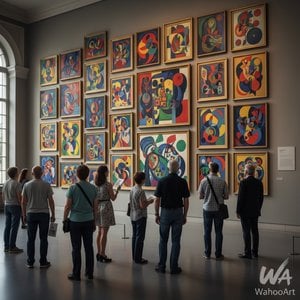
Utforsk Wassily Kandinskys 25 mest ikoniske malerier! Oppdag historien bak abstrakt kunst, ekspresjonisme og fargeharmoni. Finn inspirasjon til interiøret – museumskvalitet reproduksjoner på WahooArt.com.
 Forhåndsvisning
 Send
Send Del
Del
 Vis detaljer
 Utskriftsvennlig guide

 Last ned bilde
 Liknende objekter
 Røntgenundersøkelse
 Lysbildefremvisning
 Spørsmål og svar
 Statistikk

 Vis hele teksten









 Glassalternativet er kun tilgjengelig i størrelser under 110 cm


