

Giclée- eller lerretsprint av museumskvalitet med rask produksjon og fleksible valgmuligheter for etterbehandling. ( Kjøp håndmalt maleri Bytt til digitalt bilde)





























Velg mellom våre forhåndsdefinerte størrelser som bevarer kunstverkets opprinnelige proporsjoner.

Skriv inn ønsket bredde og høyde for å tilpasse trykket til din ramme eller vegg. Et trykk kan kun beskjæres, aldri skaleres opp utover motivets opprinnelige størrelse, noe som betyr at et format med andre proporsjoner vil føre til tap av deler av bildet. Vi sender deg en digital mockup for godkjenning før vi starter trykkeprosessen. Bildet som vises på denne siden viser ikke den faktiske beskjæringen — det er kun mockuppen som viser dette.
Verdensomspennende levering () på 2 uker i stedet for standard 4/5 uker. (10 November)
Arabesque
Størrelse på reproduksjon

Claude Audran III (1658-1734) was a prominent French decorative painter whose career flourished during the reigns of Louis XIV and Louis XV. He is celebrated for his ornate style, encompassing arabesques, grotesques, and particularly, playful ‘singeries’ – depictions of monkeys mimicking human behavior.
Born in Lyon, France, on August 25th, 1658, Claude Audran III came from a family deeply rooted in the artistic world. He was closely mentored by his uncle, Claude Audran the Younger, who served as painter to Louis XIV. This familial connection provided him with early exposure and training within the royal circles of French art.
Audran III’s artistic development was heavily influenced by the prevailing Baroque aesthetic and the demand for lavish decoration within the French court. He mastered techniques in painted panelling, harpsichord cases, and other decorative elements. His style evolved to incorporate a unique blend of classical motifs with whimsical and imaginative scenes.
Audran III’s style is characterized by:
Claude Audran III played a significant role in shaping the decorative arts landscape of late 17th and early 18th-century France. His work embodies the opulence and grandeur associated with the French court, and his influence can be seen in the works of later artists, including Antoine Watteau, who was among his pupils.
In 1704, Audran III obtained the position of Keeper of the Luxembourg Palace. He continued to work as a decorative artist until his death in Paris on May 27th, 1734. His legacy endures through surviving examples of his work and the enduring appeal of his distinctive style.

1658 - 1734 , France

Explore the profound mastery of engraving and intaglio printmaking. Delve into the rich history, technical precision of the burin, and the enduring legacy of fine art techniques that shaped the world's most iconic masterpieces.
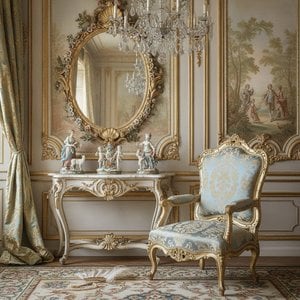
Discover the exquisite allure of Rococo art. Explore a curated guide to 18th-century French masterpieces, from Watteau to Fragonard, and learn how hand-painted oil reproductions can bring timeless elegance and luxury to your sophisticated interior design collection.

Immerse yourself in the splendor of Rococo art. Discover the era of elegance through masterworks by Watteau and Fragonard. Explore themes of romance, aristocratic leisure, and gilded ornamentation in this definitive guide to 18th-century French opulence.
 Forhåndsvisning
 Send
Send Del
Del
 Vis detaljer
 Utskriftsvennlig guide

 Last ned bilde
 Liknende objekter
 Røntgenundersøkelse
 Lysbildefremvisning
 Spørsmål og svar
 Statistikk


 Vis hele teksten









 Glassalternativet er kun tilgjengelig i størrelser under 110 cm


