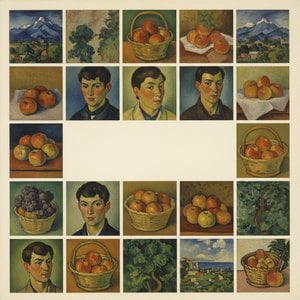
Clarence Alphonse Gagnon (1881–1942): A Visionary of Quebec’s Winter Landscapes
Clarence Alphonse Gagnon (1881–1942) stands as a monumental figure in Canadian art history—a painter who dedicated his life to capturing the ethereal beauty and rugged spirit of Quebec’s Laurentians and Charlevoix regions. More than just documenting scenery, Gagnon sought to convey a profound connection to the land and its people, imbuing his canvases with an emotional resonance that continues to captivate audiences today.
Born in Montreal on November 8th, 1881, Gagnon’s early life was shaped by a supportive family environment. His father, Alphonse E. Gagnon, ran a milling business, fostering a pragmatic outlook alongside his mother’s encouragement of artistic pursuits—a crucial catalyst for Gagnon's burgeoning talent.
His formative years were marked by mentorship from William Brymner at the Art Association of Montreal in 1897, who recognized Gagnon’s innate ability and championed his ambition to study abroad. This pivotal influence propelled him towards Paris, where he immersed himself in the vibrant artistic currents of the Académie Julian.
Parisian Influences and Artistic Development
The Parisian atmosphere proved transformative for Gagnon, exposing him to Impressionism and Post-Impressionism—movements that fundamentally reshaped his aesthetic sensibilities. He absorbed techniques for capturing light and atmosphere, experimenting with color palettes and brushstrokes while painting *en plein air*, diligently recording the subtle nuances of Quebec’s winter landscapes.
Artists like Eugène Boudin and James Wilson Morrice served as inspiration, introducing Gagnon to the expressive power of plein air painting. His early works demonstrate a delicate balance between observation and emotional interpretation—a hallmark of his distinctive style.
The Charlevoix Years: A Defining Chapter
Gagnon’s relocation to Baie-Saint-Paul in 1907 cemented his artistic identity, establishing him as the epicenter of his creative endeavors. During this period, he collaborated closely with local artisans on designs for hooked rugs and *ceintures fléchées*, honoring Quebecois traditions while simultaneously elevating the aesthetic quality of these crafts.
His prolific output during the 1910s and 1920s—characterized by breathtaking depictions of snow-covered mountains, valleys, and villages—solidified his reputation as a master of winter landscapes. Notably, Gagnon’s contribution to Louis Hémon’s novel *Maria Chapdelaine* earned him international acclaim for its evocative illustrations.
Legacy and Enduring Significance
Clarence Alphonse Gagnon’s legacy extends far beyond his artistic achievements. He was a champion of preserving Quebecois culture, fostering connections between art and craftsmanship. His paintings—particularly those capturing the majesty of Quebec’s winter wilderness—remain a cornerstone of Canadian art history.
More than simply reproducing visual impressions, Gagnon sought to convey an emotional understanding of the land and its inhabitants—a feat accomplished with remarkable sensitivity and artistic skill. Today, his work continues to inspire artists and admirers alike, ensuring that Clarence Alphonse Gagnon’s vision of Quebec’s landscape persists as a timeless testament to Canadian artistry.



 Forhåndsvisning
 Kjøp håndlaget maleri
 Send
Send Del med andre
 Vis detaljer
 Veiledning

 Last ned bildet
 Liknende objekter
 Røntgenundersøkelse
 Lysbildefremvisning
 Statistikk


 Vis hele teksten






































 Glassalternativet er kun tilgjengelig i størrelser under 110 cm