


Giclée- eller lerretsprint av museumskvalitet med rask produksjon og fleksible valgmuligheter for etterbehandling. ( Kjøp håndmalt maleri Bytt til digitalt bilde)





























Velg mellom våre forhåndsdefinerte størrelser som bevarer kunstverkets opprinnelige proporsjoner.

Skriv inn ønsket bredde og høyde for å tilpasse trykket til din ramme eller vegg. Et trykk kan kun beskjæres, aldri skaleres opp utover motivets opprinnelige størrelse, noe som betyr at et format med andre proporsjoner vil føre til tap av deler av bildet. Vi sender deg en digital mockup for godkjenning før vi starter trykkeprosessen. Bildet som vises på denne siden viser ikke den faktiske beskjæringen — det er kun mockuppen som viser dette.
Verdensomspennende levering () på 2 uker i stedet for standard 4/5 uker. (8 November)
Angels Pity
Størrelse på reproduksjon
In the quiet, hallowed atmosphere of the Early Renaissance, few works capture the intersection of human sorrow and divine grace as poignantly as Carlo Crivelli’s "Angels Pity." Painted in 1470, this masterpiece serves as a profound meditation on tenderness and spiritual devotion. The scene unfolds with an intimate warmth, presenting Jesus cradling two children within his arms—a gesture that transcends mere historical depiction to become a universal symbol of protection and innocence. Surrounded by a celestial assembly of angels and watchful figures, the composition draws the viewer into a sacred circle of empathy. Even the subtle presence of a solitary bird in the upper corner acts as a silent witness, lending an air of tranquility to a moment heavy with emotional significance.
The artistry of Crivelli is on full display through his masterful command of color and light. Utilizing soft, luminous hues and delicate brushstrokes, the artist creates a sense of palpable intimacy that makes the divine feel reachable. The painting is a triumph of the Early Renaissance style, where every detail is rendered with an almost obsessive realism. Crivelli’s technique involves the meticulous application of oil glazes on wood panel, building layers of color to achieve a radiant depth. This method allows light to appear as if it is emanating from within the figures themselves, highlighting the soft textures of skin and the intricate folds of drapery, thereby inviting the observer to linger on the subtle nuances of the composition.
Beyond its visual splendor, "Angels Pity" is a rich tapestry of Christian iconography designed to provoke deep reflection. The arrangement of the figures within an arched niche creates a sense of sacred enclosure, separating the holy event from the mundane world. Every element serves a symbolic purpose: the tender way Jesus holds the children reflects the theological concept of divine mercy, while the surrounding angels represent the bridge between heaven and earth. Crivelli’s use of trompe l'oeil—a technique intended to trick the eye into perceiving three-dimensional reality—adds a layer of tactile presence to the work, making the spiritual themes feel grounded in a tangible, physical reality.
For the discerning collector or interior designer, this painting offers more than mere decoration; it provides an emotional anchor for any space. The somber yet serene mood makes it an ideal centerpiece for rooms dedicated to contemplation, study, or quiet luxury. Whether one is drawn to its historical significance as a product of the Venetian-influenced March of Ancona or moved by its profound expression of compassion, "Angels Pity" remains a timeless testament to the power of art to evoke the sublime. Owning a high-quality reproduction of this work allows for the preservation of this Renaissance spirit, bringing a sense of historical weight and aesthetic harmony into the modern home.
"Angels Pity" av Carlo Crivelli kan forhåndsvises på din egen vegg via kunstverkets Se i AR-side ved bruk av utvidet virkelighet (AR) på en kompatibel enhet.
Verker som ligner på "Angels Pity" er oppført på verkets Lignende verk-side.
"Angels Pity" av Carlo Crivelli stammer fra Renaissance-perioden. Denne perioden gir verkets historiske kontekst.

Den italienske renessansemaleren Carlo Crivelli ble født i Venezia rundt 1430-35. Han sprang ut av en familie av kunstnere og mottok sin kunstneriske dannelse i de kulturelle sentrene Venezia og Padova. Det antas at Crivellis tidlige opplæring fant sted under Jacobello del Fiore, som fremdeles var aktiv i 1436, og han studerte også ved Vivarini-skolen i Venezia.
Crivelli tilbrakte sine tidlige år i Veneto-regionen, hvor han absorberte dype impulser fra mestere som Vivarini, Squarcione og Mantegna. Innen 1458 forlot han Veneto og tilbrakte mesteparten av sin karriere i Marche-regionen ved Ancona. Her utviklet han en særegen personlig stil som står i markant kontrast til den til hans venetianske samtidige, Giovanni Bellini. Crivellis verk er preget av en konservativ, dekorativ sengotisk sans, kjennetegnet av en lineær kvalitet, en uovertruffen detaljrikdom og den forførende bruken av "trompe l'oeil"-teknikker som leker med betrakterens blikk.
* Carlo Crivellis maleri "Madonna og barnet på tronen" (106 x 55 cm, Museum of Fine Arts, Budapest, Ungarn) står som et fremragende eksempel på hans unike stil. * Han samarbeidet med sin yngre bror, Vittorio Crivelli, på flere prosjekter. * Pietro Alemanno, en maler som emigrerte til Marche-regionen fra Tyskland/Østerrike, var både hans elev og samarbeidspartner.
* Pinacoteca di Brera i Milano, Italia, rommer flere av Crivellis verk, inkludert "Pietà" (128 x 241 cm). * Museo San Giovanni in Bragora i Venezia, Italia, inneholder en samling kunstverk fra ulike perioder og stiler, deriblant verk som tilskrives Crivelli.
Crivellis ettermæle fortsetter å inspirere både kunstentusiaster og lærde, og hans arbeid forblir et vitnesbyrd om den vedvarende kraften i en konservativ, dekorativ sengotisk sans.

1435 - 1495 , Italia

Discover the enduring legacy of oil on board painting. Explore how historical techniques, rich impasto textures, and structural durability create timeless masterpieces that bridge Renaissance grandeur with modern art collecting excellence.

Discover the profound allure of oil on canvas. Explore the mastery of impasto textures, the science of pigment longevity, and expert guides to selecting museum-quality reproductions that elevate your collection with timeless elegance and tactile depth.

Discover the enduring allure of oil on canvas. Explore how master techniques like impasto and glazing create the depth, texture, and emotional resonance found in the world's greatest masterpieces. An essential guide for fine art enthusiasts and discerning collectors.

Discover the enduring allure of hand-painted oil reproductions. WahooArt offers museum-quality, archival masterpieces designed for discerning collectors seeking timeless beauty and a lasting legacy. Invest in fine art that transcends generations with our expert craftsmanship.
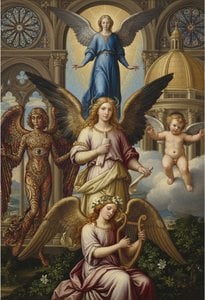
Explore the profound beauty of angelic figures in art history. From Renaissance masterpieces to celestial symbolism, our expert guide offers a sophisticated journey through the divine imagery of the Old Masters for discerning collectors and art enthusiasts.
 Forhåndsvisning
 Send
Send Del
Del
 Vis detaljer
 Utskriftsvennlig guide

 Last ned bilde
 Liknende objekter
 Røntgenundersøkelse
 Lysbildefremvisning
 Spørsmål og svar
 Statistikk

 Vis hele teksten









 Glassalternativet er kun tilgjengelig i størrelser under 110 cm


