


Kunstverket som vises på denne siden er beskyttet av opphavsretten, noe som betyr at vi ikke har juridisk tillatelse til å lage eller selge identiske reproduksjoner. Denne beskyttelsen håndheves i henhold til internasjonale avtaler som for eksempel Bernerkonvensjonen og av nasjonale lover, inkludert de som er fastsatt i Amerikansk lov om opphavsrett – Tittel 17.
Denne metoden er i fullt samsvar med opphavsrettslige regler, da den ikke innebærer kopiering eller duplisering av det beskyttede kunstverket. I stedet er det snakk om en kreativ nytolkning – et nytt maleri som er inspirert av originalen, men ikke identisk med den.
Giclée- eller lerretsprint av museumskvalitet med rask produksjon og fleksible valgmuligheter for etterbehandling. ( Kjøp håndmalt maleri Bytt til digitalt bilde)





























Velg mellom våre forhåndsdefinerte størrelser som bevarer kunstverkets opprinnelige proporsjoner.

Skriv inn ønsket bredde og høyde for å tilpasse trykket til din ramme eller vegg. Et trykk kan kun beskjæres, aldri skaleres opp utover motivets opprinnelige størrelse, noe som betyr at et format med andre proporsjoner vil føre til tap av deler av bildet. Vi sender deg en digital mockup for godkjenning før vi starter trykkeprosessen. Bildet som vises på denne siden viser ikke den faktiske beskjæringen — det er kun mockuppen som viser dette.
Verdensomspennende levering () på 2 uker i stedet for standard 4/5 uker. (8 November)
Florence
Størrelse på reproduksjon
To gaze upon this depiction of Florence is to step through a veil of time, into a moment suspended between vibrant history and quiet contemplation. Carlo Carrà’s vision captures more than just the magnificent dome of Santa Maria del Fiore; it encapsulates the very soul of Florentine artistry—a spirit rooted in the rigorous beauty of the Quattrocento. The composition itself feels like an archaeological discovery rendered in paint, presenting the city not as a mere collection of buildings, but as a unified, breathing volume. Carrà masterfully guides the eye across this aerial panorama, where every overlapping block and delicate curve speaks to centuries of human endeavor and artistic devotion.
Technically, the painting is a profound study in restraint. Carrà employs a technique characterized by light, quick brushstrokes and the exquisite layering of transparent glazes, or velature. This process allows the color to build up luminosity from within, giving the entire scene an ethereal, almost spiritual glow that seems to emanate from the very stone of the city. The structure is defined by thin, delicate black outlines—lines that are structural rather than restrictive. These lines serve to delineate the cubic forms of the architecture, suggesting a geometric order beneath the soft wash of color. It is this interplay between the rigid geometry suggested by the outlines and the atmospheric softness achieved through glazing that gives the piece its unique visual tension.
This work stands as a beautiful testament to the breadth of Carrà's artistic journey. Having navigated the turbulent waters of Futurism, Metaphysics, and various avant-garde movements throughout the twentieth century, here he finds a profound synthesis. In this later period, his focus turns inward, toward essential forms and pictorial simplicity. The painting moves away from overt naturalism or dramatic impressionism, instead achieving an equilibrium between concrete reality and sublime abstraction. It is Carrà distilling the monumental into its most fundamental visual components—a mature artist finding quiet power in elegant reduction.
The subject matter itself carries immense symbolic weight. Florence, particularly viewed through the lens of Brunelleschi’s dome, represents the pinnacle of Renaissance humanism and artistic revival. For Carrà, this city was not just a backdrop; it was a cultural touchstone. The muted palette—of soft blues, earthy grays, and pale terracotta—contributes to an overwhelming sense of tranquility. It invites the viewer into a meditative state, suggesting that true beauty lies in the enduring structure of culture itself. Owning this piece is acquiring not just art, but a tangible connection to the deep, abiding spirit of Italian artistic heritage.
For collectors and designers seeking an object imbued with history and quiet grandeur, this reproduction offers unparalleled depth. The soft luminosity achieved through Carrà’s glazing technique translates beautifully into interior spaces, acting as a focal point that uplifts any room without overwhelming it. It speaks to those who appreciate art that rewards close looking—a piece where the eye can wander from the defined geometry of the foreground blocks to the hazy, luminous expanse of the sky, finding continuous beauty in every subtle shift of tone.
Carlo Carrà er også kjent som Carlo Carra.
"Florence" tilskrives Carlo Carrà.
En reproduksjon av "Florence" av Carlo Carrà anbefales til Accent. Dette forslaget er basert på verkets motiv, stemning og fargebruk.


1881 - 1966 , Italia
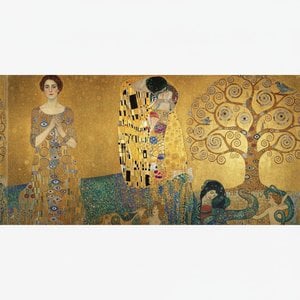
Utforsk Gustav Klimts 25 mest ikoniske kunstverk! Fordyp deg i Jugendstilens gullalder, symbolisme og portretter av kvinner. Finn inspirasjon til interiørdesign & kjøp eksklusive reproduksjoner på WahooArt.com.

Opplev renessansens storhet! Utforsk de 25 mest ikoniske kunstverkene i Galleria degli Uffizi, Firenze – fra Botticelli til Leonardo da Vinci. Historier, teknikker & inspirasjon for ditt hjem. Finn museumskvalitets reproduksjoner på WahooArt.com.

Explore the artistic journey of Carlo Carrà, a pivotal figure in Italian Futurism & Metaphysical painting. Discover his dynamic compositions, collaborations with de Chirico, and lasting influence on modern art history.

Explore the profound works of Mario Sironi, a key figure in Italian Modernism. Discover his evolution from Futurism to Metaphysical painting and his powerful social commentary. Learn about his legacy at WahooArt.

Utforsk topp 10 berømte malerier som forvandler stuen din! Fra Van Gogh til Monet – lær historien bak ikoniske kunstverk og finn inspirasjon til interiøret. Museumskvalitet reproduksjoner på WahooArt.com.
 Forhåndsvisning
 Send
Send Del
Del
 Vis detaljer
 Utskriftsvennlig guide

 Last ned bilde
 Liknende objekter
 Røntgenundersøkelse
 Lysbildefremvisning
 Spørsmål og svar
 Statistikk


 Vis hele teksten









 Glassalternativet er kun tilgjengelig i størrelser under 110 cm


