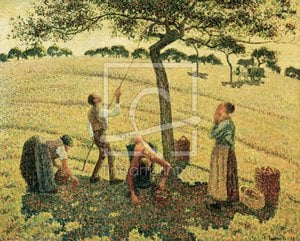
A Life Rooted in Observation: The World of Camille Pissarro
Camille Pissarro, et navn synonymt med både fødselen og utviklingen av impresjonismen, var en kunstner hvis liv speilet de skiftende landskapene han så ivrigst fanget på lerret. Født Jacob Abraham Camille Pissarro 10. juli 1830 i Charlotte Amalie, St. Thomas – da en del av det Danske Vestindia, nå US Virgin Islands – var hans opprinnelse like mangfoldig og levende som de scener som senere definerte hans kunstneriske visjon. Hans far, en portugisisk jødisk handelsmann med fransk statsborgerskap, og hans mor, fra en fransk-jødisk familie på øya, la grunnlaget for et unikt kulturelt miljø som ville forme hans tidlige forståelse av verden. Denne oppveksten, noe ukonvensjonell på grunn av familiens kompleksitet, fremmet en tidlig følsomhet for omgivelsene, en kvalitet som skulle bli grunnsteinen i hans kunstneriske praksis. Hans første formelle utdannelse ved Savary Academy nær Paris ga ham et fundament i tradisjonelle teknikker, men det var hans tilbakekomst til St. Thomas og etterfølgende arbeid som lastebilsjåfør som virkelig tente hans lidenskap for observasjon. Havnenes livlige aktivitet, det pulserende lokale livet og den rå skjønnheten i Karibiske landskap ble hans første motiver, og formet et blikk skarpt tilpasset nyansene i hverdagen.
Fra Realisme til Revolusjon: Kunstnerisk Utvikling
Pissarros kunstneriske reise var en konstant utforskning og forfining. Etter en periode med assistentarbeid for den danske maleren Anton Melbye i Paris, fordypet han seg i verkene til mestere som Gustave Courbet, Jean-Baptiste-Camille Corot og Honoré Daumier – kunstnere som fremmet realisme og sosial kommentar. I utgangspunktet søkte han aksept i det etablerte kunstmiljøet, og viste arbeider på Paris Salon, men fant snart dets begrensninger frustrerende. Et vendepunkt kom med hans omfavnelse av *plein air* maleri – å male direkte utendørs fra naturen – en praksis oppmuntret av Corot som ville bli sentral for impresjonismen. Denne overgangen var ikke bare teknisk; den representerte et filosofisk skifte, en ønske om å fange de flyktige effektene av lys og atmosfære, selve essensen av en scene snarere enn dens nøyaktige representasjon. Han begynte å eksperimentere med løsere penselstrøk og rikere farger, og beveget seg bort fra akademiske konvensjoner mot en mer subjektiv og uttrykksfull stil. Hans tidlige landskapsmalerier, selv om de fortsatt var forankret i realisme, antydet den revolusjonære veien han var på vei til å følge. Denne perioden så ham kjempe med å finne sin egen stemme midt i det voksende kunstneriske utbruddet i Paris, en by som gjennomgikk rask transformasjon og ga endeløse inspirasjoner.
Den Faderlige Figuren av Impresjonismen
Camille Pissarro var ikke bare *en* impresjonist; han var kanskje dens mest samlende og støttende kraft. Unikt viste han arbeider på alle åtte Paris Impressionist-utstillinger fra 1874 til 1886, og fungerte som en stabiliserende faktor i en gruppe ofte preget av interne uenigheter og individuelle ambisjoner. Han var ikke bare til stede – han oppmuntret aktivt sine medkunstnere, tilbød støtte, veiledning og en mye nødvendig følelse av kameratskap. Dette tjente ham navnet “den faderlige figuren” av bevegelsen. Hans forpliktelse til kunstnerisk frihet og innovasjon var urokkelig, selv i møte med kritikk og publikums likegyldighet. Han trodde på kraften i kollektiv handling og fremmet ideen om at kunstnere kunne utstille seg fritt fra Salonens restriktive regler. Ut over sine egne verk utvidet Pissarros innflytelse seg til en yngre generasjon av kunstnere, inkludert Paul Cézanne, Vincent van Gogh og Paul Gauguin, som han veiledet og dypt påvirket. Han ga dem ikke bare teknisk råd, men også et filosofisk rammeverk for deres kunstneriske utforskninger. Hans villighet til å eksperimentere førte ham midlertidig inn i Neo-Impressionismen, inspirert av Georges Seurats punktviserte teknikk, før han endelig returnerte til en mer personlig stil som blandet hans tidligere påvirkninger med nye oppdagelser.
Landskap av Liv: Temaer og Arv
Pissarros kunstneriske produksjon var bemerkelsesverdig mangfoldig, men fokuserte konsekvent på verden rundt ham. Han er kjent for sine fremstillinger av både landlige og urbane landskaper, ofte portretterer scener fra hverdagen – bønder som arbeider i åkrene, travle parisianere gater, rolige landsbytorger. Hans malerier var ikke bare pittoreske utsikter; de var sosiale kommentarer, som gjenspeilte hans dype empati for arbeidsklassen og hans forpliktelse til å skildre deres liv med verdighet og respekt.
- Landskap: Kjent for å fange skjønnheten i både landskaps- og byliv.
- Scener fra Paris: Levende fremstillinger av en raskt foranderlig metropol.
- Bønderliv: Reflekterer hans sosiale bevissthet og empati for arbeidsklassen.
Pissarros senere verk, spesielt de skapt i perioder med politisk uro eller personlige vanskeligheter, bærer ofte en følelse av melankoli og sosial kritikk. Hans arv strekker seg langt utover hans vakre malerier. Han var en forkjemper for kunstnerisk frihet, en mentor for generasjoner av kunstnere, og en pioner i utviklingen av moderne kunst. Hans forpliktelse til *plein air* maleri revolusjonerte landskapskunsten, mens hans villighet til å eksperimentere med forskjellige stiler demonstrerte hans intellektuelle nysgjerrighet og urokkelige dedikasjon til sitt håndverk. Han er en høyt verdsatt figur hvis bidrag fortsetter å bli studert og satt pris på for sin vedvarende relevans. *Pissarros kunst er ikke bare en registrering av verden slik den var; det er et vitnesbyrd om kraften i observasjon, empati og kunstnerisk innovasjon.*



 Forhåndsvisning
 Kjøp håndlaget maleri
 Send
Send Del med andre
 Vis detaljer

 Last ned bildet
 Liknende objekter
 Røntgenundersøkelse
 Lysbildefremvisning
 Statistikk


 Vis hele teksten






































 Glassalternativet er kun tilgjengelig i størrelser under 110 cm