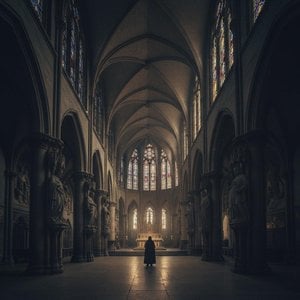
St George og draken (1487) av Bernt Notke, håndmalt oljemaleri-reproduksjon av en mesterkunstner
Forhåndsvisning Se i AR Bytt til trykk Bytt til digitalt bilde Send
Vis detaljer Utskriftsvennlig guide Legg til i favoritter Last ned bilde Liknende objekter Røntgenundersøkelse Lysbildefremvisning Spørsmål og svar Last ned presentasjon Statistikk

St George og draken Håndmalt oljemalerireproduksjon

Et monumental skulptur av St George og draken i Stockholm Domkirke, utført av Bernt Notke rundt 1487. Et symbol på kristendom og svensk seier over Danmark – en kunstnerisk triumf.

Bernt Notke (c. 1440-1509) was a pivotal Late Gothic artist of Northern Europe, famed for expressive sculptures & paintings like the Danse Macabre and monumental altarpieces. Explore his innovative workshop & legacy.

Håndlaget oljereproduksjon

Håndmalt olje på lerret i din valgte størrelse og ramme, laget på bestilling av våre kunstnere. ( Bytt til trykk Bytt til digitalt bilde)

Corner sample of the P118B picture frame: støpt polystyren, 5 cm wide and 3 cm thick
P118B Nkr10
Corner sample of the P118H picture frame: støpt polystyren, 5 cm wide and 3 cm thick
P118H Nkr10
Corner sample of the P118W picture frame: støpt polystyren, 5 cm wide and 3 cm thick
P118W Nkr10
Corner sample of the P438Z picture frame: støpt polystyren, 5.5 cm wide and 3.5 cm thick
P438Z Nkr10
Corner sample of the P508JH picture frame: støpt polystyren, 7 cm wide and 3.5 cm thick
P508JH Nkr12
Corner sample of the P508YH picture frame: støpt polystyren, 7 cm wide and 3.5 cm thick
P508YH Nkr12
Corner sample of the P805H picture frame: støpt polystyren, 5 cm wide and 3.5 cm thick
P805H Nkr10
Corner sample of the P805Z picture frame: støpt polystyren, 5 cm wide and 3.5 cm thick
P805Z Nkr10
Corner sample of the P919BZ picture frame: støpt polystyren, 7 cm wide and 3.5 cm thick
P919BZ Nkr10
Corner sample of the P919G picture frame: støpt polystyren, 7 cm wide and 3.5 cm thick
P919G Nkr10
Corner sample of the P919XJ picture frame: støpt polystyren, 7 cm wide and 3.5 cm thick
P919XJ Nkr10
Corner sample of the P959ZH picture frame: støpt polystyren, 5 cm wide and 3 cm thick
P959ZH Nkr10
Corner sample of the P968JZ picture frame: støpt polystyren, 6 cm wide and 4 cm thick
P968JZ Nkr12
Corner sample of the W106C picture frame: massivt tre, 5 cm wide and 3 cm thick
W106C Nkr8
Corner sample of the W218G picture frame: massivt tre, 5 cm wide and 3 cm thick
W218G Nkr10
Corner sample of the W218JH picture frame: massivt tre, 5 cm wide and 3 cm thick
W218JH Nkr8
Corner sample of the W218Y picture frame: massivt tre, 5 cm wide and 3 cm thick
W218Y Nkr10
Corner sample of the W307PJ picture frame: massivt tre, 6 cm wide and 3 cm thick
W307PJ Nkr10
Corner sample of the W316G picture frame: massivt tre, 6 cm wide and 3 cm thick
W316G Nkr10
Corner sample of the W316PJ picture frame: massivt tre, 6 cm wide and 3 cm thick
W316PJ Nkr8
Corner sample of the W316Y picture frame: massivt tre, 6 cm wide and 3 cm thick
W316Y Nkr10
Corner sample of the W398PJ picture frame: massivt tre, 5 cm wide and 3 cm thick
W398PJ Nkr8
Corner sample of the W4111J picture frame: massivt tre, 6.5 cm wide and 3.5 cm thick
W4111J Nkr10
Corner sample of the W500HY picture frame: massivt tre, 7 cm wide and 5 cm thick
W500HY Nkr15
Corner sample of the W500JH picture frame: massivt tre, 7 cm wide and 5 cm thick
W500JH Nkr15
Corner sample of the W692G picture frame: massivt tre, 8 cm wide and 4 cm thick
W692G Nkr12
Corner sample of the W849H picture frame: massivt tre, 5 cm wide and 3 cm thick
W849H Nkr8
Corner sample of the W940BG picture frame: massivt tre, 7.5 cm wide and 4.5 cm thick
W940BG Nkr15
Corner sample of the W953PJ picture frame: massivt tre, 6 cm wide and 3.5 cm thick
W953PJ Nkr8

Standardformat
skreddersydd
CM
INCH

Velg mellom våre forhåndsdefinerte størrelser som bevarer kunstverkets opprinnelige proporsjoner.

bredde
høyde

Skriv inn ønsket bredde og høyde for å tilpasse bildet til din ramme eller vegg. Siden dette er håndmalt, kan kunstneren male litt mer rundt motivet eller beskjære det noe dersom du velger et annet format — valget er ditt. Vi sender deg en digital mockup til godkjenning før maleriet påbegynnes. Bildet som vises på denne siden representerer ikke det faktiske resultatet — kun mockuppen viser det endelige uttrykket.

Eksempler på hva som kan endres: Erstatt ansikt med bilde av kunden; Legg til kjæledyr (f.eks. bytt ut katt med hund); Inkluder en skjult melding i bakgrunnen; Endre bakgrunnslandskap eller elementer.
Etter bestilling vil WahooArt.com-teamet sende e-post til kunden for instruksjoner og sende et utkast (mockup) som forhåndsvisning.

Verdensomspennende levering () på 3–4 uker i stedet for standard 5 uker. (10 November). Ingen kompromisser med kvaliteten.

Gratis ekspressfrakt over hele verden
Lerretsduk av lin av høy kvalitet
Full transportforsikring
Garanti for refusjon av toll og importavgifter
Garantert fargegjengivelse
100 dagers returrett ved fabrikasjonsfeil
100% pengene tilbake-garanti
Rabatt ved flere kjøp

Totalpris

Nkr 2600

St George og draken

Trykkmetode

Størrelse på reproduksjon

-

Totalpris for valgte alternativer

Nkr 2600

Kort om verket

  • Year: 1487
  • Movement: Sen gotisk
  • Notable elements or techniques: Detaljert skulpturarbeid; Dramatisk komposisjon
  • Artistic style: Nordisk gotikk
  • Location: Storkyrkan, Stockholm

Kunnequiz om kunst

Det er kun ett riktig svar på hvert spørsmål.

Spørsmål 1:
Hva er hovedtemaet i dette maleriet?
Spørsmål 2:
Hvilken kirkegård er dette maleriet av?
Spørsmål 3:
Når ble dette monumentet oppført?
Spørsmål 4:
Hvilken kunstner skapte denne St. George og dragen statuen?
Spørsmål 5:
Hva symboliserer de små relieffene på monumentets base?

Saint George and the Dragon: A Triumph of Faith and Form

The monumental sculpture of Saint George slaying the dragon, housed in Stockholm’s Storkyrkan (Storkyrkan), stands as an unparalleled testament to Late Gothic artistic achievement—a dramatic distillation of Christian legend into breathtaking sculptural form. Commissioned by Sten Sture the Elder following his decisive victory over Danish forces at Brunkeberg in 1471, this masterpiece embodies not only martial triumph but also profound spiritual conviction and masterful craftsmanship. Its enduring presence within Sweden’s national church underscores its significance as a symbol of resilience, piety, and artistic innovation.
  • Historical Context: The sculpture emerged from the turbulent political landscape of Scandinavia during the Hussite Wars—a period marked by religious fervor and dynastic struggles. Sten Sture's patronage reflects a desire to secure divine favor for Sweden’s cause against Danish aggression, aligning artistic expression with political ambition.
  • Artist: Bernt Notke (c. 1440-1509), hailing from Lübeck—a bastion of Gothic sculpture—was a pioneer in his time. His workshop produced numerous monumental altarpieces and sculptures, establishing him as one of the foremost artists of the Baltic region.
  • Style: The sculpture exemplifies Late Gothic sculptural style, characterized by expressive dynamism and meticulous detail. Notke skillfully blends realism with symbolic representation—capturing both the physicality of the figures and the spiritual essence of the narrative.

Composition and Technique: A Symphony of Movement

The sculpture’s central grouping depicts Saint George astride a horse, engaged in a ferocious battle against a dragon. Notke employed a technique known as *contrapposto*, positioning St. George's torso slightly off-center to create an illusion of weightlessness and movement—a hallmark of Gothic art that conveys both strength and grace. The sculptor meticulously carved the horse’s musculature, capturing its tense posture and conveying palpable energy. Similarly, the dragon is rendered with astonishing anatomical accuracy, emphasizing its coiled form and menacing gaze.
  • Material: Crafted from oak—a favored material for monumental sculptures—the sculpture demonstrates exceptional wood carving skill. The artist utilized a combination of chisel and mallet to achieve remarkable precision and textural variation.
  • Color Palette: Although the sculpture’s original polychromy has largely faded over time, traces of pigment remain—revealing a vibrant color scheme that complemented the narrative depicted in the artwork. Researchers believe that St. George's robe was adorned with ultramarine blue—a pigment derived from lapis lazuli—symbolizing holiness and divine majesty.

Symbolism: Faith, Courage, and Divine Victory

Beyond its aesthetic qualities, the sculpture is laden with symbolic meaning—reflecting medieval Christian theology. Saint George embodies courage, chivalry, and unwavering faith—attributes revered throughout Christendom. The dragon represents evil, temptation, and pagan idolatry—forces vanquished by Christ’s grace. The horse symbolizes St. George's noble spirit and his steadfast devotion to God.
  • Narrative Representation: Notke meticulously translated the legend of Saint George into sculptural form—capturing the climactic moment when St. George defeats the dragon with his lance and sword. The sculpture’s dramatic pose conveys the intensity of the battle and underscores the triumph of Christian virtue over pagan darkness.
  • Decorative Elements: Miniature carved reliefs adorning the base of the sculpture further enrich its narrative complexity—depicting scenes from St. George's life and highlighting his martyrdom. These reliefs serve as visual reminders of St. George’s unwavering faith and his ultimate victory over death.

Emotional Impact: A Legacy of Inspiration

The sculpture continues to inspire awe and contemplation—serving as a powerful emblem of Sweden's artistic heritage and spiritual tradition. Its monumental scale commands attention—drawing viewers into the drama of the biblical tale and eliciting feelings of reverence and admiration. The sculpture’s enduring presence within Storkyrkan testifies to its ability to transcend time—reminding audiences of the transformative power of faith and art.

Spørsmål og svar

Hvordan relaterer motivet i "St George og draken" seg til Bernt Notke sine vanlige temaer?

Blant Bernt Notke sine dokumenterte temaer – medieval tradition, religious allegory, royal patronage, symbolic narrative, sculptural masterpiece – retter "St George og draken" sitt eget fokus mot medieval art, christian symbolism, sculpture group, dragon battle, saint george triumph, swedish history, religious narrative.

Hvilket museum har det originale verket "St George og draken"?

Originalen av "St George og draken" av Bernt Notke oppbevares i Storkyrkan, Stockholm, Sverige. En reproduksjon gjør det mulig å stille ut verket i eget hjem.

Hvordan beskrives fargepaletten i "St George og draken" av Bernt Notke?

Fargepaletten i "St George og draken" av Bernt Notke beskrives som Jordnær estetikk. Det er en kortfattet beskrivelse av verkets farger.


Om kunstneren

A Master of the Baltic Gothic: The Life and Art of Bernt Notke

Bernt Notke, a name resonating with the somber beauty and expressive power of late Gothic art, remains an enigmatic figure despite his profound influence on Northern European sculpture and painting. Born around 1440 in the small Pomeranian town of Lassan, his life unfolded amidst the burgeoning trade routes and artistic currents of the Baltic Sea region. While concrete details about his early years are scarce, we know he emerged from a family deeply connected to commerce – his father, Michel Notke, was a trader and ship-owner based in Tallinn. This maritime background likely fostered an openness to diverse influences that would characterize his art. His mother, Gertraut, hailed from Visby, further cementing the artist’s ties to the Hanseatic League's vibrant network of exchange. Little is known about his formal training, but it is believed he spent time in Flanders, possibly within the workshop of tapestry weaver Pasquier Grenier in Tournai. This experience instilled in him not only technical skills but also an understanding of large-scale collaborative projects – a hallmark of his later work.

The Workshop and its Innovations

Notke’s artistic practice was deeply rooted in the medieval workshop system, a communal endeavor far removed from the solitary studio of the Renaissance artist. He wasn't merely an individual creator but a master orchestrator, leading a team of skilled artisans – carpenters, painters, sculptors – to realize ambitious visions. A remarkable discovery during the restoration of his Triumphal Cross in Lübeck revealed a signed note by Notke and five collaborators, offering a rare glimpse into the inner workings of his workshop. This collaborative spirit allowed him to undertake projects of monumental scale and complexity. But what truly set Notke apart was his willingness to experiment with materials and techniques. He wasn’t content with simply carving wood or applying paint; he sought to imbue his sculptures with an almost unsettling realism, often employing unconventional additions like leather strips to simulate veins or fragments of cloth and glass to enhance the texture and detail of garments. This innovative approach blurred the lines between sculpture and painting, creating works that were both visually striking and emotionally resonant. The question of whether Notke was primarily a painter, sculptor, or organizer remains debated, but his 1467 recognition by the Lübeck city council as a “painter” suggests an initial focus on this discipline.

Themes of Mortality and Majesty: Key Works

Notke’s oeuvre is dominated by two powerful themes: the inevitability of death and the grandeur of religious devotion. These are vividly expressed in his most celebrated works. The *Danse Macabre*, or Dance of Death, a popular medieval motif, found particularly potent expression in Notke's hands. Two versions survive – one fragment in Tallinn’s St. Nicholas Church, and a 1701 copy (based on the original) of the larger Lübeck version which was destroyed during World War II. These depictions of death leading figures from all walks of life to their final fate are not merely morbid exercises but profound meditations on human mortality and the transience of earthly power. His *Triumphal Cross* in Lübeck Cathedral, completed around 1477, stands as a testament to his sculptural prowess. Comprising seventy-two intricately carved figures surrounding the crucified Christ, it is a breathtaking display of realism, monumentality, and emotional intensity. Commissioned by Bishop Albert Krummedik, this work showcases Notke’s ability to convey both divine suffering and human grief with remarkable sensitivity. Another significant commission was the high altar for Aarhus Cathedral in Denmark (1479), a towering structure featuring sculptures of Saint Anne, John the Baptist, and Pope Clement I. This altarpiece, signed by Notke in three places, reflects the growing influence of early Northern Renaissance portraiture, evident in the realistic depiction of individual features. Finally, his *Saint George and the Dragon* sculpture in Stockholm’s Storkyrkan, created during his time as mint master of Sweden (1491-1497), embodies a heroic narrative with dynamic composition and expressive detail.

A Legacy Forged in Wood and Paint

Bernt Notke's artistic journey spanned the late 15th and early 16th centuries, a period of transition between the medieval world and the dawn of the Renaissance. While he absorbed influences from Flanders and Italy, his work remained firmly rooted in the Gothic tradition, characterized by its emotional intensity, dramatic compositions, and symbolic richness. He died before May 1509 in Lübeck, leaving behind a legacy that continues to inspire awe and admiration. His impact on Northern European art is undeniable. He not only elevated sculpture and painting to new heights of technical skill and artistic expression but also established a thriving workshop that trained generations of artists. His innovative use of materials, his mastery of form, and his profound engagement with the themes of life, death, and faith cemented his position as one of the foremost artists of his time – a true master of the Baltic Gothic. His works serve as poignant reminders of a bygone era, inviting us to contemplate the enduring mysteries of human existence.
Bernt Notke

Bernt Notke

1440 - 1509 , Germany

Kort om kunstneren

  • Full Name: Bernt Notke
  • Nationality: German
  • Date Of Birth: 1440
  • Date Of Death: 1509
  • Place Of Birth: Pomorze, Germany
  • Notable Artworks:
    • Danse Macabre
    • Triumphal Cross
    • St. George & Dragon
  • Artistic Movement Or Style: Late Gothic
Utforsk kunstverk organisert etter temaer, stiler og kjennetegn.