


Giclée- eller lerretsprint av museumskvalitet med rask produksjon og fleksible valgmuligheter for etterbehandling. ( Kjøp håndmalt maleri Bytt til digitalt bilde)





























Velg mellom våre forhåndsdefinerte størrelser som bevarer kunstverkets opprinnelige proporsjoner.

Skriv inn ønsket bredde og høyde for å tilpasse trykket til din ramme eller vegg. Et trykk kan kun beskjæres, aldri skaleres opp utover motivets opprinnelige størrelse, noe som betyr at et format med andre proporsjoner vil føre til tap av deler av bildet. Vi sender deg en digital mockup for godkjenning før vi starter trykkeprosessen. Bildet som vises på denne siden viser ikke den faktiske beskjæringen — det er kun mockuppen som viser dette.
Verdensomspennende levering () på 2 uker i stedet for standard 4/5 uker. (16 November)
Veritas
Størrelse på reproduksjon
In this somber monochrome portrait, the figure of Veritas emerges from a deep, undifferentiated void. Painted by Arnold Böcklin about 1881, the work presents a female personification of Truth. She holds a long, slender sword upright in her right hand, a gesture that feels both steady and unyielding. Her gaze is direct, meeting the viewer with a stoic expression that suggests a quiet, piercing revelation. There is a sense of stillness here, as if she exists in a space removed from the passage of time.
The subject possesses a statuesque quality, her form rendered with a luminous skin texture that contrasts against the dark background. Fine, translucent folds of draped fabric fall from her head, adding a layer of soft, organic detail to her classical silhouette. The sharp, vertical line of the blade cuts through the composition, providing a rigid counterpoint to the curves of her anatomy. She does not merely exist within the frame; she commands the space with a presence that feels both ancient and immediate.
Through this allegorical lens, Arnold Böcklin explores themes of purity and strength. The grayscale palette strips away the distraction of color, forcing a confrontation with the subject's intense, singular purpose. Every shadow and highlight works to define her form, creating a sense of shallow depth that keeps the focus entirely on her unwavering stare and the metallic sheen of her weapon. Truth stands before us, stripped of ornament, defined only by her essence and her steel.
The composition centers on a vertical portrait, drawing the eye immediately to the upper torso and head of the woman. She holds a long, slender sword upright in her right hand, a sharp verticality that cuts through the space. This straight, rigid line of the blade provides a striking contrast to the soft, organic curves of her anatomy. The subject gazes directly toward the viewer with a stoic expression, her eyes meeting the observer in a moment of unyielding presence. Everything about her posture suggests a stillness that is both heavy and resolute.
Light and shadow perform a dramatic dance across the figure, creating a strong chiaroscuro effect. This interplay of light pulls her form out of a dark, undifferentiated void, giving the portrait a sense of shallow depth. The color palette remains strictly grayscale, stripping away the distraction of hue to focus entirely on the interplay of tone. One can almost feel the textures through the visual shifts: the smooth, luminous quality of the skin contrasts against the metallic sheen of the blade and the fine, translucent folds of the draped fabric falling from her head.
The work emerges from a style of academic realism infused with heavy allegorical symbolism. Every brushstroke seeks to ground the ethereal subject in a tangible, physical reality. This sense of presence is heightened by the medium, as the piece appears to be executed in oil on a small panel or canvas. The intimate scale of 27.4 x 21.8cm forces a close encounter with the subject, demanding a quiet, focused gaze to fully register the subtle shifts in light and form. It is a work that feels contained, as if the energy of the figure is being held within its modest boundaries.
A profound darkness defines the environment, with a background of deep black void that offers no sense of horizon or distance. This lack of setting pushes the figure forward, creating a sharp, dramatic contrast between the luminous skin and the surrounding nothingness. The light seems to strike the subject from an unseen source, carving out the anatomy with precision. This technique creates a sense of weight and volume, making the figure feel as though she is stepping out from the shadows into the viewer's immediate space. The composition remains fixed and steady, anchored by the verticality of the sword and the stillness of the pose.
Created about 1881, the painting relies on the interplay of light and shadow to define its narrative. The textures of the draped fabric and the metallic edge of the blade emerge from the darkness through careful application of pigment. There is a tension between the soft, organic lines of the human form and the rigid, unyielding geometry of the weapon. This visual dialogue between the living and the inanimate reinforces the allegorical weight of the scene, leaving the viewer to wonder at the silent strength held within this monochrome realm.
Nei – kunstverket oppbevares i utlandet. "Veritas" befinner seg i Tyskland, mens Arnold Böcklin ble født i Sveits.
"Veritas" representerer Arnold Böcklin sin Mature Period.
"Veritas" av Arnold Böcklin er fritt tilgjengelig – opphavsretten har utløpt. Opphavsretten beregnes fra kunstnerens dødsår, og Arnold Böcklin døde i 1901.

Basel i Sveits utgjør startpunktet for et liv definert av spenningen mellom det håndfaste og det spektrale. Den unge mannen, født 16. oktober 1827 av Christian Frederick Böcklin og Ursula Lippe, ville etter hvert bevege seg bort fra farens silkehandel og inn i de strenge salene ved Düsseldorf-akademiet. Under veiledning av Schirmer begynte han å absorbere landskapets språk, en ferdighet som senere skulle brukes til å kartlegge den menneskelige sjelens geografi. Han malte ikke bare kulisser; han konstruerte riker der det klassiske og det makabre kolliderer.
Bevegelsen fra den akademiske disiplinen i Düsseldorf til lyset i Paris og den eldgamle tyngden i Roma markerer et fundamentalt skifte i hans visjon. I Louvre absorberte han mesternes historie, men det var atmosfæren i Italia som virkelig formet hans hånd. Han vendte tilbake til Roma mellom 1862 og 1866, en periode hvor paletten hans begynte å favorisere mer voldsomme og ekspressive farger. Dette var ikke det lyse, solfylte Italia fra renessansen, men et sted preget av dype skygger og mytologisk tyngde. Hans arbeid begynte å bevege seg mot det allegoriske, hvor han brukte figurer fra antikken for å utforske dødelighetens tunge og uunngåelige nærvær.
Mot slutten av det 19. århundre var hans rykte forankret i en spesifikk, hjemsøkende opptatthet. Mellom 1880 og 1886 produserte han fem versjoner av Dødens øy. Dette verket, inspirert av den engelske kirkegården i Firenze hvor datteren hans var begravet, ble et brennpunkt for symbolistbevegelsen. Det er en scene av dyp stillhet: en steinete liten øy, mørke sypresser og en robåt som nærmer seg en taus strand. Maleriet skildrer ikke bare et sted; det skildrer en tilstand av væren. Denne evnen til å fremstille det immaterielle – drømmenes hvisking og etterlivets tyngde – plasserte ham i sentrum av en ny europeisk sensibilitet.
Hans tekniske tilnærming benyttet ofte en tykk, ekspressiv impasto, særlig i verk som La Guerre (1896). I dette verket skjelver lerretet av konfliktens kaos. Han unngår tradisjonalismens rene linjer og velger i stedet en tett, lagdelt komposisjon der figurer kjemper midt i ruinert arkitektur. Det er en visceral manifestasjon av ødeleggelse, hvor sløret mellom myte og virkelighet går i oppløsning i en storm av skygger. Hans stil overlappet med pre-rafaelittene, men han forble distinkt, fokusert på en mystikk som føltes både eldgammel og urovekkende moderne.
Virkningen av hans bildespråk strakte seg langt utover lerretet og nådde inn i den senromantiske musikkens auditive rike. Hans malerier ga visuell stimulans til komponister, og påvirket særlig atmosfæren i Gustav Mahlers verker. Hans evne til å bygge bro mellom det visuelle og det psykologiske betydde at hans innflytelse ble følt av dem som søkte å representere det underbevisste. Hans rekkevidde berørte flere generasjoner av kunstnere:
Han døde i Fiesole i Italia, og etterlot seg et kunstnerskap som nektet å la seg kategorisere enkelt. Han var en maler av det sveitsiske landskapet, den romerske tavernaen og den mytologiske lunden, men hans sanne motiv forble det tause, vedvarende nærværet av det ukjente. Hans verk er bevart i betydelige samlinger, inkludert Kunstmuseum Basel og Kunsthaus Zürich, og fungerer som ankre for de som utforsker skjæringspunktet mellom myte og dødelighet.

1827 - 1901 , Sveits
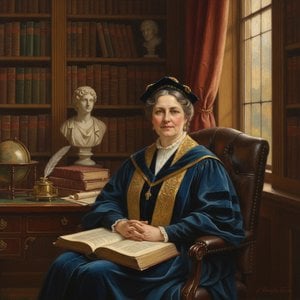
Discover the profound beauty of Academic Portraiture. Explore how classical realism captures prestige through meticulous technique, anatomical truth, and timeless elegance—perfect for discerning collectors seeking museum-quality mastery and historical grandeur.

Explore the clinical precision of German New Objectivity through masters like Otto Dix. Discover the truth behind the Weimar era's raw realism.

Discover the profound beauty of Classical Realism. Explore a curated guide to academic mastery, from technical precision to timeless elegance, perfect for discerning collectors seeking museum-quality excellence and bespoke artistry.

Master the art of decoding hidden symbols and visual allegories in historical masterpieces. Elevate your collection with expert insights.

Decode the profound symbolism of hands in masterworks from Van Gogh to Hindu mudras. Explore the silent language of art with our expert guide.
 Forhåndsvisning

 Send
 Del
 Vis detaljer
 Utskriftsvennlig guide


 Last ned bilde
 Liknende objekter
 Røntgenundersøkelse
 Lysbildefremvisning
 Spørsmål og svar

 Statistikk


 Vis hele teksten









 Glassalternativet er kun tilgjengelig i størrelser under 110 cm


