A Celestial Vision: Unveiling Andrea Mantegna’s Angelic Fresco
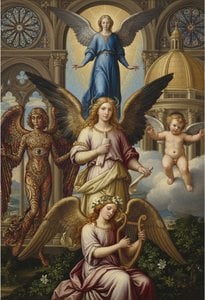
The fragment of fresco attributed to Andrea Mantegna, designated simply as “untitled (2659),” offers a captivating glimpse into the artist's masterful command of Renaissance painting. Though its original context remains shrouded in mystery – size and precise date unknown – the surviving image transports us to a realm of ethereal beauty, populated by angels and cherubs amidst swirling clouds. It’s a scene brimming with spiritual energy, rendered with the meticulous detail and dramatic perspective that define Mantegna's unique style.
Mantegna was deeply influenced by his early training under Francesco Squarcione, who prioritized the study of classical antiquity over traditional painting techniques. This immersion in Roman art instilled in Mantegna a profound appreciation for sculptural form, archaeological accuracy, and illusionistic space. We see these qualities beautifully manifested in this fresco fragment. The angels aren’t merely decorative figures; they possess a weight and solidity reminiscent of ancient statuary, their forms carefully modeled with light and shadow. Some are depicted holding bows and arrows – symbols often associated with divine power and the defense of faith – suggesting a narrative element perhaps relating to a celestial battle or protective guardianship. The inclusion of cherubs further enhances the heavenly atmosphere, adding layers of innocence and grace to the composition.
Mantegna’s skill in trompe-l'oeil is subtly present even within this fragment. The clouds aren’t simply painted representations; they seem to recede into space, creating a sense of depth that draws the viewer into the scene. This illusionistic effect was a hallmark of his work, and he employed it frequently to blur the boundaries between reality and representation. The bird soaring in the upper right corner adds an unexpected touch of naturalism, grounding the celestial vision with a fleeting moment of earthly life. It’s a detail that speaks to Mantegna's keen observation of the world around him, even as he sought to transcend it through his art.
Considering Mantegna’s broader oeuvre, particularly works like the “Lamentation over the Dead Christ,” we can appreciate how this fresco fragment aligns with his characteristic emotional intensity and dramatic perspective. While the "Lamentation" is known for its stark realism and poignant depiction of grief, this angelic scene evokes a sense of awe and reverence. Both pieces, however, demonstrate Mantegna’s ability to create powerfully moving images that resonate deeply with the viewer. The enduring appeal of his work lies in his unique blend of classical rigor, innovative technique, and profound humanism – qualities that continue to inspire artists and captivate audiences centuries later.
For those seeking to bring a touch of Renaissance grandeur into their homes or collections, a hand-painted reproduction of this angelic fresco offers an opportunity to own a piece of art history. The delicate interplay of light and shadow, the graceful forms of the angels, and the overall sense of celestial harmony would make it a stunning focal point in any interior space – a testament to Mantegna’s enduring legacy as one of the greatest masters of the Italian Renaissance.



 Forhåndsvisning
 Kjøp håndlaget maleri
 Send
Send Del med andre
 Vis detaljer

 Last ned bildet
 Liknende objekter
 Røntgenundersøkelse
 Lysbildefremvisning

 Vis hele teksten






































 Glassalternativet er kun tilgjengelig i størrelser under 110 cm