Om kunstneren
A Renaissance Forged in Antiquity: The Life and Art of Andrea Mantegna
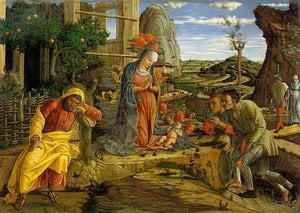
Andrea Mantegna, født nær Padua rundt 1431, står som en sentral figur som forbinder den tidlige og høye renessansen. Hans kunstneriske reise var ikke bare å adoptere klassiske former; det var en fordypende utgravning av antikken, et lidenskapelig forsøk på å gjenopplive Romaens ånd i den blomstrende italienske renessansen. I motsetning til mange samtidige som fant inspirasjon i klassiske modeller, hadde Mantegna en unik feber for arkeologisk nøyaktighet. Denne besettelsen stammet fra hans tidlige år under Francesco Squarcione, en maler og samler hvis verksted fungerte mindre som et tradisjonelt studio og mer som en akademisk institusjon dedikert til å studere romerske ruiner, skulpturer og inskripsjoner. Det var i disse veggene, omgitt av fragmenter av et tapt imperium, at Mantegnas kunstneriske visjon begynte å ta form – en visjon preget av skulpturelle former, dramatisk perspektiv og nesten obsessiv oppmerksomhet på detaljer. Hans tidlige liv er i det vesentlige litt skjult i mystikk; beretninger antyder at han ble funnet som en lovende lærling, hans iboende talent anerkjent og dyrket av Squarcione til tross for ydmyke opprinnelser. Dette uvanlige begynnelsen kan ha ført til Mantegnas utmattelige søken etter kunstnerisk mesterskap og hans besluttsomhet om å forme en stil som var distinkt hans egen.
The Gonzaga Court and the Illusion of Reality
Mantegnas karriere blomstret virkelig da han gikk inn i tjenesten for Gonzaga-familien i Mantua, og ble hoffmaler i 1488. Denne patronaten ga ham et utenprecedent nivå av kunstnerisk frihet og en plattform for å realisere sine mest ambisiøse prosjekter. Gonzaga’ene var ikke bare mecenater; de var samarbeidspartnere, bestilte verk som presset grensene for kunstnerisk innovasjon. Det var i denne perioden at Mantegna skapte hva som er ansett som hans mesterverk: *Camera degli Sposi* (Brudekammers) freskene i Palazzo Ducale. Dette banebrytende verket overgår bare dekorasjon; det er et komplett illusjonsmiljø, som sømløst integrerer arkitektur og maleri for å skape en utvidet følelse av rom. Freskene skildrer scener fra Gonzaga-familiens liv, portretter som er bemerkelsesverdig realistiske og engasjerende, og et fantastisk *di sotto in sù* (fra under) takpanel som skaper illusjonen av en åpen himmel. Denne mesterskapfulle manipulasjonen av perspektiv var ikke bare et spørsmål om teknisk dyktighet; det dreide seg om å skape en verden i et rom, og utvisker grensene mellom virkelighet og representasjon. I tillegg til *Camera degli Sposi* fortsatte Mantegna å produsere verk av eksepsjonell kvalitet for Gonzaga-høiet, inkludert de monumentale seriene *Triumphs of Caesar*. Disse maleriene, inspirert av romerske triumfparader, er ikke bare historiske skildringer; de er forseggjorte allegorier som feirer Gonzaga-familiens makt og prestisje, presentert med en prakt som rivaliserer det keiserlige ambisjonene til antikken.
A Master of Perspective and Anatomical Precision
Mantegnas kunstneriske innovasjoner utvidet seg langt utover illusjonsmiljøer. Han var en pioner i bruken av perspektiv, ofte ved å bruke teknikker som gikk imot konvensjonelle metoder for å oppnå dramatiske effekter. Ofte justerte han horisontlinjen, og skapte en følelse av monumentalt og imponerende skala. Denne teknikken, kombinert med hans nøyaktige oppmerksomhet på anatomi, ga hans figurer en uovertruffen følelse av vekt og tilstedeværelse. Han var ikke fornøyd med bare å representere det menneskelige legeme; han dissekert det, studerte dets muskulatur og skildret det med en presisjon som var revolusjonerende for sin tid. Hans mesterskap i *trompe-l'oeil* – å skape illusjoner så overbevisende at de villeder øyet – forsterket dette ytterligere. Han studerte klassisk kunst, spesielt skulpturer av Donatello, og forsøkte å gjenskape den ideelle formen. Dette ble tydelig i hans mange portretter, hvor han brukte mørke og lys til å fremheve muskulaturen og skikkelsenes former.
Influences and Legacy
Mantegnas kunst var påvirket av en rekke faktorer, inkludert hans interesse for antikken, hans studier av Donatello og andre florentinske malere, og hans arbeid i Squarciones verksted. Han var også en viktig bidragsyter til utviklingen av perspektiv og anatomi i italiensk kunst. Hans bruk av perspektiv var mer radikal enn mange av hans samtidige, og han eksperimenterte med forskjellige teknikker for å skape illusjoner av dybde og rom. Hans interesse for antikken er tydelig i mange av hans verk, spesielt *Triumphs of Caesar*, hvor han bruker klassiske motiver og symbolikk for å feire makt og ære.
Mantegna døde i Mantua i 1506, og etterlot seg et arv som fortsatt resonerer hos kunsthistorikere og entusiaster. Hans verk representerer en kritisk vendepunkt i kunstens historie, og forbinder den tidlige og høye renessansen. Han var ikke bare en imitator av klassiske former; han var en tolk, tilpasset antikke motiver og teknikker for å skape noe helt nytt og unikt hans egen. Hans oppmerksomhet på detaljer, hans mesterskap i perspektiv og hans dype engasjement med den klassiske verden etablerte ham som en ledende figur i sin tid. *Mantegnas utforskning av klassiske temaer hjalp med å gjenopplive interessen for antikk kunst og kultur*, og banet vei for de kunstneriske prestasjonene til den høye renessansen. Hans innflytelse kan sees i verkene til utallige kunstnere, fra Rafael's elegante komposisjoner til Michelangelos kraftfulle figurer. I dag er hans malerier utstilt i store museer rundt om i verden, inkludert National Gallery i London og Pinacoteca di Brera i Milano, hvor de fortsetter å inspirere beundring og ærefrykt.



 Forhåndsvisning
 Bytt til trykk
 Send
Send Del med andre
 Vis detaljer

 Last ned bildet
 Liknende objekter
 Røntgenundersøkelse
 Lysbildefremvisning
 Statistikk
 Vis hele teksten