En pioner innen orientalistiske visjoner: Livet og kunsten til Alexandre Gabriel Decamps
Alexandre Gabriel Decamps, et navn som klinger med de levende fargene fra eksotiske landskap og romantikkens dramatiske eleganse, trådte frem som en sentral skikkelse i det 19. århundrets franske malerkunst. Han ble født i Paris den 3. mars 1803, og hans kunstneriske reise var preget av dristig innovasjon, der han utfordret akademiske konvensjoner og banet vei for det som skulle bli kjent som orientalisme. Selv om samtidige som Delacroix og Ingres også innehadde fremtredende posisjoner i den franske kunstverdenen, skilte Decamps seg ut gjennom en intenst personlig stil – en forening av nitid observasjon, dramatisk komposisjon og en fengslende fortellerkraft som trakk betrakteren inn i verdener som føltes både kjente og fullstendig fremmede. Hans tidlige anerkjennelse som et talentfullt kunstnersinn varslet en karriere preget av kritisk hyllest, noe som kulminerte i den store eller konsil-medaljen ved Paris-utstillingen i 1855, et vitnesbyrd om hans eksepsjonelle ferdigheter og unike visjon. Utenfor lerretet var Decamps en mann dypt knyttet til naturen; han fant trøst og inspirasjon i landsbygda rundt Paris, hvor han dyrket sin lidenskap for dyr og jakt – en forkjærlighet som på subtilt vis skulle gjennomtrengte mye av hans kunstneriske virke.
Fra skrift til Sahara: En kunstnerisk stil i utvikling
Decamps’ kunstneriske utvikling var preget av en vilje til å utforske mangfoldige motiver og teknikker. Opprinnelig ble han trukket mot historiske og bibelske scener, men han utmerket seg raskt ved å fremstille disse fortellingene med et uovertruffent nivå av realisme – ved å forankre dem i autentiske, lokale omgivelser snarere enn å støtte seg på idealiserte eller konvensjonelle fremstillinger. Denne forpliktelsen til sannferdighet sprang ut av hans reiser til Østen, opplevelser som satte dype spor i hans kunstneriske sanselighet. Han avbildet ikke bare det han så; han formidlet en følelse av atmosfæren, lyset og selve essensen av disse fjerne landene.
Joseph Sold by His Brethren er for eksempel ikke bare en illustrasjon av en bibelsk historie, men en levende skildring av en spesifikt tid og et sted, gjennomsyret av emosjonell dybde og psykologisk innsikt. Denne tilnærmingen strakte seg også til hans større historiske verk som
The Defeat of the Cimbri, hvor han mesterlig fanget kampens kaos og brutalitet, og viste sin evne til å håndtere storslåtte komposisjoner med dynamisk energi. Likevel var det hans skildringer av det orientalske livet som virkelig skilte ham fra mengden. Han avduket hverdagslige scener – markeder, skoler, hjemlige interiører – med en trofasthet som i starten forundret kritikere som var vant til mer romantiserte eller stereotypiske fremstillinger.
Orientalismens far og hans varige innflytelse
Decamps regnes med rette som grunnleggeren av orientalisme i fransk malerkunst. Før ham ble skildringer av Østen ofte filtrert gjennom et prisme av fantasi og eksotisme. Han presenterte en annen visjon – en rotfestet i direkte observasjon og genuin nysgjerrighet. Hans utstilling ved Salongen i 1831 markerte et vendepunkt, da den introduserte det parisiske publikummet for et usminket glimt av livet i Nord-Afrika og Midtøsten. Denne banebrytende tilnærmingen resonnerte hos både kunstnere og forfattere, og inspirerte en bølge av orientalistiske verk som skulle dominere store deler av 1800-tallets kunst. Hans stil – preget av dristige penselstrøk, slående kontraster mellom lys og skygge, og en merkbar følelse av atmosfære – ble et referansepunkt for generasjoner av malere, fotografer og forfattere.
Maxime du Camp døpte ham berømt "Orientens Christopher Columbus", i anerkjennelse av hans pionerrolle i å åpne opp dette nye kunstneriske territoriet.
The Albanian Dancer, med sine vibrerende farger og energiske komposisjon og, eksemplifiserer hans evne til å fange en kulturs sjel samtidig som han opprettholder en distinkt fransk estetisk sans. Selv satiriske verk som
The Monkey Connoisseurs, et lekent stikk mot den konservative juryen i Académie des Beaux-Arts, demonstrerer hans vilje til å utfordre etablerte normer og omfavne en mer uavhengig kunstnerisk visjon.
En tragisk slutt og en evig arv
Tragisk nok ble Decamps’ liv avbrutt den 22. august 1860, i en alder av 57 år, etter en jaktulykke nær Fontainebleau. Hans tidlige død berøvet kunstverdenen et virkelig innovativt talent, men hans arv lever videre gjennom hans fengslende malerier og deres vedvarende appell. I dag feires mesterverk som
Incendie d'un village italien, med sin dramatiske skildring av konflikt og mesterlige bruk av impasto, og
A Bedouin and a Camel Resting in a Desert, som viser teksturene og stillheten i ørkenlivet, for sin kunstneriske verdi og historiske betydning. Hans verk kan finnes i prestisjetunge institusjoner som Musée du Louvre i Paris, noe som sikrer at hans visjon fortsetter å inspirere og fange publikum over hele verden. Plattformer som WahooArt.com spiller en viktig rolle i å bevare og spre hans kunst ved å tilby reproduksjoner av høy kvalitet som lar beundrere oppleve skjønnheten og kraften i Decamps’ malerier på nært hold. Hans innflytelse strekker seg utover malerkunstens grenser; den har formet oppfatningen av Østen og etterlatt et uutslettelig merke på det kulturelle landskapet i 1800-tallets Europa.
Utforskning av Decamps' verden: Bemmerkelsesverdige verk
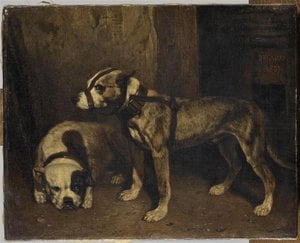
- CHIENS BRIFAUTS: En sjarmerende orientalistisk scene som viser hunder i en livlig setting.
- LA COUR DE FERME: Et fengslende maleri fra det 19. århundre som forener fransk romantikk med historiske detaljer.
- L’ÉCOLE TURQUE: En livlig skildring av en tyrkisk skole, som fanger energien og atmosfæren i dagliglivet.
- PAYSAGE TURC: Et fredfullt landskap som utforsker realisme og romantikk i en fransk kontekst.



 Forhåndsvisning
 Bytt til trykk
 Send
Send Del med andre
 Vis detaljer

 Last ned bildet
 Liknende objekter
 Røntgenundersøkelse
 Lysbildefremvisning
 Statistikk

 Vis hele teksten