x
ForhåndsvisningForhåndsvisning Se i ARSe i AR Kjøp trykk Kjøp trykkKjøp bilde Kjøp bilde SendSend
Vis detaljerVis detaljer Legg til i favoritter Legg til i favoritter Last ned bildetLast ned bildet Liknende objekterLiknende objekter RøntgenundersøkelseRøntgenundersøkelse LysbildefremvisningLysbildefremvisning

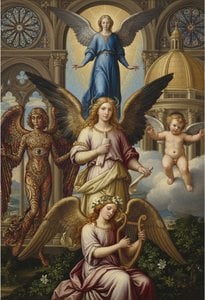
Vault decoration

Marvel at Agnolo Bronzino's 'Vault Decoration,' a stunning Renaissance fresco from Florence’s Palazzo Vecchio. Witness intricate figures, golden light, and classical beauty in this masterpiece of Mannerism.

Utforsk Agnolo Bronzinos raffinert eleganse – Florentinsk Mannerist mester og hoffmaler til Medici-familien. Oppdag hans ikoniske portretter og allegoriske verk.

Håndlaget oljereproduksjon

Håndmalt olje på lerret i din valgte størrelse og ramme, laget på bestilling av våre kunstnere. (Kjøp trykk Kjøp trykkKjøp bilde Kjøp bilde)

P118B $10
P118H $10
P118W $10
P438Z $10
P508JH $12
P508YH $12
P805H $10
P805Z $10
P919BZ $10
P919G $10
P919XJ $10
P959ZH $10
P968JZ $12
W106C $8
W218G $10
W218JH $8
W218Y $10
W307PJ $10
W316G $10
W316PJ $8
W316Y $10
W398PJ $8
W4111J $10
W500HY $15
W500JH $15
W692G $12
W849H $8
W940BG $15
W953PJ $8

Standardformat
skreddersydd
CM
INCH

Velg mellom våre forhåndsdefinerte størrelser som bevarer kunstverkets opprinnelige proporsjoner.

bredde
høyde

Du kan angi egne mål for å tilpasse en spesifikk ramme eller plass. Dersom den valgte størrelsen ikke samsvarer med originalbildets proporsjoner, vil vi enten beskjære kunstverket eller utvide maleriet med ytterligere håndmalte elementer. En digital mockup vil bli sendt til din godkjenning før produksjonen starter.
Vennligst merk at forhåndsvisningen på skjermen ikke gjenspeiler den faktiske beskjæringen eller utvidelsen. Kun mockuppen vil vise den endelige komposisjonen nøyaktig.
Selv om tilpassede størrelser er tilgjengelige, anbefaler vi å velge et mål fra den forhåndsdefinerte listen for å bevare de originale proporsjonene.

Eksempler på hva som kan endres: Erstatt ansikt med bilde av kunden; Legg til kjæledyr (f.eks. bytt ut katt med hund); Inkluder en skjult melding i bakgrunnen; Endre bakgrunnslandskap eller elementer.
Etter bestilling vil WahooArt.com-teamet sende e-post til kunden for instruksjoner og sende et utkast (mockup) som forhåndsvisning.

Verdensomspennende levering () på 3–4 uker i stedet for standard 5 uker. (30 August). Ingen kompromisser med kvaliteten.

why_choose_icon
Gratis ekspressfrakt over hele verden
why_choose_icon
Lerretsduk av høykvalitets lin
why_choose_icon
Full forsikring under transport
why_choose_icon
Garanti for refusjon av toll og importavgifter
why_choose_icon
Garantert korrekt fargegjengivelse
why_choose_icon
60 dagers returrett (kun ved feil)
why_choose_icon
100% pengene tilbake-garanti
why_choose_icon
Rabatt ved flere kjøp

Totalpris for bestilling

$ 272

reproduction

Vault decoration

Teknikk for reproduksjon

Størrelse på reproduksjon

-

Endelig pris

$ 272

Kort om verket

  • Movement: Mannerism
  • Medium: Fresco
  • Year: 1541
  • Artist: Agnolo Bronzino
  • Subject or theme: Religious & Myth.
  • Artistic style: Reserved elegance
  • Location: Palazzo Vecchio, Florence

Kunstighetsquiz

Det er kun ett riktig svar på hvert spørsmål.

Spørsmål 1:
What is the primary subject depicted in Agnolo Bronzino’s ‘Vault Decoration’?
Spørsmål 2:
The ‘Vault Decoration’ is located in which Florentine palace?
Spørsmål 3:
Which artistic movement is most closely associated with Agnolo Bronzino’s style, as evidenced by the ‘Vault Decoration’?
Spørsmål 4:
What is a prominent feature of the fresco’s composition, contributing to its overall effect?
Spørsmål 5:
When was the ‘Vault Decoration’ created?

A Glimpse of Celestial Grace: Agnolo Bronzino’s “Vault Decoration”

Within the opulent Palazzo Vecchio in Florence resides a breathtaking fresco—Agnolo Bronzino's "Vault Decoration," completed in 1541 for Duchess Eleonora di Toledo. More than just a decorative scheme, this monumental work offers a profound meditation on divine order, classical beauty, and the burgeoning complexities of Renaissance courtly life. It’s a visual symphony that invites contemplation, revealing layers of symbolism woven into its meticulously rendered figures and vibrant palette.

Bronzino, a master of Mannerism, eschewed the dramatic emotionality favored by his predecessors like Pontormo in favor of a refined elegance and controlled composition. His style is characterized by elongated forms, subtle distortions, and an almost disconcerting stillness—a deliberate departure from the dynamism of earlier Renaissance painting. “Vault Decoration” exemplifies this perfectly; each figure possesses a serene composure, their gazes fixed with an unnerving intensity that draws the viewer into a world both familiar and subtly unsettling.

A Tapestry of Myth and Religion

The fresco’s central theme is deeply rooted in biblical narrative and classical mythology. The vault itself depicts a celestial scene, dominated by St. Michael, St. John the Evangelist, St. Jerome, and St. Francis—figures representing key virtues and patrons of the Medici court. Below them unfolds a series of allegorical scenes: “Moses Striking the Rock,” illustrating the miraculous parting of the Red Sea; “Moses Gathering Manna,” depicting God’s provision for his people in the wilderness; and “Crossing of the Red Sea.” These stories, rendered with exquisite detail and bathed in a rich, jewel-toned palette of reds, blues, and golds, speak to themes of faith, obedience, and divine guidance.

However, Bronzino doesn’t simply present these narratives as straightforward accounts. He imbues them with a distinctly Mannerist sensibility—figures are often idealized, their bodies rendered with an almost sculptural quality, reminiscent of ancient Greek sculpture. The drapery is voluminous and complex, creating intricate patterns that seem to shimmer with light. The use of gold leaf further enhances the sense of opulence and divinity, transforming the vault into a veritable temple of beauty.

Symbolism and Courtly Intrigue

Beyond the readily apparent religious iconography, “Vault Decoration” is laden with subtle symbolic meaning. The placement of each figure—their gestures, their attire—holds significance within the context of Renaissance courtly life. The Duchess herself, Eleonora di Toledo, was a woman of considerable influence and intelligence; her presence in this grand design underscores the power and sophistication of the Medici court.

Furthermore, the fresco’s meticulous detail suggests an underlying concern with status and prestige—a reflection of the patronage system that fueled Renaissance art. Bronzino's skill was highly sought after by wealthy families and powerful figures, and this work stands as a testament to his ability to fulfill their desires for artistic expression and social affirmation.

A Legacy of Elegance

“Vault Decoration” remains a pivotal masterpiece in the history of Renaissance art. It showcases Bronzino’s mastery of technique, his profound understanding of classical ideals, and his unique Mannerist vision. The fresco's enduring appeal lies not only in its technical brilliance but also in its ability to evoke a sense of awe and wonder—a reminder of the beauty, complexity, and spiritual depth that characterized the High Renaissance.

Today, reproductions of this extraordinary work continue to captivate audiences worldwide. Its timeless elegance and profound symbolism make it an ideal addition to any discerning collection or a stunning focal point for interior design, transporting viewers to a world of celestial grace and courtly splendor.


Om kunstneren

Agnolo Bronzino: The Sculptor's Touch in Florentine Mannerism

Agnolo di Cosimo, known to history as Bronzino, emerged from the vibrant artistic landscape of Renaissance Florence in 1503, a period already brimming with genius. Born the son of a butcher, his path diverged sharply from familial trade, guided instead by an innate talent that would see him become one of the most sought-after portraitists of his era and a defining figure of Mannerism. His early training began with Raffaellino del Garbo, but it was under the tutelage of Jacopo da Pontormo that Bronzino’s artistic sensibilities truly took shape. While absorbing Pontormo's innovative style—characterized by expressive distortions and dramatic lighting—he ultimately forged his own distinct voice—one characterized by a cool composure and refined detail markedly different from his teacher’s often emotionally charged works. This early period was also influenced by studies with Andrea del Sarto, exposing him to the legacies of Michelangelo and Leonardo da Vinci, foundational influences that would subtly permeate his mature style. The young Bronzino quickly demonstrated an aptitude for capturing not just physical likeness but a certain psychological depth, even in his earliest commissions.

Early Influences and Artistic Formation

Pontormo’s impact on Bronzino was profound. Unlike Pontormo's emotionally turbulent compositions—often imbued with sorrowful expressions and swirling draperies—Bronzino favored a deliberate restraint, prioritizing clarity of line and meticulous rendering of surface textures. This stylistic preference reflected a broader trend within Mannerism—a rejection of High Renaissance ideals of harmony and balance in favor of stylized forms and unsettling perspectives. Bronzino’s apprenticeship under Pontormo instilled in him a fascination with sculptural techniques, evident in his approach to portraiture where he sought to achieve an almost three-dimensional effect through careful manipulation of volume and contour. Furthermore, the influence of Michelangelo—particularly his monumental sculptures—shaped Bronzino's understanding of anatomical precision and dramatic gesture. Leonardo da Vinci’s scientific observation and artistic experimentation similarly contributed to Bronzino’s intellectual curiosity and commitment to mastering the complexities of visual representation.

Ascension at the Medici Court: Patronage and Artistic Output

Bronzino’s career ascended dramatically with the patronage of Cosimo I de’ Medici, Duke of Tuscany. This relationship—established after Bronzino contributed to the lavish decorations celebrating Cosimo’s wedding to Eleonora di Toledo in 1539—cemented his position as the official court painter for much of his life. It was a role he fulfilled with unwavering dedication and remarkable skill. The portraits emanating from this period are not merely likenesses; they are carefully constructed statements of power, status, and dynastic ambition. Cosimo and Eleonora themselves became frequent subjects—immortalized in paintings that exude an aristocratic aloofness and polished elegance. These works weren’t simply about capturing physical resemblance but crafting enduring symbols of Medici authority. Bronzino's meticulous attention to detail—the textures of fabrics, the gleam of jewels, the subtle nuances of expression—all rendered with an almost enamel-like precision—became hallmarks of aristocratic representation. He was entrusted with decorating the chapel dedicated to Eleonora, a project spanning two decades and showcasing his versatility as a fresco painter. The resulting images are testament to Bronzino’s technical prowess and artistic vision.

The Mannerist Style: Cool Composure and Sculptural Precision

Bronzino's distinctive style—characterized by cool composure and sculptural precision—represented a radical departure from the prevailing aesthetic sensibilities of his time. Unlike the emotionally charged compositions favored by artists like Raphael or Michelangelo, Bronzino’s paintings eschewed dramatic gestures and expressive coloration in favor of deliberate restraint and meticulous rendering of surface textures. His figures are often posed in stiff, stylized positions—almost as if sculpted—creating an illusion of three-dimensionality that defied conventional artistic conventions. This stylistic preference reflected a broader trend within Mannerism—a rejection of High Renaissance ideals of harmony and balance in favor of distorted perspectives and unsettling spatial arrangements. Bronzino’s mastery of line—particularly his use of hatching and crosshatching—produced velvety surfaces that conveyed an uncanny sense of depth and luminosity. He achieved this effect by carefully controlling the interplay of light and shadow, creating a visual experience that was both intellectually stimulating and aesthetically captivating.

Legacy and Influence: Shaping European Portraiture

Bronzino’s influence extended far beyond Florence, shaping the visual language of aristocratic representation throughout Europe for generations to come. His cool elegance and refined technique became hallmarks of court portraiture—inspiring artists across the continent to adopt a similar stylistic approach. Scholars now recognize Bronzino's contribution to Mannerist art as pivotal in establishing a new aesthetic standard—one that prioritized intellectual complexity and stylistic control over emotional expression. Despite criticisms leveled against Mannerism during the Romantic era, Bronzino’s work has experienced a resurgence of appreciation in recent decades—demonstrating its enduring power to fascinate and inspire viewers centuries after his death in 1572. His legacy as one of the most important Mannerist painters—a master of reserved elegance whose portraits continue to captivate and intrigue—ensures his place among the titans of Renaissance art history.
Agnolo Bronzino

Agnolo Bronzino

1503 - 1572 , Italia

Kort om kunstneren

  • Artistic Movement Or Style: Mannerism
  • Artists Who Influenced This Artist:
    • Pontormo
    • Michelangelo
    • Leonardo da Vinci
  • Date Of Birth: 17 november 1503
  • Full Name: Agnolo di Cosimo
  • Nationality: Italian
  • Notable Artworks:
    • Venus, Cupid, Folly & Time
    • Ugolino Martelli
    • The Holy Family
  • Place Of Birth: Florence, Italy
Utforsk kunstverk organisert etter temaer, stiler og kjennetegn.