


Giclée- eller lerretsprint av museumskvalitet med rask produksjon og fleksible valgmuligheter for etterbehandling. ( Kjøp håndlaget maleri Kjøp bilde)





























Velg mellom våre forhåndsdefinerte størrelser som bevarer kunstverkets opprinnelige proporsjoner.

Du kan oppgi egne mål for å tilpasse en spesifikk ramme eller et bestemt område. Dersom den valgte størrelsen ikke samsvarer med det originale bildets proporsjoner, vil vi enten beskjære kunstverket eller utvide bildet med en speilet eller ensfarget kant. En digital mockup vil bli sendt til din godkjenning før produksjonen starter.
Vennligst merk at forhåndsvisningen på skjermen ikke gjenspeiler den faktiske beskjæringen eller utvidelsen. Kun mockuppen vil vise den endelige komposisjonen nøyaktig.
Selv om tilpassede størrelser er tilgjengelige, anbefaler vi å velge et mål fra den forhåndsdefinerte listen for å bevare de originale proporsjonene.
Verdensomspennende levering () på 2 uker i stedet for standard 4/5 uker. (7 September)


Diana Badeende
Størrelse på reproduksjon

Born in Utrecht around 1620 and tragically passing away in the same city in 1658, Abraham van Cuylenborch remains a captivating figure within the rich tapestry of 17th-century Dutch painting. While his life was relatively short, his artistic output—primarily characterized by idyllic landscapes populated with mythological figures and evocative grotto scenes—left an indelible mark on the genre, establishing him as a key interpreter of Italianate influences within the burgeoning Dutch art scene.
Cuylenborch’s early training unfolded under the tutelage of Cornelis van Poelenburgh, a prominent Utrecht painter known for his elegant landscapes and skillful rendering of classical motifs. Van Poelenburgh's style profoundly shaped Cuylenborch’s artistic development, imbuing him with a deep appreciation for atmospheric perspective, balanced compositions, and a refined sense of detail. This foundational influence is readily apparent in Cuylenborch’s early works, which often feature meticulously rendered foliage, distant horizons, and figures engaged in pastoral activities.
Cuylenborch's most distinctive contribution to the Dutch landscape tradition lies in his fascination with grottoes—small, enclosed caves or grottos—and their inhabitants. These scenes, frequently depicted as idyllic retreats where nymphs and mythological figures frolic amidst lush vegetation, became a hallmark of his oeuvre. The grotto itself served not merely as a setting but as a symbolic space, often imbued with an atmosphere of mystery, tranquility, and sensual delight. He wasn't simply painting landscapes; he was constructing miniature worlds brimming with allegorical meaning.
The depiction of these grottos is remarkably detailed, showcasing Cuylenborch’s skill in capturing the textures of stone, moss, and water. He frequently employed a technique known as ‘chiaroscuro,’ utilizing dramatic contrasts between light and shadow to heighten the sense of depth and create a captivating visual drama. The figures within these scenes—often inspired by classical mythology or biblical narratives—were rendered with a delicate grace and an awareness of their surroundings, contributing to the overall atmosphere of enchantment.
Cuylenborch’s artistic style is often described as ‘Italianate,’ reflecting the profound influence of Italian Renaissance landscape painting. He drew inspiration from artists such as Claude Lorrain and Andrea Pozzo, adopting their techniques for creating atmospheric perspective, balanced compositions, and dramatic lighting effects. However, Cuylenborch skillfully adapted these influences to suit the specific conventions of Dutch art, resulting in a unique synthesis of styles.
Beyond Italianate traditions, Cuylenborch’s work also demonstrates an awareness of contemporary trends within the Dutch landscape genre. He shared with his contemporaries a fascination with depicting natural beauty and exploring the relationship between humanity and nature. His compositions often feature elements of ‘arcadianism,’ a popular trend in 17th-century art that idealized rural life and celebrated the virtues of simplicity and harmony.
Among Cuylenborch’s most celebrated works are “A Tomb in a Grotto,” currently housed at the Glasgow Museums, and “Landscape with Bacchus and the Nymphs,” held by The Metropolitan Museum of Art. These paintings exemplify his mastery of composition, color, and detail, capturing the essence of his distinctive artistic vision.
Despite his relatively short career, Abraham van Cuylenborch left a significant legacy on Dutch art. His innovative depictions of grotto landscapes influenced generations of artists and helped to establish the genre as a prominent feature of the Dutch Golden Age. His work continues to be admired for its beauty, elegance, and evocative power, offering viewers a glimpse into a world of mythic enchantment and serene natural splendor.

1620 - 1658 , Netherlands
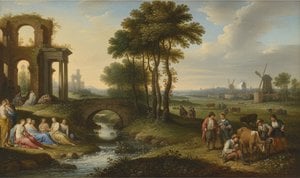
Discover Cornelis van Poelenburch, a pivotal Dutch Baroque landscape painter bridging Mannerism & Italianate styles. Explore his life, key works, and lasting influence on 17th-century art with WahooArt.

Oppdag de 10 ikoniske mesterverkene som definerte nederlandsk barokk! Rembrandt, Vermeer og mer – lær historien bak kunsten og finn inspirasjon til ditt hjem. Museumskvalitet reproduksjoner på WahooArt.no. Utforsk samlingen online!

Discover Jan van Goyen, the master of Dutch landscape painting. Explore his subtle technique, atmospheric realism & lasting influence on art history. Learn about this 17th-century pioneer at WahooArt.

Utforsk Rembrandts 25 mest ikoniske kunstverk! Oppdag historiene bak mestermalerier, portretter og bibelske scener fra den nederlandske barokken. Finn museumskvalitets reproduksjoner & interiørinspirasjon på WahooArt.com.
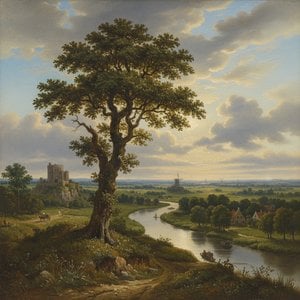
Explore the life & work of Jacob van Ruisdael, the preeminent Dutch landscape painter. Discover his technical brilliance, symbolic depth, and lasting influence on art history. Learn about collecting Ruisdael's masterpieces.

 Forhåndsvisning
 Send
Send Del med andre
 Vis detaljer

 Last ned bildet
 Liknende objekter
 Røntgenundersøkelse
 Lysbildefremvisning

 Vis hele teksten







 Glassalternativet er kun tilgjengelig i størrelser under 110 cm


