William Grimaldi, 1751 – 1830

De 4 beroemdste schilderijen van William Grimaldi

Het schilderij dat William Grimaldi beroemd maakte is Portrait of Sir Harbord Harbord, 1st Baron Suffield (1734-1810) (1789); het hangt in het Nationalmuseum, Stockholm. William Grimaldi, Son of the Artist (1808) en Margaret Pryse volgen in de harten van verzamelaars en museumbezoekers. Van de 5 werken van William Grimaldi in onze catalogus zijn dit de 4 meest bewonderde, elk gepresenteerd met de datum, het museum en wat het uniek maakt.

Gerangschikt op basis van onze populariteitsscore, die de zoekopdrachten, bezoeken en bestellingen voor elk werk combineert. Bijgewerkt in november 2026. Elk meesterwerk op deze pagina kan worden besteld als een handgeschilderde olieverfreproductie van museumkwaliteit of als een fine art print, in de door u gekozen afmeting.

Portret van William Grimaldi
William Grimaldi · 1751 – 1830
Geboren · overleden
1751 – 1830, Shoreditch
Werken in onze catalogus
5
Meest bekend
Portrait of Sir Harbord Harbord, 1st Baron Suffield (1734-1810) (1789)
Meeste werken in
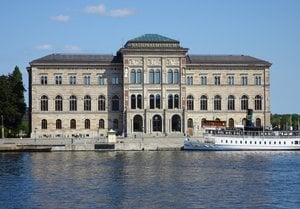
Nationalmuseum

William Grimaldi: de tien meesterwerken

Portrait of Sir Harbord Harbord, 1st Baron Suffield (1734-1810) (1789) door William Grimaldi
1

Portrait of Sir Harbord Harbord, 1st Baron Suffield (1734-1810)

1789 · Watercolor · Nationalmuseum, Stockholm

This portrait miniature, dated 1789, presents a bust-length depiction of Sir Harbord Harbord, 1st Baron Suffield. The subject is positioned in a three-quarter view, his gaze directed slightly toward the viewer with a composed expression. He is rendered with a pale complexion and white powdered hair that shows a fine, tactile texture. His attire consists of a dark forest-green coat worn over a pale cream or white waistcoat and a…

Handgeschilderde olieverfreproductie vanaf $199 28 × 35 cm
William Grimaldi, Son of the Artist (1808) door William Grimaldi
2

William Grimaldi, Son of the Artist

1808 · Watercolor · Yale Center for British Art, New Haven

This delicate and intimate portrait miniature, created in 1808, depicts a young boy named William Grimaldi, Son of the Artist. The composition is an oval-shaped bust-length portrait set within a larger rectangular grey mount. The subject is positioned slightly off-center, looking towards the viewer with a subtle smile and a gentle, serene expression.

Handgeschilderde olieverfreproductie vanaf $199 29 × 34 cm
Margaret Pryse door William Grimaldi
3

Margaret Pryse

Watercolor · National Library of Wales, Aberystwyth

This portrait by William Grimaldi depicts Margaret Pryse. The subject is identified as the heir of her father, Lewis Pryse. She was the wife of Edward Loveden, who resided at Buscot Park in Berkshire. The painting captures her in a profile view, presenting a formal likeness of the woman within an oval-shaped composition.

Handgeschilderde olieverfreproductie vanaf $199 29 × 35 cm
Sir Joshua Reynolds (1723–1792) door William Grimaldi
4

Sir Joshua Reynolds (1723–1792)

Watercolor

This small-scale portrait captures the likeness of Sir Joshua Reynolds, rendered in the delicate style of Rococo miniature painting. Presented within an ornate gold oval frame, the work focuses on the subject's head and shoulders in a tight, intimate composition. He is depicted in profile, gazing slightly to his right, his presence defined by voluminous, curled hair and a red coat over a white shirt. A muted green landscape provides…

Handgeschilderde olieverfreproductie vanaf $199 28 × 36 cm

De onderwerpen die William Grimaldi het meest schilderde

De vier onderwerpen die het meest voorkomen in deze meesterwerken, met van elk het mooiste voorbeeld.

Waar u de schilderijen van William Grimaldi kunt bekijken

De 3 musea met de meeste schilderijen op deze pagina.

Museum Stad Werken van William Grimaldi Schilderijen uit deze lijst
Nationalmuseum, StockholmNationalmuseum Stockholm 1 Portrait of Sir Harbord Harbord, 1st Baron Suffield (1734-1810)
Yale Center for British Art, New HavenYale Center for British Art New Haven 1 William Grimaldi, Son of the Artist
National Library of Wales, AberystwythNational Library of Wales Aberystwyth 1 Margaret Pryse

William Grimaldi, jaar voor jaar: de meest bepalende schilderijen

Van 1789 tot 1808, 20 jaar aan kunst van William Grimaldi, jaar voor jaar, via de mooiste schilderijen.

  1. 1789
  2. 1808
    William Grimaldi, Son of the Artist (1808) door William Grimaldi
    #2 van 4

    William Grimaldi, Son of the Artist

    Leeftijd 57 · Yale Center for British Art

    This delicate and intimate portrait miniature, created in 1808, depicts a young boy named William Grimaldi, Son of the Artist. The composition is an oval-shaped bust-length portrait set…

Meesterwerken van William Grimaldi: vragen en antwoorden

Waar is William Grimaldi het meest bekend om?Toon het antwoord

Portrait of Sir Harbord Harbord, 1st Baron Suffield (1734-1810) (1789), Nationalmuseum, Stockholm. Daarna volgen William Grimaldi, Son of the Artist (1808) en Margaret Pryse.

Hoe oud was William Grimaldi bij het schilderen van Portrait of Sir Harbord Harbord, 1st Baron Suffield (1734-1810)?Toon het antwoord

38 jaar oud: Portrait of Sir Harbord Harbord, 1st Baron Suffield (1734-1810) dateert uit 1789 en William Grimaldi werd geboren in 1751.

Hoeveel werken heeft William Grimaldi geschilderd?Toon het antwoord

Onze catalogus bevat 5 werken van William Grimaldi, gedateerd van 1789 tot 1808.

In welke musea kan ik de meesterwerken van William Grimaldi bewonderen?Toon het antwoord

De meeste bevinden zich in Nationalmuseum (Stockholm), Yale Center for British Art (New Haven) en National Library of Wales (Aberystwyth). De bovenstaande tabel somt de musea één voor één op.

Wat zijn de eerste en laatste beroemde schilderijen van William Grimaldi?Toon het antwoord

De oudste op deze pagina is Portrait of Sir Harbord Harbord, 1st Baron Suffield (1734-1810) (1789), de nieuwste William Grimaldi, Son of the Artist (1808).

Wat waren de favoriete onderwerpen van William Grimaldi?Toon het antwoord

White cravat (2) en Portrait (2), van de 4 werken op deze pagina.

Welke techniek had William Grimaldi de voorkeur?Toon het antwoord

Watercolor: 4 van de 4 werken op deze pagina.

Kan ik een reproductie van een meesterwerk van William Grimaldi bezitten?Toon het antwoord

Ja. Elk schilderij op deze pagina kan worden besteld als een handgeschilderde olieverfreproductie van museumkwaliteit of als een fine art print, in de door u gekozen afmeting, via de eigen pagina van het schilderij.

Het leven van William Grimaldi

The Delicate Art of Miniature Portraiture

In the intimate, luminous world of eighteenth-century British portraiture, few names evoke the exquisite precision and aristocratic elegance of William Grimaldi. Born in the London parish of Shoreditch in 1751, Grimaldi was far more than a mere craftsman; he was a master of the miniature, an art form that demanded an almost superhuman level of patience and a delicate touch. His lineage itself whispered of grandeur, as he was a descendant of the Genoese nobility, a connection to the illustrious Grimaldi family that lent him an air of inherited sophistication. This sense of heritage, combined with his profound technical skill, allowed him to navigate the highest echelons of Georgian society, transforming small, portable keepsakes into profound windows of emotional and social identity.

Grimaldi’s artistic journey began under the watchful eye of his uncle, Thomas Worlidge, a respected engraver whose mentorship provided the foundational rigors of printmaking and fine detail. This early apprenticeship was crucial, instilling in him a reverence for line and light that would later define his miniature works. However, it was Grimal di’s period in Paris between 1777 and 1783 that truly expanded his aesthetic vocabulary. Immersed in the vibrant atmosphere of the Enlightenment, he absorbed the refined grace of Rococo aesthetics, learning to infuse his compositions with a certain rhythmic fluidity and a sophisticated use of color. This continental influence breathed new life into his work, moving him beyond simple representation toward a more nuanced, atmospheric style.

Royal Patronage and the Height of Eminence

The trajectory of Grimaldi’s career was irrevocly altered by the recognition of Sir Joshua Reynolds, the titan of British portraiture. Reynolds, acting as both a mentor and a powerful patron, championed Grimaldi’s talent to the most influential figures in the United Kingdom. This endorsement opened the doors to royal circles, leading to prestigious commissions that solidified his status as a premier court artist. His ability to capture the essence of his subjects—not merely their physical likeness but their very station and spirit—made him the preferred choice for the era's elite.

His professional achievements during this period were nothing short of extraordinary, marked by several key milestones:

  • Appointment as Enamel Painter: In 1790, Grimaldi achieved the rare distinction of being named the enamel painter to the Duke of York and Albany, a role that required unparalleled mastery over the difficult and permanent medium of enamel.
  • Royal Commissions: His talent earned him the patronage of the Prince of Wales and the Duchess of York, for whom he produced portraits that served as both personal treasures and symbols of royal favor.
  • Exhibition at the Royal Academy: A frequent and respected contributor to the Royal Academy from 1786 until 1824, his presence in these exhibitions ensured his lasting influence on the British art scene.

A Legacy Written in Miniature

As Grimaldi’s career progressed, his technical repertoire expanded from delicate watercolours to the more robust and luminous medium of enamel painting. This evolution allowed him to explore a broader range of textures and light effects, further enriching his oeuvre. Even as he moved toward a more settled life in Chelsea in his later years, his dedication to the craft remained unwavering. His work, characterized by an incredible sensitivity to nuance, continues to captivate collectors and historians alike, offering a poignant glimpse into the social fabric of the late eighteenth and early nineteenth centuries.

The historical significance of William Grimaldi lies in his ability to elevate the miniature from a secondary decorative art to a sophisticated medium of high portraiture. Through his meticulous brushwork and his capacity for capturing the subtle interplay of light and shadow, he helped define the visual language of an era. Today, his portraits remain much more than historical artifacts; they are enduring testaments to a period of profound artistic transition, embodying the elegance, the intimacy, and the enduring grace of the Georgian age.