99 Famous Late Medieval Kunstenaars: The Definitive Ranking
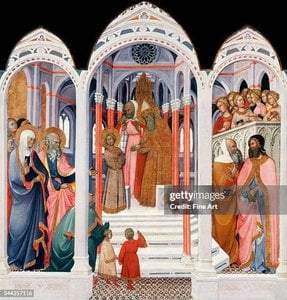
The most famous Late Medieval kunstenaar is Simone Martini (1284–1344), known for Maestà (Madonna with Angels and Saints) en De Aankondiging met Sint Margaretha en Sint Ansanus. Next come Andrej Roebljov, Ambrogio Lorenzetti, Pietro Lorenzetti en Hubert Van Eyck. This ranking of the 99 most famous Late Medieval artiesten runs from Yuan Dynasty (born 1271) to Hubert Van Eyck (born 1366), across 20 countries.
WBy the WahooArt.com curators
How this list is ranked. Artists whose works our catalogue files under Late Medieval, in the order of our fame ranking of artists. Artists without a Wikidata identifier born after 1955 are left out until verified. The Wikipedia figure next to each name is the number of our 32 languages in which Wikipedia has an article on the artist.
ItaliaansBorn in SienaInternationale GotiekWikipedia in 28/32 languages
In 1319 voltooide hij het Polyptiek van de Heilige Catharina van Alexandrië Polyptych in Pisa. Saint Louis of Toulouse Crowning His Brother Robert of Anjou, 1317. Saint Louis of Toulouse Crowning His Brother Robert of Anjou, 1317.
RussischBorn in Grootvorstendom MoskouRussische iconenschilderkunstWikipedia in 31/32 languages
Andrei Rublev (ca. 1360 – ca. 1430) blijft een van de meest raadselachtige en diepgaand invloedrijke figuren in de geschiedenis van de Russische kunst. In 1405 sloot hij zijn krachten met Theofanes en Prokhor van Gorodets om de Verkondigingskathedraal te decoreren, een cruciaat moment in de Russische iconenschilderkunst. De Drie-eenheid-icoon: Wellicht zijn meest gevierde werk, de “Drie-eenheid”-icoon (ca. 1420-1428), is een getuigenis van zijn artistiek genie.
ItaliaansBorn in SienaSiënese SchoolWikipedia in 29/32 languages
Hoewel hij periodes lang werd overschaduwd door tijdgenoten zoals Duccio en Simone Martini, en vaak samen met zijn broer, de schilder Pietro Lorenzetti, besproken werd, creëerde Ambrogio een uniek pad, gekenmerkt door een innovatieve geest en een diepe betrokkenheid bij de wereld om hem heen. Zijn fresco’s in het Palazzo Pubblico staan als meesterwerken van vroege Renaissance seculiere schilderkunst, wat een groeiende nadruk weerspiegelt op burgerleven en de verantwoordelijkheden van leiderschap.
ItaliaansBorn in SienaVroege RenaissanceWikipedia in 27/32 languages
Pietro Lorenzetti (ca. 1280 – 1348) staat te boek als een cruciale figuur in de Sienese kunst, een meester die de diepgaande overgang markeerde van het Gotische formalisme naar de opkomende humanistische idealen van de vroege Renaissance. Geboren in het levendige culturele landschap van Siena rond 1280, ontvouwde de artistieke reis van Lorenzetti zich te midden van een periode van ingrijpende intellectuele en artistieke transformatie in Toscane.
ItaliaansBorn in FlorenceVroege RenaissanceWikipedia in 23/32 languages
Als een van de meest vooraanstaande leerlingen van de legendarische Giotto di Bondone, erfde Gaddi niet louter een stijl; hij breidde het visuele vocabulaire van zijn tijd uit.
ItalianBorn in FlorenceGothic, Early RenaissanceWikipedia in 20/32 languages
The monumental figures, the emotional resonance, and the narrative clarity that characterized Giotto’s frescoes are all present in Agnolo’s initial paintings. This isn’t to say he abandoned the naturalism pioneered by Giotto; rather, he layered it with a sophisticated aesthetic sensibility that reflected the evolving tastes of Florentine society.
GrieksBorn in ConstantinopelByzantijnse iconografieWikipedia in 22/32 languages
Geboren in Constantinopel rond 1340, hoewel vaak geassocieerd met Griekenland vanwege zijn latere activiteiten, was Theophanes een sleutelfiguur die de laatste bloei van de Byzantijnse kunst verbond met de opkomende tradities van Rusland. Rond 1395 arriveerde hij in Novgorod, een machtige stadstaat binnen Rusland, samen met Andrei Rublev, een andere iconische figuur van de Russisch-orthodoxe kunst.
ItaliaansBorn in VenetiëByzantijnse invloed & Gotische kunstWikipedia in 15/32 languages
Paolo Veneziano (ca. 1333 – 1358) staat als een monumentale figuur in de geschiedenis van de Venetiaanse kunst, universeel erkend als de belangrijkste Venetiaanse schilder van de veertiende eeuw. Geboren in een artistieke bloedlijn binnen het hart van Venetië—zijn vader was zelf een gerenomerd kunstenaar—viel de korte maar briljante carrière van Veneziano samen met een transformerende periode in de Europese schilderkunst.
ItaliaanBorn in SienaInternationaal GotiekWikipedia in 17/32 languages
Lippo Memmi, geboren rond 1291 in het hart van Siena, Italië, staat als een sleutelfiguur in de overgang van de Byzantijns gewortelde tradities van middeleeuwse schilderkunst naar de opkomende elegantie van de Internationale Gotiek. Ansanus (1333), gemaakt in samenwerking met Simone Martini voor de Uffizi Galerie.
ItaliaansBorn in ZevioGotische kunstWikipedia in 20/32 languages
Altichiero Da Zevio, geboren nabij het rustige stadje Zevio in Verona rond 1330, was niet louter een kroniekschrijver van heilige gebeurtenissen, maar een pionier van de Venetiaanse gotische stijl. De evolutie van de kunst van Altichiero Da Zevio is het best te begrijpen door zijn monumentale bijdragen aan het burgerlijke en religieuze landschap van Verona en Padua.
ItaliaansBorn in ArezzoSchakel tussen de school van Giotto en de Sienese SchoolWikipedia in 16/32 languages
Geboren in een familie van Florentijnse goudsmeden, was zijn ware naam Spinello Di Luca Spinelli, maar hij werd door de geschiedenis bekend onder de bijnaam "Aretino", wat duidt op zijn verbondenheid met Arezzo.
ItaliaansBorn in FlorenceVroege RenaissanceWikipedia in 17/32 languages
Bernardo Daddi, geboren in Florence rond 1290 en overleden in 1348, staat als een spilfiguur in de overgang van de late Gotiek naar de ontluikende Italiaanse Renaissance. De Uffizi Gallery in Florence herbergt een belangrijk triptiek uit 1328, dat een boeiend kijkje biedt in zijn compositietechnieken en verhalende kracht. Eveneord merkwaardig is het “Martyrium van de Heilige Stefanus” in de Pinacoteca Vaticana—een predella bestaande uit acht panelen, geschilderd rond 1345.
Niccolò Di Tommaso, een naam die zachtjes weerklinkt in de annalen van de veertiende-eeuwse Italiaanse schilderkunst, kwam rond 1346 in Florence op de wereld. Hun gezamenlijke inspanningen in de Strozzi-kapel binnen de Santa Maria Novella vormen een beslissingsmoment in de artistieke loopbaan van Niccolò. Het jaar 1370 markeerde ook de eerste gedocumenteerde uitstap van Niccolò Di Tommaso buiten Florence, met werkzaamheden in de kerk van San Giovanni Fuorcivitas in Pistoia.
ChineesBorn in WuxiVier Meesters van de Yuan-dynastieWikipedia in 15/32 languages
Zijn voornaam was Yuan Zhen (元鎮), en hij hanteerde diverse kunstnamen, waaronder Yun Lin Zi (雲林子), Huan Xia Sheng (幻霞生), en Jing Man Min (荊蠻民). Ni Zan wordt beschouwd als een van de vier meesters van de Yuan-dynastie, samen met Huang Gongwang, Wu Zhen, en Wang Meng.
Andrea Di Cione (Orcagna), in de geschiedenis bekend onder de evocatieve bijnaam Orcagna, staat als een van de meest invloedrijke figuren in de Florentijnse kunst tijdens het midden van de 14e eeuw—een periode die werd gekenmerkt door een fascinerende versmelting van Gotische en Laat-Gotische artistieke tradities.
ItalianBorn in FlorenceGothic-Late GothicWikipedia in 20/32 languages
The name Orcagna—a moniker bestowed upon him by local artisans—encompasses a remarkable figure in the history of Italian art: Andrea di Cione, a painter, sculptor, architect, and master craftsman who dominated the artistic landscape of Florence during the latter half of the 14th century. He bridged the gap between the Gothic traditions inherited from his predecessors and the emerging Renaissance style, paving the way for future generations of artists.
Geboren als Giovanni di Jacopo di Guido da Caversaccio in Lombardije rond 1346, ontvouwde zijn artistieke reis voornamelijk binnen het bruisende culturele landschap van Florence tijdens een tijd van immense verandering en innovatie.
ChineseBorn in HuzhouYuan Dynasty Landscape PaintingWikipedia in 14/32 languages
Unlike the more restrained approaches of his contemporaries, Wang Meng’s paintings are characterized by an extraordinary density and dynamism. His brushstrokes—often described as “ropy” or “layered”—were meticulously applied in thick, overlapping patterns, creating a palpable sense of texture and movement. Wang Meng’s style was profoundly influenced by the landscape painters who preceded him – Wang Wei, Dong Yuan, and Juran – but he developed his own distinctive voice through his innovative use of brushwork and composition.
Yet, within this tradition flourished an artist of startling intensity and dramatic vision – Nicolas Bataille (c. 1330-1405). He was born around 1330 in Paris, likely as the son of an architect, a profession that may have instilled within him an appreciation for structure and design. The depiction of Babylon’s destruction reflects the prevailing fears about political instability and social decay in 14th-century France.
ItaliaansBorn in VenetiëByzantijnse kunstWikipedia in 11/32 languages
Het jaar 1336 resoneert diep in het artistieke landschap van Italië, onlosmakelijk verbonden met een figuur gehuld in intrigerende mysterie – de Meester van 1336. Nauwkeuriger bekend als Giovanni Lipini, biedt de naam van deze kunstenaar, afgeleid van een miraculeuze fresco van de Maagd Maria in Santa Maria delle Grazie in Pistoia, een verleidelijk voorproefje van zijn oorsprong en blijvende invloed.
However, unlike Duccio’s often exuberant and emotionally charged compositions, Segna’s paintings possess a more restrained elegance, characterized by a sense of solemnity and a focus on formal clarity. It’s believed that Segna spent time in Florence during this period, absorbing influences from the burgeoning Florentine school, which was beginning to experiment with linear perspective and naturalistic representation. Segna's artistic journey is believed to have begun under the tutelage of his uncle, Duccio di Buoninsegna, a towering figure in Sienese painting.
ItalianBorn in Colle di Val d'ElsaLate GothicWikipedia in 18/32 languages
While many painters of his era are remembered only by the fragments of their altarpieces, Cennino Cennini achieved immortality through the written word.
ItaliaansBorn in SienaSienese schilderkunstWikipedia in 13/32 languages
Ugolino di Nerio, een naam die grotendeels ontbreekt in de mainstream kunsthistorische verhalen, staat als een spilfiguur in het opkomende artistieke landschap van Siena en Florence tijdens de jaren 1320. Geboren rond 1280 binnen een familie van schilders – zijn vader Guido, en zijn broers/zussen Muccio en Ugolino – kwam hij naar voren als een onafhankelijk meester.
ItalianBorn in SienaEarly RenaissanceWikipedia in 13/32 languages
Architectural Precision: The use of structured backgrounds to ground holy figures within a tangible, albeit idealized, reality. In works such as his Virgin and Child with Saints, one can witness the evolution of his hand—moving from the more rigid, ornamental patterns of the late Gothic style toward a more robust and naturalistic approach. The historical significance of Taddeo di Bartolo lies in his role as a custodian of Sienese identity during a period of immense change.
Despite the paucity of surviving paintings attributed to Lippo di Benivieni, his influence is palpable in several significant frescoes adorning churches throughout Siena and San Gimignano. Madonna and Child Panel Painting: A monochrome panel depicting Mary holding the infant Jesus exemplifies Lippo’s mastery of technique—particularly his ability to achieve remarkable tonal gradation using tempera on wood. Furthermore, his work serves as an exemplar of early Quattrocento painting—a transitional phase between Gothic formalism and Renaissance naturalism —demonstrating Lippo’s willingness to embrace new stylistic approaches while retaining core aesthetic principles.
Like Wang Meng, Zhao Yuan embraced a dense, complex compositional structure characterized by layered mountains, gnarled trees, and meticulously rendered details. Beyond Wang Meng, echoes of earlier masters like Fan Kuan (c. 937-1020), renowned for his monumental landscapes and powerful brushwork, can also be detected in Zhao Yuan’s treatment of rock formations and atmospheric effects. His most significant debt is undoubtedly to Wang Meng (1308-1383), one of the last great masters of the Yuan dynasty.
ItalianBorn in SienaSienese SchoolWikipedia in 12/32 languages
Working alongside luminaries such as Luca di Tommè, he contributed to significant communal works, including an altarpiece for the shoemaker's guild in the cathedral of Siena, marking his first documented presence in the annals of art history.
This preference for light is not merely aesthetic; it reflects a deeper philosophical shift – a move towards celebrating the beauty and dignity of human life. He skillfully employed perspective, though not with the mathematically precise rigor of later Renaissance artists, creating a sense of depth and spatial awareness through subtle variations in scale and detail. He is considered a crucial link between the late Gothic style of his predecessors and the groundbreaking innovations of artists like Masaccio and Botticelli.
BelgianBorn in YpresEarly Netherlandish PaintingWikipedia in 15/32 languages
By integrating the sculptural solidity learned from masters like Claus Sluter with the fluid grace of the International Gothic style, Broederlam helped forge a new visual vocabulary. As the favored painter to powerful patrons such as Louis de Mâle, Count of Flanders, and later the formidable Philip the Bold, Duke of Burgundy, his work became a visual manifestation of ducal prestige.
ItaliaansBorn in FlorenceFlorentijnse SchoolWikipedia in 8/32 languages
Lorenzo di Bicci, geboren rond 1373 in Florence, staat als een centrale figuur binnen de opkomende Florentijnse schilderkunst tijdens de tweede helft van de veertiende en het begin van de vijftiende eeuw.
ItalianBorn in FlorenceVenetian RenaissanceWikipedia in 12/32 languages
The enduring impact of Gherardo di Jacopo Starnina can be summarized through several key artistic contributions: Stylistic Synthesis: The seamless blending of Florentine emotional realism with Venetian decorative splendor.
Emerging during the turbulent and transformative reign of Philip IV, Pucelle rose from the workshops of Paris to become the preeminent manuscript illuminator of his generation.
ItaliaansBorn in FlorenceToscaanse schilderkunstWikipedia in 12/32 languages
Geboren rond 1308 in Florence en overleden omstreeks 1368, was Orcagna niet louter een ambachtsman; hij was een spilfiguur die de stilistische verschuivingen overbrugde tussen het naturalisme van Giotto en de meer geformaliseerde tradities van de Byzantijnse kunst, waarmee hij de koers van de Florentijnse schilderkunst voor decennia zou bepalen.
ItalianBorn in Piove di SaccoEarly Renaissance; Venetian painting; Gothic artWikipedia in 12/32 languages
Guariento di Arpo (c. 1310–1370) stands as a monumental figure of the Trecento, acting as the essential bridge between the grounded, volumetric realism of Florence and the ethereal, ornamental splendor of the Venetian Gothic tradition.
Claus Sluter (ca. 1350-1406) staat te boek als een van de meest invloedrijke beeldhouwers van zijn tijd, een meester die een cruciaal kruispunt markeerde tussen de gotische en renaissance-artistieke tradities in Noord-Europa. De vermelding van zijn naam in het register van het Brusselse steenhouwersgilde rond 1379/1380 bevestigt zijn professionele betrokkenheid en onderstreept het belang van vakmanschap binnen de middeleeuwse artistieke cultuur.
Kokan Shiren (虎関師錬; 9 May 1278 – 11 August 1347), a pivotal figure in 14th-century Japan, stands as a unique confluence of artistic expression, philosophical depth, and historical scholarship.
ItalianBorn in FlorenceGothicWikipedia in 7/32 languages
His commitment to procuring marble for the cathedral underscored his understanding of artistic grandeur and civic responsibility. Furthermore, he continued to secure patronage from influential families like the Albizzi, ensuring that Florentine art would endure as a symbol of prestige and cultural achievement. The dispersed predella depicting scenes from Saint Peter’s life – a collaborative effort with Niccolò di Pietro Gerini – remains a poignant reminder of Jacopo's artistic legacy and the enduring power of Florentine Gothic art.
ItalianBorn in SienaSienese SchoolWikipedia in 13/32 languages
In het hart van het veertiende-eeuwse Toscane, een periode die werd gedefinieerd door de overgang van de etherische gratie van het gotische tijdperk naar het ontluikende humanisme van de Renaissance, kwam Bartolo di Fredi naar voren als een meester van licht en narratief. Tegen 1355 was hij officieel toegetreden tot de Arte dei Maestri di Tavola e Dipinto, een mijlpaal die hem toegang gaf tot de belangrijkste mecenaatnetwerken in Italië.
GermanBorn in DortmundInternational Gothic soft styleWikipedia in 13/32 languages
In the twilight of the fourteenth century, a transformative artistic energy began to pulse through the prosperous Hanseatic city of Dortmund, finding its most profound expression in the hands of Conrad von Soest. Completed around 1420, this monumental triptych stands as a pinnacle of the International Gothic style.
Tuthmosis’s mastery lay not only in capturing likeness but also in skillfully manipulating stone. He primarily worked with fine-grained limestone, a material readily available in the quarries surrounding Amarna. The Amarna period, largely due to the work of artists like Tuthmosis, marked a significant departure from traditional artistic conventions, paving the way for subsequent developments in sculpture and portraiture.
ItalianBorn in ValmoreaItalian GothicWikipedia in 13/32 languages
In the bustling streets of Florence, where the air was thick with the scent of fresh pigment and the echoes of a changing era, a painter named Giovanni di Jacopo di Guido da Caversaccio began to make his mark. Hailing from Lombardy, he arrived in Tuscany as a man seeking his fortune, appearing in the city's records as Johannes Jacobi de Commo.
GermanBorn in MindenInternational GothicWikipedia in 13/32 languages
It is believed that Bertram was influenced by both French and Netherlandish artistic trends prevalent during his time. Despite these influences, Bertram maintained a uniquely Northern German sensibility, imbuing his work with a sense of regional identity. While sharing similarities with other artists of the period, such as Master Francke (another prominent Hamburg painter), Bertram's work possesses a distinct character—a subtle restraint in emotional expression compared to Francke’s more overtly dramatic approach.
Giorgio Vasari, the celebrated Renaissance art historian, initially placed Agostino within the orbit of Giovanni Pisano’s workshop, suggesting a formative apprenticeship under this master sculptor. However, modern scholarship proposes a more nuanced lineage, positing that his early training likely occurred with Camaino di Crescentino, father to Tino di Camaino, another influential figure in Sienese sculpture. His exact date of death remains unknown, though records indicate he was no longer living as of June 27, 1347—a period marked by the devastating impact of the Black Death.
He employed elaborate rituals, symbolic imagery, and monumental architecture – like Kitayama-dono – to portray himself as a universal monarch or dharma king, mirroring rulers in Southeast Asia. His posthumous name was Rokuon'in (鹿苑院), further cementing his place in Japanese history. Late in his career, Yoshimitsu increasingly sought to legitimize his power through the lens of Buddhist kingship.
NetherlandishBorn in ValenciennesPucellian revival
In 1386, Beaunever accepted the prestigious role of superintendent of all painting and sculpture for the Duke, a position that placed him at the heart of one of Europe's most vibrant cultural epicenters. His technical achievements are best observed in the following areas: Illuminated Manuscripts: In works such as the Psalter of Jean de Berry and his depictions of figures like King David, Beauneveu demonstrated an extraordinary ability to use light and shadow to create a sense of three-dimensional volume on parchment.
Technical Innovation: Early mastery of light, shadow, and the illusion of volume. In the annals of Italian art, Jacopo remains a luminous figure, a painter who captured the very essence of Florentine devotion. The origins of his artistry are deeply rooted in the Florentine milieu, likely shaped by the influential circle surrounding the Master of St.
JapansBorn in IseZenboeddhismeWikipedia in 12/32 languages
Zijn afkomst onderstreepte zijn maatschappelijke impact; hij werd geboren in een familie van groot belang, waarbij zijn moeder de dochter was van Hōjō Masamura (1264–1268), de zevende shikken (regent) van het Kamakura-shogunaat.
ItalianBorn in PisaGothic ArtWikipedia in 11/32 languages
Orcagna's Legacy: Andrea Orcagna’s influence is undeniable in Traini’s compositional strategies and expressive dynamism. Orcagna championed the concept of “naturalis dispositio,” prioritizing spatial realism to communicate theological ideas effectively—a principle that Traini wholeheartedly embraced.
ItalianBorn in BolognaInternational GothicWikipedia in 12/32 languages
His legacy is found in: The Synthesis of Styles: The seamless integration of Riminese color palettes with Giottesque structural depth. As we look back upon his prolific career, Vitale remains a cornerstone of Italian art, a painter who captured the transition from the medieval soul to the Renaissance mind with unparalleled grace and spiritual power. His works, scattered across prestigious locations such as Pomposa Abbey and Udine Cathedral, serve as windows into a world where the divine and the earthly were intimately entwined.
Zain al-Din’s prominence grew during a period of significant change in India, as the power of the Mughal Empire waned and British influence expanded. This era saw the emergence of what is now known as the “Company style” of painting—a hybrid aesthetic favored by British officials and collectors who sought realistic depictions of Indian life, flora, and fauna. The Ashmolean Museum in Oxford holds several examples of his work, including exquisite depictions of mountain-rats, hanging bats, parrots, and storks—each painting a miniature world unto itself.
Born around 1357 and passing away in 1406, his life coincided with a period of significant artistic and cultural change across Europe, yet he maintained a distinctly Catalan sensibility throughout his career. The city was a vibrant hub for trade and artistic exchange, exposed to influences from Italy, France, and Flanders.
MexicaansBorn in TenochtitlanMeso-Amerikaanse kunst
De artistieke tradities van de Azteken, die in de vroege 14e eeuw ontstonden in Tenochtitlan, het hart van het Azteekse Rijk, waren diep geworteld in de nalatenschap van eerdere Meso-Amerikaanse beschavingen. De Olmeken, met hun kolossale hoofden en geavanceerde kalendersystemen, de Teotihuacanos, beroemd om hun massieve piramides en stadsplanning, en de Tolteken, meesters in metaalbewerking en beeldhouwkunst, droegen allemaal bij aan het rijke artistieke weefsel dat de Azteken erfden.
Some of his most notable achievements include: Teaching on Enlightenment: A masterpiece written in running script that is currently held within the prestigious collection of the Tokyo National Museum in Japan, recognized as a National Treasure.
Born into a lineage of painters, likely the son of Martino and brother to Marco, Paolo’s very existence was woven into the fabric of Venetian artistic tradition. His formative years were steeped in the luminous, spiritual grandeur of Byzantine art, a tradition brought to the Venetian lagoons through trade and deep ecclesiastical ties to Constantinople. His ability to blend the following elements created a style that was uniquely "Venetian": Luminous Color Palettes: Drawing from the Byzantine tradition to create depth and spiritual radiance.
Serving as a supervising architect and decorator, Matteo played an instrumental role in shaping this monumental edifice, which stands as a testament to Florentine civic pride and the intellectual aspirations of the merchant class.
Through his relocation of the capital, his naval voyages, and his massive infrastructure projects like the reconstruction of the Grand Canal, Zhu Di ensured that the House of Zhu would be etched into the very foundation of Chinese history.
CatalanBorn in Avinyonet del PenedèsGothic painting
Born around 1285 in the small town of Avinyonet del Penedès, his early life remains shrouded in some mystery, yet the documented evidence reveals a trajectory marked by both diligent craftsmanship and royal favor. His ability to synthesize diverse stylistic elements—French elegance, Sienese refinement, and Giottesque drama—resulted in a visual language that was both innovative and deeply rooted in its cultural context.
ItalianBorn in ModenaLate GothicWikipedia in 15/32 languages
Tommaso Barisini, commonly known as Tommaso da Modena and sometimes referred to as Tomaso Baffini (c. 1325 – 1379), stands as one of the most prominent figures in Northern Italian painting during the mid-14th century—a period marked by burgeoning artistic innovation and profound spiritual reflection. His unwavering commitment to naturalistic representation—coupled with his masterful command of perspective—established a precedent for Renaissance artists seeking to emulate the grandeur and clarity of classical art forms.
ItalianBorn in BolognaRenaissance, Proto-Renaissance
D'Avanzi’s style occupies a fascinating position within the transition from Gothic art to the early Renaissance. He wasn’t alone in this pursuit; Altichiero da Zevio, with whom he frequently collaborated, shared similar artistic concerns.
ItaliaansBorn in San Quirico d'OrciaNaturalisme, Proto-RenaissanceWikipedia in 10/32 languages
Pietro Lorenzetti, geboren rond 1280 en tragisch overleden in 1348 tijdens de verwoestende Zwarte Doodpandemie, blijft een centrale figuur in de evolutie van de Italiaanse schilderkunst.
ItalianBorn in FlorenceEarly Italian painterWikipedia in 14/32 languages
His output includes a variety of formats, from devotional panels to architectural elements: Frescoes: The narrative cycles in the San Silvestro chapel, Santa Croce, Florence. Sculpture and Architecture: A marble statue located on the Florentine campanile and various works attributed to his hand in the Florentine school.
Yuan dynastyBorn in Jiashan CountyWikipedia in 12/32 languages
The brush of Wu Zhen moved with a particular intent, seeking to capture the essence of the natural world through landscape paintings and the delicate forms of bamboo. He achieved a rare unity known as the Three Perfections, where the boundaries between different disciplines began to dissolve. His influence reached far beyond his own lifetime, as he was recognized as one of the Four Yuan Masters, alongside Huang Gongwang, Ni Zan, and Wang Meng.
FlorentineBorn in FlorenceLater GothicWikipedia in 10/32 languages
His later Gothic style reflects this integration of Sienese elements. The tension between these traditions defines his artistic output: The foundational weight of Giotto’s legacy.
ItalianBorn in FlorenceEarly RenaissanceWikipedia in 12/32 languages
Menabuoi’s distinctive style transcends simple categorization, reflecting a complex interplay between Byzantine iconography and Florentine Proto-Renaissance aesthetics. Unlike many of his contemporaries who embraced the burgeoning realism championed by artists like Altichiero and Jacopo d'Avanzi, Menabuoi prioritized conveying spiritual emotion over meticulous anatomical accuracy—a hallmark of Giotto’s artistic vision. Giotto's Legacy: As a student of Giotto, Menabuoi absorbed Giotto’s expressive technique—characterized by elongated figures and emotionally charged gestures—establishing a crucial link between Florentine artistic tradition and Byzantine influences.
FrenchBorn in HesdinInternational GothicWikipedia in 13/32 languages
Grandes Heures: Another important illuminated manuscript commissioned by the Duke of Berry. Petites Heures: A smaller-scale book of hours, also demonstrating Jacquemart’s skill in illumination. Historical Significance: Jacquemart de Hesdin played a vital role in the artistic renewal during the late 14th and early 15th centuries.
In the heart of fourteenth-century Italy, amidst the spiritual awakening of the early Renaissance, the name Matteo Giovanetti emerged as a beacon of devotional mastery. His life’s work serves as a vital bridge between the rigid, symbolic traditions of the Gothic period and the burgeoning naturalism that would soon define the Italian Renaissance.
Unlike the flamboyant styles prevalent during Nanbokuchō, Gukyoku's approach prioritized conveying spiritual essence over visual spectacle. He favored ink wash techniques (sumi-e), utilizing varying shades of black to create textured surfaces that mirrored the natural world—particularly landscapes reminiscent of Mount Yoshino, a sacred site venerated by Zen monks. His meticulous technique and contemplative aesthetic established precedents for subsequent generations of Zen painters, emphasizing simplicity, directness, and an unwavering focus on capturing the essence of Buddhist thought.
He possessed a rare, intuitive grasp of how to marry the ancient, ethereal majesty of Byzantine iconography with the burgeoning humanism and spatial curiosity emerging from Florence. This stylistic evolution is perhaps most evident in his ability to balance: The Byzantine influence, which provided the sacred, unmoving grandeur of the divine. Whether through the intimate grace of his Madonna and Child compositions or the solemnity of his depictions of saints, Bulgarini’s work captures the spiritual heartbeat of an era.
Hsieh Ho’s approach to capturing atmospheric effects through subtle shifts in hue and tone resonated deeply with Tettō's own desire to convey emotion and spiritual depth within his works. His compositions frequently featured sweeping vistas and dynamic brushstrokes, reflecting both the natural world and the internal landscapes of Zen meditation. His bold use of color and expressive brushwork served as an inspiration for subsequent generations of artists, including those who followed in the footsteps of the Ōtōkan school.
ItalianBorn in ModenaByzantine-influenced Lombard PaintingWikipedia in 12/32 languages
Born around 1328 in Modena (Emilia), he emerged from obscurity to become arguably the first Lombard painter of considerable renown, leaving behind an impressive oeuvre that testifies to his unwavering devotion to this venerable artistic heritage. His activity spanned Lombardy, Piedmont, and Pisa in Tuscany, establishing him as a pivotal artist within the burgeoning cultural dynamism of the era.
German-BohemianBorn in Schwaebisch GuemundLate Gothic
In the heart of the Late Middle Ages, a period defined by soaring spires and profound devotion, Peter Parler emerged as one of the most influential architects and sculptors of his era. Known variously as Peter von Gemünd or Petr Parléř, his identity was inextricably linked to the Parler family, a lineage of craftsmen whose influence stretched across much of Central Europe.
Understanding Yuan art requires delving into its complex context: the ambition of Kublai Khan to unite Eurasia under Mongol rule, coupled with a burgeoning intellectual elite eager to embrace new ideas and traditions. He actively supported artists like Wang Meng and Zhao Yuan, commissioning monumental landscapes and intricate calligraphy scrolls that celebrated imperial grandeur and Confucian ideals. The Yuan Dynasty (1271–1368), established by Kublai Khan, represents a singular moment in Chinese history – the first time a foreign power successfully ruled over all of China.
He is often credited with contributions to the equestrian statue of Cangrande della Scala, a powerful symbol of Scaliger authority, and even implicated in the design of Mastino II della Scala’s tomb within the Arche scaligere complex.
The Virgin of the Annunciation, found in various iterations across several museums, exemplifies his mature style. The composition typically depicts the Angel Gabriel kneeling before Mary, delivering the news of Christ’s birth. Yet, unlike Simone’s increasingly internationalized aesthetic, Domenico remained firmly rooted in the Sienese tradition.
Siena’s artistic climate was characterized by a distinctive emphasis on grace, refined detail, and narrative clarity – qualities that would become hallmarks of Agnolo’s own work. The influence of Nicola Pisano and his son Giovanni, prominent sculptors active in Pisa and Florence, cannot be discounted, as their innovations in depicting classical forms and emotional expression were widely admired throughout Tuscany. He frequently collaborated with painters, as seen in the Monument to Tarlati, highlighting the interconnectedness of artistic disciplines during the 14th century.
However, he also absorbed influences from Northern European sculpture traditions, particularly those emanating from France and Germany, demonstrating a cosmopolitan outlook that characterized the artistic landscape of his era.
Born in Arezzo, Italy, in 1304 as Francesco Patriarca – later adopting the name Francesco Petrarca – this artist was more than just a painter; he was a pivotal figure in the burgeoning Italian Renaissance. His family, prominent Florentine notaries, faced exile due to the turbulent power struggles between the White and Black Guelphs. Furthermore, Petracco's connection to the exiled poet Dante Alighieri – both sharing political exile from Florence – undoubtedly shaped his artistic outlook.
A significant partnership was formed with Agnolo di Ventura, culminating in their joint execution of the cenotaph of Guido Tarlati in the Cathedral of Arezzo (signed and dated 1330). Vasari also mentions collaborations on commissions from the commune of Siena, including the Porta Romana and the iconic Torre del Mangia.
Yūbai’s disciples, including Akamatsu Norimura and Akamatsu Norisuke, diligently upheld his legacy—propagating Zen philosophy and artistic traditions throughout Japan.
Sultan Al-Malik Al-Zahir Abu Sa’id Barquq, a name resonating through the annals of Mamluk Egypt, stands as a pivotal figure in the 14th-century Islamic world.
Born amidst the rolling landscapes of Certaldo in 1313, Giovanni Boccaccio emerged as a vital force in the cultural landscape of the fourteenth century. As one of the legendary "Three Crowns" of Italian literature—standing alongside the giants Dante Alighieri and Petrarch—his life served as a bridge between the medieval world and the dawning light of the Renaissance.
While the Nanboku-chō period was defined by conflict between rival courts, Kōgon’s focus on Buddhist art provided a sense of cultural continuity and spiritual stability. He successfully utilized the medium of painting to assert a form of authority that was not dependent on military might, but on moral and religious prestige. Emperor Kōgon (1313–1364) was not merely a sovereign navigating a period of profound instability; he was a visionary patron whose devotion to Buddhist iconography helped reshape the aesthetic soul of Northern Japan.
Early Life & Artistic Formation: Little biographical detail survives concerning Genkō’s formative years; he emerged from obscurity as a student of Zen at Nara Temple, establishing a foundation for his lifelong devotion to the Dharma.
Through these spiritual windows, she glimpsed a God characterized not by distant judgment, but by an overwhelming, compassionate intimacy. She famously portrayed the divine as a nurturing force, a Father whose love sustains all of creation.
ItalianBorn in FlorenceRenaissance PaintingWikipedia in 10/32 languages
The significance of Nardo di Cione lies in his ability to bridge the gap between the rigid traditions of the medieval period and the burgeoning humanism of the Renaissance. To study Nardo is to witness the evolution of the Florentine spirit: Technical Versatility: The seamless integration of sculptural depth with painterly fluidity. His early training under Maestro Piero Bargellini, a distinguished sculptor and painter, provided him with a unique dual perspective.
Each artifact—from the delicate ebony rods inscribed with sacred hieroglyphs to the iconic, shimmering golden mask —embodies an idealized vision of royal divinity.
One of his most celebrated achievements, the Coronation of the Virgin, bears a proud inscription dating the work to March 1385, serving as a permanent testament to his hand. Beyond the cathedral walls, Serafini’s influence extended into other significant religious sites, such as the Church of San Francesco in Mantua. In the twilight of the fourteenth century, amidst the architectural grandeur of Northern Italy, the name Serafino Serafini emerged as a vital, if enigmatic, force in the evolution of late medieval painting.
Beyond the physical permanence of his marble reliefs, Antonio Baboccio da Piperno’s true significance lies in the lineage of talent he helped cultivate. In the twilight of the Middle Ages, as the rigid structures of the Gothic era began to soften under the burgeoning light of the Renaissance, there emerged a master whose hands shaped the very identity of Neapolitan grandeur.
He was deeply influenced by Giotto di Bondone, whose revolutionary approach to depicting human emotion and space began to permeate the region. Giotto's innovations—a move away from the stylized, flattened forms of Byzantine art towards greater naturalism and psychological depth —were skillfully absorbed and adapted by his Pistoian disciple. While his name—a label bestowed upon him due to a fresco depicting the miracle of the Virgin Mary in Santa Maria delle Grazie, Pistoia—offers little insight into his personal identity, his paintings speak volumes about the artistic currents shaping Tuscany at the time.
Hoi! Ik kan je helpen bij het kiezen van een kunstwerk, het volgen van een bestelling of het beantwoorden van vragen over de garantie. Waarmee kan ik je van dienst zijn?