A Catalan Visionary: The Life and Art of Ferrer Bassa
Ferrer Bassa emerged from the artistic landscape of 14th-century Catalonia as a pivotal figure, bridging the gap between established Gothic traditions and the burgeoning Italianate styles that would reshape European painting. Born around 1285 in the small town of Avinyonet del Penedès, his early life remains shrouded in some mystery, yet the documented evidence reveals a trajectory marked by both diligent craftsmanship and royal favor. Bassa’s initial steps as an artist were taken within the religious sphere, working on chapels in Sitges during the early years of the 14th century – commissions that likely served to hone his skills and establish a local reputation. These early works, though not extensively preserved, suggest a foundation built upon meticulous detail and a developing understanding of narrative composition. The tragic curtailment of both Ferrer Bassa’s life and that of his son, Arnau—also a painter with whom he frequently collaborated—during the devastating plague epidemic of 1348 represents a profound loss for Catalan art, cutting short a lineage of artistic innovation.Italian Echoes and Royal Patronage
Bassa’s artistic development was profoundly shaped by exposure to diverse influences. His early work demonstrates a clear absorption of both French and Sienese painting traditions, particularly evident in his exquisite miniature paintings. These delicate works showcase refined detail and elegant compositions, hinting at the meticulous training that underpinned his style. However, it was the Italian Gothic tradition—specifically the innovations of artists like Giotto di Bondone, Duccio di Buoninsegna, and Ambrogio Lorenzetti—that truly ignited Bassa’s artistic evolution. He masterfully integrated elements of spatial depth, emotional expression, and narrative clarity into his own compositions, moving beyond the more stylized conventions of earlier Gothic art. A turning point in Bassa's career came with securing commissions from the Aragonese court, first under Alfonso IV and later Peter IV. This royal patronage provided not only financial stability but also opportunities to experiment with larger-scale projects and refine his artistic vision. The demands of these prestigious commissions pushed him towards more monumental compositions, solidifying his position as a favored artist within the realm.Masterpieces in Miniature and Monumental Scale
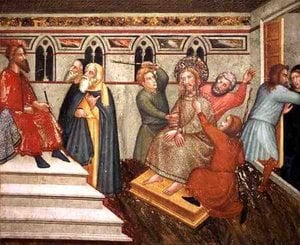
Ferrer Bassa’s oeuvre encompasses a range of works, from intricately detailed manuscript illuminations to expansive fresco cycles. His early commissions included creating miniatures for significant manuscripts such as the *Uses of Barcelona* and *Costumes of Catalonia*, demonstrating his exceptional skill in rendering detail and decorative artistry. These miniature paintings are not merely illustrations; they are self-contained worlds brimming with life and narrative nuance. However, Bassa’s most enduring legacy lies in his monumental works, particularly the series of wall paintings within the St. Michael Chapel at Pedralbes Monastery. This cycle, comprising around twenty scenes depicting both *The Passion of Christ* and *The Seven Pains of the Virgin*, stands as a testament to his artistic maturity and innovative spirit. The frescoes are characterized by their dramatic narrative power, emotional intensity, and Giottesque influences – qualities that set them apart from contemporary Catalan painting. Other attributed works include a *Coronation of the Virgin* in Bellpuig church and a *St. Bernard* now housed in the museum of Vich, further illustrating the breadth of his artistic output. He is also believed to have played a crucial role in the Catalan phase of illustrating the renowned *Great Canterbury Psalter*, showcasing his versatility across different media and scales.A Lasting Legacy: The Foundations of Catalan Gothic
Ferrer Bassa’s historical significance extends beyond his individual artistic achievements. He is widely regarded as a pivotal figure in the development of Catalan Gothic painting, instrumental in integrating Italian artistic influences into the local tradition and forging a unique and distinctive style. His ability to synthesize diverse stylistic elements—French elegance, Sienese refinement, and Giottesque drama—resulted in a visual language that was both innovative and deeply rooted in its cultural context. The association with the Aragonese court not only elevated his status but also contributed to the flourishing of art during that period, fostering an environment conducive to artistic experimentation and innovation. While much of his work has been lost over the centuries, the surviving frescoes at Pedralbes Monastery remain a powerful testament to his artistic skill and enduring influence on subsequent generations of Catalan painters. Bassa’s legacy is not merely one of aesthetic beauty but also of cultural synthesis—a masterful blending of tradition and innovation that continues to resonate with art lovers today.Key Characteristics of Bassa's Style
- Giottoesque Influences: His compositions often exhibit a sense of dramatic narrative, emotional intensity, and realistic depiction of figures – characteristics borrowed from Giotto.
- Decorative Detail: Bassa’s work is characterized by meticulous attention to detail, particularly in drapery, facial expressions, and architectural settings.
- Narrative Clarity: He excelled at conveying complex religious narratives with clarity and emotional resonance, making his works accessible and engaging for viewers.
Vraag en antwoord
Hoe vind ik werken van Ferrer Bassa met een specifiek thema?
Om werken van Ferrer Bassa met een specifiek thema te vinden, kunt u de Op trefwoorden pagina van de kunstenaar gebruiken, waarop de kunstwerken per trefwoord zijn gegroepeerd.
In welke historische periode werkte Ferrer Bassa?
Ferrer Bassa werkte in de Late Medieval-periode. Deze periode plaatst het oeuvre van de kunstenaar in een historisch kader.
Waar en wanneer is Ferrer Bassa geboren?
Ferrer Bassa werd geboren in Avinyonet del Penedès in 1285.