A Presence in the Muromachi Period
The historical record offers only a glimpse into the life of Judō, a painter active during the 16th century in Japan. Operating during the Muromachi period, this era was a time of significant cultural shifts and artistic refinement. While the specific details of his personal life remain obscured by the passage of centuries, his existence is confirmed through the surviving remnants of his brushwork. He belonged to a tradition that sought to capture the essence of the natural world through ink and subtle composition.
His work reflects the sensibilities of a Japan in transition. The landscape tradition he inhabited required a disciplined hand and a deep understanding of space. In his era, the act of painting was often a meditative practice, a way to translate the physical world into a spiritual or philosophical dialogue on silk or paper.
The Landscape Tradition
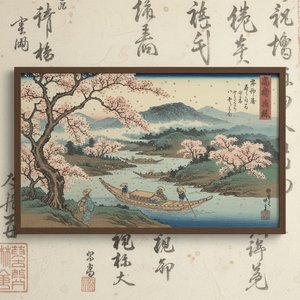
Judō’s contribution to the art of his time is anchored by a specific, significant work held in the Cleveland Museum of Art. This piece, a landscape dating to the 1500s, provides the primary evidence of his technical capability and his aesthetic focus. Through this work, we understand his engagement with the natural environment.
- Primary Work: Landscape
- Historical Context: Muromachi period (1392–1573)
- Geographic Origin: Japan
Historical Significance
To study Judō is to study the quiet persistence of the Japanese painter. He did not leave behind a vast body of work, yet his presence in the historical record is felt through the preservation of his vision. His ability to translate the topography of the 16th century into a lasting visual form ensures his place in the lineage of Japanese ink painting. He remains a figure of the Muromachi period, a painter whose brush once moved across a surface to define the contours of a landscape that survives long after the hand that drew it has passed.
Vraag en antwoord
Kan ik de kunstwerken van Judō sorteren op kleur?
De werken van Judō kunnen op kleur worden verkend op de Sorteren op kleur pagina van de kunstenaar.
In welke stromingen heeft Judō gewerkt?
De stromingen waarin Judō werkte, zijn te vinden op de Alle stromingen-pagina van de kunstenaar, waar de kunstwerken per stroming zijn gegroepeerd.
Is er een chronologisch overzicht van Judō?
De Loopbaanoverzicht van Judō is een interactieve tijdlijn die de werken van de kunstenaar chronologisch presenteert, gegroepeerd in hoofdstukken per carrièreperiode.
Welke stemmingen drukken de kunstwerken van Judō uit?
De werken van Judō kunnen per stemming worden bekeken op de Sfeercollectie pagina van de kunstenaar, waar de kunstwerken zijn gerangschikt op basis van hun vastgelegde stemmingen.