The Portraitist of the Midlands Enlightenment
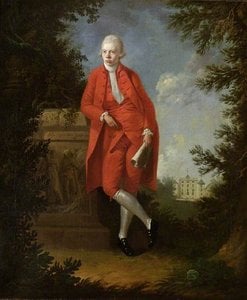
In the bustling, industrious heart of eighteenth-century Birmingham, a period defined by the intellectual fervor of the Midlands Enlightenment, James Millar emerged as a master of the human countenance. Born around 1735, Millar did not merely paint faces; he captured the very essence of an era characterized by scientific curiosity and rational progress. As the city’s preeminent portrait painter during the latter half of the century, his work served as a visual record of the luminaries who shaped the industrial and social fabric of England. His presence in the local community was firmly established by 1763, and through his brush, the thinkers, merchants, and innovators of Birmingham were granted a sense of permanence and dignity.
Millar’s artistic language was deeply steeped in the neoclassical tradition, a movement that sought to marry the clarity of ancient ideals with a refined, modern sensibility. Drawing profound inspiration from the legendary Joshua Reynolds and the lyrical Thomas Gainsborough, Millar developed a technique that balanced meticulous precision with subtle emotional depth. He was particularly adept at utilizing both oil paint and the mezzotint process, a method that allowed him to achieve exquisite tonal gradations and a soft, luminous quality in his subjects' skin and drapery. This mastery of light and shadow enabled him to transcend simple likeness, imbuing his sitters with a psychological complexity that reflected their intellectual stature.
Symbolism and the Spirit of an Age
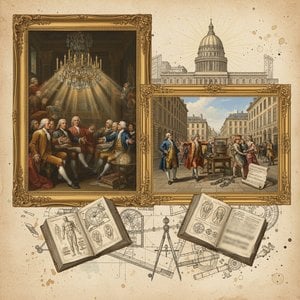
Beyond the mere documentation of physical features, Millar’s oeuvre is celebrated for its rich use of allegorical symbolism. His compositions often functioned as visual manifestos of Enlightenment values, weaving together themes of wisdom, science, and the arts. A profound example of this can be found in his commissioned works for figures such as Thomas Day, where Millar utilized allegorical figures to mirror the intellectual landscape of the time. In these pieces, the presence of symbols representing scientific discovery or artistic achievement often stood in deliberate dialogue with the local architecture, such as the iconic tower of St. Philip’s Church, grounding his lofty themes in the tangible reality of Birmingham.
This ability to blend the personal with the universal allowed his work to resonate far beyond the borders of the Midlands. His portraits of notable figures—including John Baskerville, Francis Eginton, and John Freeth—are not merely studies of individuals but are windows into a society on the precipice of modern transformation. Whether through the somber realism of a clerical portrait or the layered elegance of a family scene like Robert Mynors and His Family, Millar’s art captured the tension between the burgeoning industrial wealth and the enduring classical ideals of his subjects.
Legacy and Artistic Recognition
The breadth of Millar's influence was recognized by the most prestigious institutions of his day. Between 1771 and 1790, his talent was showcased to the wider British public through frequent exhibitions at the Royal Academy and the Society of Artists in London. This exposure solidified his reputation as a painter of national significance, moving him beyond the status of a regional specialist to a recognized figure in the broader British art canon.
As we reflect on the life and work of James Millar, we see an artist who was both a product and a pioneer of his environment. His legacy survives in the meticulously crafted canvases that continue to evoke the spirit of the Enlightenment:
- Technical Mastery: His sophisticated use of mezzotint and oil to create depth and character.
- Historical Documentation: His role as the visual biographer of Birmingham’s most influential citizens.
- Intellectual Depth: The integration of complex allegorical themes that celebrated scientific and artistic progress.
Vraag en antwoord
In welke historische periode werkte James Millar?
James Millar werkte in de Early Modern-periode. Deze periode plaatst het oeuvre van de kunstenaar in een historisch kader.
Hoe kan ik het werk van James Millar chronologisch volgen?
De Chronologie kunstwerken pagina van de kunstenaar presenteert de werken van James Millar, chronologisch geordend per jaar.
Kan ik de werken van James Millar verkennen op basis van het kleurenspectrum?
De Sorteren op kleur van James Millar biedt een overzicht van de kunstwerken van de kunstenaar, georganiseerd op kleur.