Edward Bird (1772–1819): Naturalism and the Bristol School
- Early Life & Training
- The Bristol School and Artistic Flourishing
- Recognition in London & Shift to Historical Themes
- Later Years, Legacy & Artistic Style
Early Life & Training
Edward Bird was born in Wolverhampton, Staffordshire, on April 12th, 1772. His father, a carpenter, instilled in him a practical understanding of craftsmanship—a grounding that would profoundly shape his artistic trajectory. Unlike many artists of his time who pursued formal academic training, Bird honed his skills through apprenticeship as a japanning artist, meticulously applying decorative designs onto tea trays. This painstaking process demanded precision and an eye for detail, qualities that would become hallmarks of his oeuvre. The influence of this early discipline—far removed from the grand narratives of history painting he would later embrace—laid the foundation for his artistic future. Initial observations suggest that Bird’s father encouraged him to develop a keen interest in art and design.The Bristol School and Artistic Flourishing
Bristol proved to be more than just a place of employment; it became an intellectual and creative crucible. Bird swiftly found himself at the heart of what would become known as the “Bristol School”—an informal collective bound by a shared spirit of experimentation and mutual encouragement. This wasn’t a formally structured academy, but rather a dynamic network where ideas flowed freely, and artistic boundaries were gently pushed. A pivotal relationship for Bird was his friendship with George Cumberland, an art collector and connoisseur whose extensive library and collection provided invaluable access to a wealth of artistic inspiration. Cumberland's patronage opened doors to study works by the Old Masters, shaping Bird’s aesthetic sensibilities. Regular evening sketching sessions and excursions into the surrounding countryside fostered both technical skill and a shared artistic vision. The Bristol School championed a naturalistic style, prioritizing fresh color palettes and a keen observation of everyday life—qualities that would become hallmarks of Bird’s work and profoundly influence artists like Rippingille and, later, Francis Danby.Recognition in London & Shift to Historical Themes
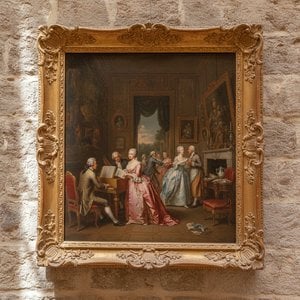
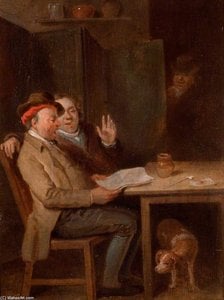
The year 1809 marked a turning point in Bird’s career. His submission to the Royal Academy—Good News—garnered immediate attention, its compelling narrative and skillful execution resonating with both critics and patrons. This success brought royal recognition, as the Prince Regent acquired his painting The Country Choristers and commissioned Blind Man’s Buff. These commissions not only solidified Bird's reputation but also provided financial stability, allowing him to explore more ambitious projects. He began a transition towards history painting, specializing in dramatic battle scenes—a genre that demanded both technical mastery and a powerful sense of narrative. Works like The Field of Chevy Chase and The Day After the Battle showcased his growing ability to capture the intensity and emotional weight of historical events.Later Years, Legacy & Artistic Style
Despite achieving considerable acclaim, Bird’s later years were shadowed by declining health and artistic challenges. His attempts at large-scale historical paintings proved more difficult than anticipated, and he struggled to maintain the momentum of his earlier successes. He passed away on November 2nd, 1819, leaving behind a diverse body of work that was celebrated in a retrospective exhibition held in Bristol shortly after his death. Edward Bird is remembered as a pivotal figure in British art history, particularly for his contributions to the development of the Bristol School and his unique ability to seamlessly blend genre painting with historical themes. His influence extended beyond his immediate circle, inspiring subsequent generations of artists who embraced naturalism and sought to capture the authenticity of everyday life.Vraag & Antwoord
Kan ik de werken van Edward Bird bekijken op basis van kleurenpalet?
De werken van Edward Bird kunnen worden bekeken op basis van kleurpalet op de Op kleurpalet pagina van de kunstenaar.
Kan ik de werken van Edward Bird verkennen op basis van trefwoorden?
De Op trefwoorden-pagina van Edward Bird groepeert de kunstwerken van de kunstenaar op basis van hun trefwoorden.
Waar kan ik het kleurprofiel van het oeuvre van Edward Bird bekijken?
Het kleurprofiel van het werk van Edward Bird is te vinden op de Paletgenoom pagina van de kunstenaar.