
1
Hedvig Lietzén gift Gezelius
Handgeschilderde olieverfreproductie vanaf $199 28 × 36 cm
Zelfde formaat als het origineel $337 64 × 80 cm Bestel in de originele afmetingen →

Het schilderij dat Anders Ulich beroemd maakte is Hedvig Lietzén gift Gezelius (1696); het hangt in het Nationalmuseum, Stockholm. Van de 1 werken van Anders Ulich in onze catalogus zijn dit de 1 meest bewonderde, elk gepresenteerd met de datum, het museum en wat het uniek maakt.
Gerangschikt op basis van onze populariteitsscore, die de zoekopdrachten, bezoeken en bestellingen voor elk werk combineert. Bijgewerkt in november 2026. Elk meesterwerk op deze pagina kan worden besteld als een handgeschilderde olieverfreproductie van museumkwaliteit of als een fine art print, in de door u gekozen afmeting.

Het museum met de meeste schilderijen op deze pagina.
| Museum | Stad | Werken van Anders Ulich | Schilderijen uit deze lijst |
|---|---|---|---|
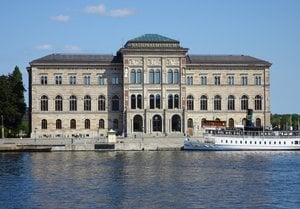 Nationalmuseum |
Stockholm | 1 | Hedvig Lietzén gift Gezelius |
Hedvig Lietzén gift Gezelius (1696)
Onze catalogus bevat 1 werken van Anders Ulich.
De meeste bevinden zich in Nationalmuseum (Stockholm). De bovenstaande tabel somt de musea één voor één op.
Ja. Elk schilderij op deze pagina kan worden besteld als een handgeschilderde olieverfreproductie van museumkwaliteit of als een fine art print, in de door u gekozen afmeting, via de eigen pagina van het schilderij.
The origins of Anders Ulich remain shrouded in the quiet uncertainty of the late seventeenth century. While his early years are lost to history, his German roots are whispered through the language of his own receipts, suggesting a man who carried his heritage into the Swedish landscape. He moved through the professional circles of the era as a journeyman painter, eventually finding his footing in the service of the church and the nobility. His presence in Åbo during the 1680s marks the beginning of a career defined by the steady, disciplined hand of a craftsman tasked with the visual dignity of faith and status.
His training likely occurred under the guidance of David Klöcker Ehrenstrahl, a connection that would have shaped his approach to form and light. By 1688, he was already established as a journeyman in Åbo, moving from the foundational work of a traveling artist to the specialized role of a portraitist. This transition from decorative laborer to a painter of faces suggests a growing command over the nuances of human character and the formal requirements of his patrons.
Much of Ulich’s professional life was spent within the sacred architecture of the Åbo Cathedral. His hands shaped the visual environment of the faithful through a variety of commissions that demanded both technical skill and a sense of decorum. His work in the cathedral was extensive, though much of it was lost to the fire of 1827, leaving only fragments of his contribution to the space.
His documented contributions to the cathedral include:
These works reveal a painter deeply embedded in the social and religious fabric of his time. He was not merely an observer but a participant in the visual liturgy of the Swedish church, capturing the likenesses of those who held authority and the sacred themes that anchored the community's spiritual life.
The surviving evidence of Ulich’s hand is sparse, yet it carries the weight of a completed life. His work is held in the Nationalmuseum, where the oil on canvas preserves a likeness that might otherwise have faded into the anonymity of the past. One such piece, a portrait of Hedvig Lietzén, wife of Gezelius, provides a window into his ability to render the individual with precision. It is a quiet, formal record of a woman from a significant era.
He passed away in 1695, leaving behind a legacy that is felt more in the absence of his lost cathedral works than in the abundance of what remains. He was a man of his era, a German-born painter who helped define the visual character of a region, working through the transition from journeyman to a recognized artist of the Swedish realm.