Biografie van de kunstenaar
Winslow Homer (1836-1910): Een Schilder van de Amerikaanse Ziel
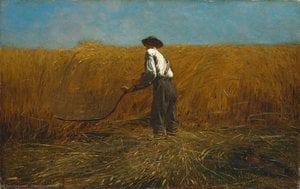
Winslow Homer, geboren in Boston in 1836, werd niet gevormd door de Europese kunstacademies die zo veel van zijn tijdgenoten vormden. Hij kwam voort uit een duidelijk Amerikaanse ervaring, één gekenmerkt door praktische wijsheid en observatie. Zijn reis begon niet met grandeuruze historische doeken, maar als commerciële illustrator op slechts twaalfjarige leeftijd voor Harper's Weekly. Deze vroege leerlingenkampioen ontwikkelde een uitzonderlijke bekwaamheid om scènes vast te leggen met helderheid en detail – vaardigheden die zouden worden verkregen tot zijn rijpe werk. Hij leerde perspectief niet in Parijs; hij leerde *zien* Amerika, zijn mensen en zijn voortdurende verhaal. De drukke straten van Boston, de rustige eerbiedbaarheid van het Amerikaanseชนteilandleven, deze waren zijn eerste onderwerpen, weergegeven met een precisie geboren uit noodzaak voor de eisen van drukmedia. Deze basis gaf hem toestemming om over te gaan naar schilderen, aanvankelijk in aquarel, voordat hij volledig omarmde het expressieve potentieel van olieverf.
Van Pastorale Scènes tot De Wilde Kracht Van Natuur
Homer’s vroegere schilderijen toonden vaak idyllische scènes – kinderen spelen, boeren hun velden bewerken, stille momenten van huishoudelijke rust. Deze werken waren charmant, maar hintten op een diepere artistieke gevoeligheid wachtend om losgelaten te worden. De katalysator voor deze transformatie was onmiskenbaar de Amerikaanse Burgeroorlog. Als oorlogskorrespondent voor Harper's Weekly zag Homer zelfstandig het brute geweld van conflict. Hij concentreerde zich niet op heroïsche gevechten of grote strategieën; hij documenteerde het dagelijks leven van soldaten en burgers, stille momenten van verdriet en veerkracht midden in chaos. Deze ervaring veranderde zijn artistieke visie diepgaand. De pastorale scènes gaven plaats aan meer uitdagende onderwerpen: veteranen worstelend met trauma, bevrijde slaven navigerend door een nieuwe wereld, en de eenvoudige schoonheid van landschappen aangeraakt door lijden. Hij begon te verkennen thema’s van strijd, isolatie en de kwetsbare relatie tussen mens en natuur – thema’s die zouden domineren zijn meest krachtige werken. Zijn stijl evolueerde ook, werd gedurfder en directer, weerspiegelend het wilde emotionele impact van wat hij had gezien.
Het Meesterlijke Gebruik Van Licht En Textuur
Winslow Homer's kunsttechniek is meteen herkenbaar voor zijn solide vormgeving en textuur. Hij was niet geïnteresseerd in vluchtige impressies; hij wilde een gevoel van tastbare werkelijkheid op het doek creëren. Zijn olieverfschilderingen worden gekenmerkt door een directe schilderaanpak – lagen verf aangebracht met zelfvertrouwen, waardoor diepte en lichtheid ontstaan. Hij bezat een uitzonderlijke bekwaamheid om licht vast te leggen, of het nu de oogstrelende gloed van de zon op zee was of de zachte gloed van avondschemering over een rustiek landschap. Deze beheersing strekte zich uit tot zijn aquarelwerk, waar hij prachtige atmosferische effecten bereikte door levendige kleuren en delicate spoelingen. Breezing Up (A Fair Wind), geschilderd in 1876, illustreert deze bekwaamheid – een tijdloze afbeelding van Amerikaanse zeevaartleven, gevuld met energie en beweging. De Gulf Stream, gemaakt jaren later, is misschien zijn meest iconische werk, een krachtige en symbolische weergave van een enkele man die vecht tegen de krachten van natuur – een metafoor voor menselijke strijd tegen overweldigende tegenstand. Hij was niet alleen het prachtige landschap schilderen; hij verkondigde een gevoel, een emotionele waarheid over de menselijke conditie.
Een Erfenis Geboren Uit Amerikaanse Realisme
Winslow Homer werd grotendeels beïnvloed door Europese kunstenaars zoals die van de Barbizon school – bekend om hun realistische afbeeldingen van hetชนteilandleven– en erkende invloeden van Courbet en Millet. Hij verwierp echter de dominante academische conventies en concentreerde zich op het vastleggen van de unieke geest van zijn land. Zijn kunst was niet geïnspireerd door Europese stijl; hij wilde een kunstwerk creëren dat uniek was voor Amerika, het weergeven ervan zijn landschappen, zijn mensen en zijn uitdagingen. Hij verkende thema’s die voortkwamen uit het Amerikaanse leven en de natuurlijke wereld. Zijn werk werd gekenmerkt door een directe schilderaanpak – lagen verf aangebracht met zelfvertrouwen, waardoor diepte en lichtheid ontstonden. Hij bezat een uitzonderlijke bekwaamheid om licht vast te leggen, of het nu de oogstrelende gloed van de zon op zee was of de zachte gloed van avondschemering over een rustiek landschap. Zijn stijl werd gekenmerkt door een directe schilderaanpak – lagen verf aangebracht met zelfvertrouwen, waardoor diepte en lichtheid ontstonden. Hij verkende thema’s die voortkwamen uit het Amerikaanse leven en de natuurlijke wereld. Zijn kunstwerk werd gekenmerkt door een directe schilderaanpak – lagen verf aangebracht met zelfvertrouwen, waardoor diepte en lichtheid ontstonden. Hij verkende thema’s die voortkwamen uit het Amerikaanse leven en de natuurlijke wereld. Zijn stijl werd gekenmerkt door een directe schilderaanpak – lagen verf aangebracht met zelfvertrouwen, waardoor diepte en lichtheid ontstonden. Hij verkende thema’s die voortkwamen uit het Amerikaanse leven en de natuurlijke wereld. Zijn kunstwerk werd gekenmerkt door een directe schilderaanpak – lagen verf aangebracht met zelfvertrouwen, waardoor diepte en lichtheid ontstonden. Hij verkende thema’s die voortkwamen uit het Amerikaanse leven en de natuurlijke wereld. Zijn stijl werd gekenmerkt door een directe schilderaanpak – lagen verf aangebracht met zelfvertrouwen, waardoor diepte en lichtheid ontstonden. Hij verkende thema’s die voortkwamen uit het Amerikaanse leven en de natuurlijke wereld. Zijn kunstwerk werd gekenmerkt door een directe schilderaanpak – lagen verf aangebracht met zelfvertrouwen, waardoor diepte en lichtheid ontstonden. Hij verkende thema’s die voortkwamen uit het Amerikaanse leven en de natuurlijke wereld. Zijn stijl werd gekenmerkt door een directe schilderaanpak – lagen verf aangebracht met zelfvertrouwen, waardoor diepte en lichtheid ontstonden. Hij verkende thema’s die voortkwamen uit het Amerikaanse leven en de natuurlijke wereld. Zijn stijl werd gekenmerkt door een directe schilderaanpak – lagen verf aangebracht met zelfvertrouwen, waardoor diepte en lichtheid ontstonden. Hij verkende thema’s die voortkwamen uit het Amerikaanse leven en de natuurlijke wereld. Zijn stijl werd gekenmerkt door een directe schilderaanpak – lagen verf aangebracht met zelfvertrouwen, waardoor diepte en lichtheid ontstonden. Hij verkende thema’s die voortkwamen uit het Amerikaanse leven en de natuurlijke wereld. Zijn stijl werd gekenmerkt door een directe schilderaanpak – lagen verf aangebracht met zelfvertrouwen, waardoor diepte en lichtheid ontstonden. Hij verkende thema’s die voortkwamen uit het Amerikaanse leven en de natuurlijke wereld. Zijn stijl werd gekenmerkt door een directe schilderaanpak – lagen verf aangebracht met zelfvertrouwen, waardoor diepte en lichtheid ontstonden. Hij verkende thema’s die voortkwamen uit het Amerikaanse leven en de natuurlijke wereld. Zijn stijl werd gekenmerkt door een directe schilderaanpak – lagen verf aangebracht met zelfvertrouwen, waardoor diepte en lichtheid ontstonden. Hij verkende thema’s die voortkwamen uit het Amerikaanse leven en de natuurlijke wereld. Zijn stijl werd gekenmerkt door een directe schilderaanpak – lagen verf aangebracht met zelfvertrouwen, waardoor diepte en lichtheid ontstonden. Hij verkende thema’s die voortkwamen uit het Amerikaanse leven en de natuurlijke wereld. Zijn stijl werd gekenmerkt door een directe schilderaanpak – lagen verf aangebracht met zelfvertrouwen, waardoor diepte en lichtheid ontstonden. Hij verkende thema’s die voortkwamen uit het Amerikaanse leven en de natuurlijke wereld. Zijn stijl werd gekenmerkt door een directe schilderaanpak – lagen verf aangebracht met zelfvertrouwen, waardoor diepte en lichtheid ontstonden. Hij verkende thema’s die voortkwamen uit



 Bekijk op ware grootte
 Koop handgeschilderd kunstwerk
 Verstuur
 Delen
Delen
 Details bekijken
 Gids
Gids

 Download
 Vergelijkbare items
 Röntgenonderzoek
 Diavoorstelling
 Statistieken

 Lees meer






































 De optie voor glas is alleen beschikbaar bij een formaat kleiner dan 110 cm.