Voorvertoning Bekijk in AR Bestel handgeschilderde reproductie Schakel over naar digitale afbeeldingen Verstuur
Details bekijken Gids Toevoegen aan favorieten Download Vergelijkbare items Röntgenonderzoek Diavoorstelling Statistieken

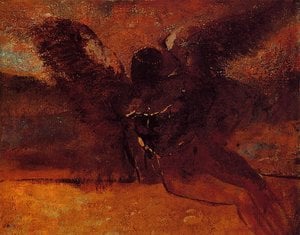
Victory

Experience the breathtaking realism of William Trost Richards’ ‘Victory’! A captivating oil painting depicting a knight on horseback, showcasing intricate detail and vibrant colors – a timeless masterpiece.

William Trost Richards (1833-1905): Amerikaanse landschapsschilder bekend om zijn gedetailleerde waterverf & olieverf van de White Mountains, kusten & zeegezichten. Een sleutelfiguur tussen Hudson River School realisme & Pre-Raphaeliet precisie.

Giclée / Kunstafdrukken

Giclée- of canvasafdruk van museumkwaliteit met een snelle productie en flexibele afwerkingsmogelijkheden. ( Bestel handgeschilderde reproductie Schakel over naar digitale afbeeldingen)

Corner sample of the P118B picture frame: gegoten polystyreen, 5 cm wide and 3 cm thick
P118B €10
Corner sample of the P118H picture frame: gegoten polystyreen, 5 cm wide and 3 cm thick
P118H €10
Corner sample of the P118W picture frame: gegoten polystyreen, 5 cm wide and 3 cm thick
P118W €10
Corner sample of the P438Z picture frame: gegoten polystyreen, 5.5 cm wide and 3.5 cm thick
P438Z €10
Corner sample of the P508JH picture frame: gegoten polystyreen, 7 cm wide and 3.5 cm thick
P508JH €12
Corner sample of the P508YH picture frame: gegoten polystyreen, 7 cm wide and 3.5 cm thick
P508YH €12
Corner sample of the P805H picture frame: gegoten polystyreen, 5 cm wide and 3.5 cm thick
P805H €10
Corner sample of the P805Z picture frame: gegoten polystyreen, 5 cm wide and 3.5 cm thick
P805Z €10
Corner sample of the P919BZ picture frame: gegoten polystyreen, 7 cm wide and 3.5 cm thick
P919BZ €10
Corner sample of the P919G picture frame: gegoten polystyreen, 7 cm wide and 3.5 cm thick
P919G €10
Corner sample of the P919XJ picture frame: gegoten polystyreen, 7 cm wide and 3.5 cm thick
P919XJ €10
Corner sample of the P959ZH picture frame: gegoten polystyreen, 5 cm wide and 3 cm thick
P959ZH €10
Corner sample of the P968JZ picture frame: gegoten polystyreen, 6 cm wide and 4 cm thick
P968JZ €12
Corner sample of the W106C picture frame: massief hout, 5 cm wide and 3 cm thick
W106C €8
Corner sample of the W218G picture frame: massief hout, 5 cm wide and 3 cm thick
W218G €10
Corner sample of the W218JH picture frame: massief hout, 5 cm wide and 3 cm thick
W218JH €8
Corner sample of the W218Y picture frame: massief hout, 5 cm wide and 3 cm thick
W218Y €10
Corner sample of the W307PJ picture frame: massief hout, 6 cm wide and 3 cm thick
W307PJ €10
Corner sample of the W316G picture frame: massief hout, 6 cm wide and 3 cm thick
W316G €10
Corner sample of the W316PJ picture frame: massief hout, 6 cm wide and 3 cm thick
W316PJ €8
Corner sample of the W316Y picture frame: massief hout, 6 cm wide and 3 cm thick
W316Y €10
Corner sample of the W398PJ picture frame: massief hout, 5 cm wide and 3 cm thick
W398PJ €8
Corner sample of the W4111J picture frame: massief hout, 6.5 cm wide and 3.5 cm thick
W4111J €10
Corner sample of the W500HY picture frame: massief hout, 7 cm wide and 5 cm thick
W500HY €15
Corner sample of the W500JH picture frame: massief hout, 7 cm wide and 5 cm thick
W500JH €15
Corner sample of the W692G picture frame: massief hout, 8 cm wide and 4 cm thick
W692G €12
Corner sample of the W849H picture frame: massief hout, 5 cm wide and 3 cm thick
W849H €8
Corner sample of the W940BG picture frame: massief hout, 7.5 cm wide and 4.5 cm thick
W940BG €15
Corner sample of the W953PJ picture frame: massief hout, 6 cm wide and 3.5 cm thick
W953PJ €8

Standaardformaat
op maat gemaakt
CM
INCH

Kies uit onze vooraf ingestelde maten die overeenkomen met de originele verhoudingen van het kunstwerk.

breedte
hoogte

Voer de gewenste breedte en hoogte in, passend bij uw lijst of muur. Een afdruk kan alleen worden ingekort en nooit groter worden gemaakt dan het origineel; een formaat met andere verhoudingen zal daarom een deel van de afbeelding verliezen. Wij sturen u een digitaal mockup ter goedkeuring voordat we tot drukwerk overgaan. De afbeelding op deze pagina toont niet de werkelijke uitsnede — dit is alleen te zien op het mockup.

Wereldwijde levering () binnen 2 weken in plaats van de standaard 4/5 weken. (28 oktober)

Gratis wereldwijde expressverzending
Hoogwaardig linnen canvas
Volledige verzendverzekering
Garantie op terugbetaling van invoerrechten
Garantie op exacte kleurweergave
Retourbeleid van 100 dagen (alleen bij defecten)
100% Geld-terug-garantie
Korting bij meerdere afnames

Totaalprijs

€ 61

Victory

Giclée / Kunstafdrukken

Afmetingen reproductie

-

Eindtotaal

€ 61

Snelle feiten

  • Year: 1870
  • Subject or theme: Triumphant moment
  • Location: Detroit Institute of Arts
  • Movement: Hudson River School
  • Medium: Oil on canvas

Kunstquiz

Er is slechts één goed antwoord op elke vraag.

Vraag 1:
What is the primary subject depicted in William Trost Richards’ ‘Victory’?
Vraag 2:
The warm orange hue in ‘Victory’ primarily contributes to which aspect of the painting?
Vraag 3:
Which artistic movement is ‘Victory’ most closely associated with?
Vraag 4:
What detail in the painting suggests a focus on realism and observation?

Victory: A Knight’s Triumph – An Exploration of Richards' Masterpiece

William Trost Richards’ “Victory,” painted in 1870 and currently residing within the esteemed Detroit Institute of Arts, is more than just a landscape; it’s a meticulously crafted tableau of chivalry, movement, and an almost palpable sense of triumph. This oil on canvas transcends mere representation, offering a glimpse into the artist's profound understanding of light, composition, and the evocative power of Romanticism blended with a remarkable realism. The painting immediately draws the viewer in with its warm, inviting palette dominated by a fiery orange sky – a dramatic backdrop that suggests both impending action and the glorious aftermath of a hard-won victory. Richards wasn't interested in simply depicting a scene; he sought to capture an *experience*, imbuing his work with a spirit of dynamism and emotional resonance.

At the heart of “Victory” stands a knight, mounted on a magnificent steed that seems poised for immediate flight. The detail invested in the armor is astonishing – each scale, rivet, and decorative element rendered with painstaking precision. The artist’s skill isn't merely technical; it’s evident in the way the light catches the metal, creating an interplay of highlights and shadows that lends a breathtaking sense of texture and volume. Notice how Richards subtly suggests movement through the horse’s musculature and flowing mane – a testament to his ability to convey kinetic energy on canvas. The two birds soaring above, seemingly unconcerned with the drama unfolding below, add a touch of unexpected realism and perhaps even a hint of symbolic commentary.

A Synthesis of Realism and Romanticism

William Trost Richards distinguished himself within the American art scene by rejecting the overly dramatic and idealized styles prevalent in the Hudson River School. Instead, he embraced a rigorous approach to observation, meticulously documenting nature as he perceived it. This commitment to realism is evident in the accurate depiction of the horse’s anatomy, the detailed rendering of the landscape elements, and the subtle nuances of light and shadow. However, Richards wasn't simply a literal recorder; he infused his work with Romantic sensibilities – a sense of grandeur, emotion, and spiritual significance. The knight’s posture, the dramatic sky, and the overall composition all contribute to an atmosphere of heroic intensity.

The choice of orange as the dominant color is particularly noteworthy. It's not merely a decorative element; it evokes feelings of warmth, energy, and passion – aligning perfectly with the theme of victory. The intricate designs on the knight’s armor also hold symbolic weight. These patterns likely represent heraldry, signifying lineage, honor, and allegiance. They are a visual shorthand for the values associated with chivalry and nobility, reinforcing the painting's central narrative.

Historical Context and Artistic Significance

“Victory” was created during a period of significant social and political change in America. The late 19th century witnessed rapid industrialization, urbanization, and westward expansion – events that profoundly impacted American art. Richards’ work reflects this evolving landscape, capturing the spirit of an era defined by both progress and uncertainty. He stands as a bridge between the more traditional Hudson River School and the emerging Pre-Raphaelite movement, incorporating elements of both while forging his own distinctive style.

Richards' meticulous approach to detail, combined with his ability to capture the essence of light and atmosphere, established him as one of the most respected landscape painters of his time. “Victory” is a prime example of his artistic prowess – a testament to his dedication, skill, and profound understanding of the natural world. It’s a painting that invites contemplation, sparking questions about heroism, honor, and the enduring power of human spirit.

Experience "Victory" Through a Hand-Painted Reproduction

WahooArt offers exquisite, hand-painted reproductions of William Trost Richards' “Victory,” meticulously crafted to capture every nuance and detail of the original masterpiece. Unlike digital prints, our reproductions are created by skilled artists using traditional oil painting techniques, ensuring unparalleled quality and authenticity. Each reproduction is a unique work of art, imbued with the same emotional depth and visual impact as the original.

Whether you’re an art collector, interior designer, or simply someone seeking to bring beauty into your home, a WahooArt “Victory” reproduction is a stunning addition to any collection. Explore our selection of sizes and framing options at /en/art/show/art-8ye78j-en/ and discover the timeless allure of this iconic American painting.

Veelgestelde vragen

Wat stelt "Victory" door William Trost Richards voor?

"Victory" door William Trost Richards toont: knight, horseback, armor, landscape, orange sky, detail, movement.

Waar kan ik statistieken vinden over "Victory" door William Trost Richards?

Er bestaat een Statistieken-pagina voor "Victory". Deze brengt de maandelijkse bezoeken aan het kunstwerk en andere werken van de kunstenaar in kaart, met uitsplitsingen naar land en taal.

Hoe verhoudt het onderwerp van "Victory" zich tot de gebruikelijke thema's van William Trost Richards?

Binnen de bekende thema's van William Trost Richards - hudson river school realism, romanticism, detail, observation, american landscape tradition, spiritual connection nature, precision, meticulous craftsmanship - legt "Victory" een eigen focus op knight, horseback, armor, landscape, orange sky, detail, movement.


Biografie kunstenaar

A Meticulous Vision of Nature: The Life and Art of William Trost Richards

William Trost Richards, geboren in Philadelphia op 14 november 1833, bezit een unieke positie binnen de pantheon van Amerikaanse landschapsschilders. Hij werd niet gedreven door de dramatische flair of romantiseerde idealen die velen van zijn tijdgenoten binnen de Hudson River School kenmerkten; in plaats daarvan streefde Richards naar een bijna wetenschappelijke nauwkeurigheid bij het weergeven van natuur, waarbij hij scènes met een precisie en detail rendeerde die op fotografische realisme leek. Zijn vroege leven legde een fundering voor deze onderscheidende benadering. Hoewel hij formeel werd onderwezen op Central High School in Philadelphia, was zijn leerlingschap tussen 1850 en 1855 met de Duitse kunstenaar Paul Weber, gecombineerd met werk als ontwerper van siergewei, die binnen hem een toewijding aan minutieuze vakmanschap en observatie instilled. Deze combinatie van artistieke training en praktische vaardigheid zou het kenmerk worden van zijn volwassen stijl. Hij schilderde niet simpelweg wat hij *over* de natuur voelde; hij documenteerde zorgvuldig wat hij *zag*.

Van Europese Invloeden tot Amerikaanse Kusten

Richards’ artistieke reis bracht hem in 1853 naar Europa, samen met collega-schilders William Stanley Haseltine en Alexander Lawrie. Deze periode bleek vormend, waardoor hij werd blootgesteld aan de Düsseldorfse School van schilderkunst – bekend om haar gedetailleerde landschappen. Echter, na zijn terugkeer naar Amerika begon Richards een eigen pad te bemalen. Hij exposeerde in de Pennsylvania Academy of Fine Arts vanaf 1852 tot 1905, waarbij hij erkenning verwierf binnen het kunstenaarsgemeenschap van Philadelphia. Zijn eerste grote publieke tentoonstelling vond plaats in 1858 met een show georganiseerd door Albert Bierstadt in New Bedford, Massachusetts, waardoor hij, zij het losjes, werd gekoppeld aan de Hudson River School traditie. Toch stond zijn werk zelfs dan afwijkend. Terwijl anderen probeerden de goddelijke grandeur van de natuur vast te leggen, richtte Richards zich op haar fijne details – de textuur van rotsen, het spel van licht op water, de delicate structuur van bladeren. In 1862 werd hij aanerkend als ere-lid van de National Academy of Design en werd hij een volwaardig academici in 1871, waardoor zijn positie binnen de Amerikaanse kunstwereld werd versterkt. Hij sloot zich ook aan bij de Association for the Advancement of Truth in Art, een Amerikaanse Pre-Raphaelite groep, wat zijn toewijding aan realisme en gedetailleerde observatie verder benadrukte.

De White Mountains en Zeevreugden

Misschien is Richards het best bekend om zijn waterverfbeelden van de White Mountains van New Hampshire. Deze werken, die werden gemaakt tijdens zomervakanties aan de Oostkust na zijn Europese reis, zijn opmerkelijk voor hun bijna klinische nauwkeurigheid. Hij probeerde geen romantische narratief over de natuur te leggen; hij presenteerde het gewoon zoals het was – een complex samenspel van geologische formaties, vegetatie en atmosferische omstandigheden. Veel van deze waterverfbeelden bevinden zich nu in de collectie van het Metropolitan Museum of Art, wat getuigt van hun blijvende artistieke waarde. Later in zijn carrière verschof Richards zijn focus bijna uitsluitend naar zeegezichten, met name langs de oevers van New Jersey, Maine en Rhode Island. Deze schilderijen onthullen een diepe fascinatie voor de ritmes van de oceaan – het onophoudelijke klappen van golven, de veranderende patronen van licht op het oppervlak van het water, de subtiele gradaties van kleur in de lucht. Hij bouwde een huis in Jamestown, Rhode Island, in 1881, waar hij tot zijn dood woonde en werkte, volledig ondergedompeld in de mariene wereld die zijn belangrijkste onderwerp werd.

Een Erfgoed van Precisie en Observatie

William Trost Richards overleed op 8 november 1905 in Newport, Rhode Island, waardoor een oeuvre achterbleef dat kijkers tot verbluffing trekt met zijn minutieuze detail en onwrikbare toewijding aan realisme. Zijn invloed is te zien in het werk van latere kunstenaars die een meer objectieve benadering van landschapsschilderkunst omarmden. Zijn afwijzing van romanticisme, zijn eis tot feitelijke nauwkeurigheid en zijn meesterschapstechniek maakten hem tot een unieke stem binnen de Amerikaanse kunstgeschiedenis. *Hij was niet geïnteresseerd in het creëren van idealistische beelden van de natuur; hij wilde de essentie ervan vastleggen met onverbogen eerlijkheid.* Zijn schilderijen worden vandaag de dag gehouden in vele prestigieuze Amerikaanse musea, waaronder de National Gallery, het Smithsonian American Art Museum en het Wadsworth Atheneum.

Verder Onderzoeken

  • Ontdek meer van Richards’ werk op online kunstdatabases zoals WahooArt.com.

  • Duik dieper in zijn leven en carrière via bronnen zoals Wikipedia en de archieven van het Smithsonian American Art Museum.
  • Verken werken van kunstenaars die door Richards beïnvloed werden, zoals Enrique Arrigoni en zijn dochter Anna Richards Brewster.
William Trost Richards

William Trost Richards

1833 - 1905 , Verenigde Staten van Amerika

Belangrijkste feiten

  • Artistic Movement Or Style: Hudson River School
  • Artists Or Movements Influenced By This Artist: ['Anna Richards Brewster']
  • Artists Who Influenced This Artist:
    • Paul Weber
    • Albert Bierstadt
  • Date Of Birth: 14 nov 1833
  • Date Of Death: 8 nov 1905
  • Full Name: William Trost Richards
  • Nationality: Amerikaans
  • Notable Artworks:
    • Lago Avernus
    • Woodland Landscape
  • Place Of Birth: Philadelphia, USA