GRATIS KUNSTADVIES

x
Print kopen Print kopenKoop afbeelding in hoge resolutie Koop afbeelding in hoge resolutie VerstuurVerstuur
DetailsDetails Toevoegen aan favorieten Toevoegen aan favorieten DownloadDownload Vergelijkbare werkenVergelijkbare werken RöntgenfotoRöntgenfoto DiavoorstellingDiavoorstelling

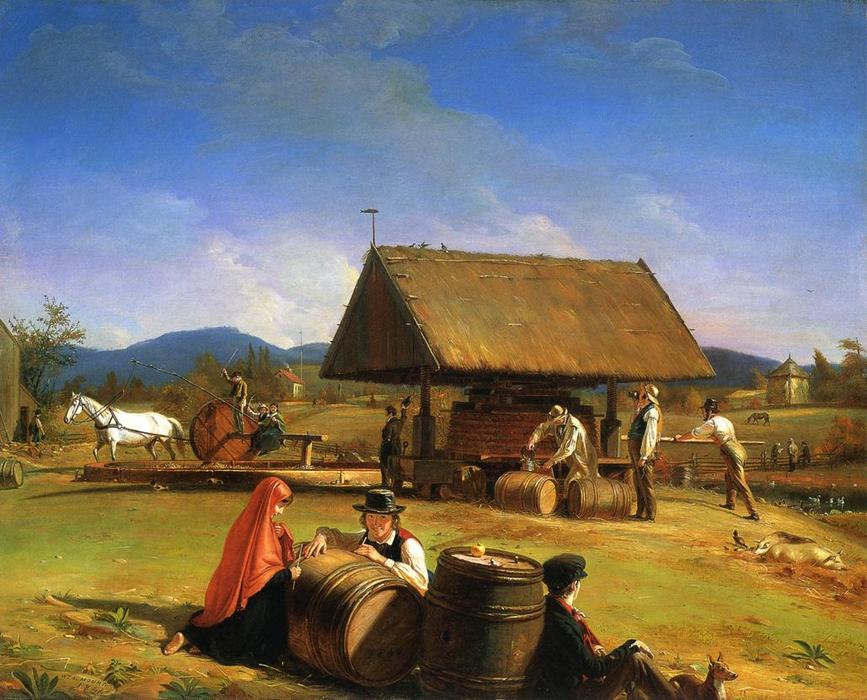
Cider Making

Experience Luminism's soft light in William Sidney Mount's 1841 Cider Making, a beautiful genre scene capturing rural American life; discover this pastoral masterpiece today.

Een pionier van Amerikaanse genre schilderkunst die prachtige afbeeldingen maakte van het eenvoudige leven aan de Long Island kustlijn en een warme kijk op het dagelijks bestaan bood. Ontdek zijn iconische werken en leer over zijn blijvende invloed!

Handgemaakte olieverfreproductie

Met de hand geschilderd in olieverf op canvas in uw gewenste maat en lijst, op bestelling gemaakt door onze kunstenaars.

P118B $10
P118H $10
P118W $10
P438Z $10
P508JH $12
P508YH $12
P805H $10
P805Z $10
P919BZ $10
P919G $10
P919XJ $10
P959ZH $10
P968JZ $12
W106C $8
W218G $10
W218JH $8
W218Y $10
W307PJ $10
W316G $10
W316PJ $8
W316Y $10
W398PJ $8
W4111J $10
W500HY $15
W500JH $15
W692G $12
W849H $8
W940BG $15
W953PJ $8

Standard
custom
CM
INCH

Kies uit onze vooraf ingestelde maten die overeenkomen met de originele verhoudingen van het kunstwerk.

breedte
hoogte

U kunt uw eigen afmetingen invoeren om in een specifieke lijst of ruimte te passen. Als de door u gekozen maat niet overeenkomt met de verhoudingen van het originele beeld, zullen we het kunstwerk bijsnijden of het schilderij uitbreiden met extra handgeschilderde elementen. Een digitale mockup wordt ter goedkeuring naar u verzonden voordat de productie begint.
Houd er rekening mee dat de preview op het scherm niet de werkelijke uitsnede of uitbreiding weergeeft. Alleen de mockup toont de uiteindelijke compositie nauwkeurig.
Hoewel aangepaste afmetingen mogelijk zijn, raden we aan een maat uit de vooraf gedefinieerde lijst te selecteren om de originele verhoudingen te behouden.

Voorbeelden van aanpassingen: Vervang het gezicht met een eigen foto; Voeg een huisdier toe (bijv. vervang de kat door een hond); Verwerk een verborgen boodschap in de achtergrond; Wijzig het landschap of andere elementen in de achtergrond.
Na de bestelling zal het team van WahooArt.com per e-mail contact opnemen voor instructies en een mockup-voorbeeld sturen.

Wereldwijde levering () binnen 3/4 weken in plaats van de standaard 5 weken. (6 juli). Geen concessies aan de kwaliteit.

why_choose_icon
Gratis wereldwijde expressverzending
why_choose_icon
Hoogwaardig linnen canvas
why_choose_icon
Volledige verzendverzekering
why_choose_icon
Garantie op terugbetaling van invoerrechten
why_choose_icon
Garantie op exacte kleurweergave
why_choose_icon
60 dagen retourbeleid (alleen bij defecten)
why_choose_icon
100% Geld-terug-garantie
why_choose_icon
Korting bij meerdere afnames

Totaalprijs

-

reproduction

Cider Making

Techniek reproductie

Afmetingen reproductie

-

Eindtotaal

-

Snelle feiten

  • Notable elements or techniques: Detailed depiction of cider production process
  • Year: 1841
  • Location: Private Collection
  • Influences: Hudson River School
  • Title: Cider Making
  • Artist: William Sidney Mount
  • Artistic style: Realism

Kunstquiz

Er is slechts één correct antwoord op elke vraag.

Vraag 1:
What genre of painting is William Sidney Mount considered a pioneer of?
Vraag 2:
The artwork 'Cider Making' primarily depicts scenes from which setting and time period?
Vraag 3:
Mount's artistic style, evident in 'Cider Making,' is closely associated with which art movement known for soft, diffused light?
Vraag 4:
Besides documenting daily labor, what deeper context did Mount subtly incorporate into 'Cider Making'?
Vraag 5:
What central object dominates the composition in 'Cider Making,' around which the figures are gathered?

Beschrijving kunstwerk

A Snapshot of Rural Life: William Sidney Mount’s Cider Making

William Sidney Mount stands apart from his contemporaries in the annals of American art history. Rather than pursuing grand narratives or aristocratic portraits, he dedicated himself to capturing the essence of everyday existence – specifically, the industrious rhythms of rural Long Island during the early 1840s. His masterpiece, “Cider Making,” exemplifies this commitment, offering a beautifully rendered tableau that transcends mere depiction and speaks volumes about the spirit of its time. This painting isn’t simply a visual record; it's an invitation to contemplate the dignity inherent in simple labor and the enduring charm of pastoral landscapes.

The Scene Unfolds: Observation and Representation

Mount meticulously documented the process of cider making, transforming a commonplace activity into a compelling subject for artistic exploration. The composition is dominated by a barrel situated prominently in a sunlit field, surrounded by figures engaged in various tasks – men tending to the horse drawn wagon, women assisting with the pressing operation, and children observing the unfolding events. The artist’s keen eye captures not only the physical actions but also the palpable atmosphere of camaraderie and celebration. Notably, Mount subtly incorporated references to contemporary political discourse; speculation arose that each participant represented a candidate vying for the presidency, mirroring the fervor surrounding the 1840 election campaign. This deliberate inclusion elevates “Cider Making” beyond a simple depiction of rural life, embedding it within the broader context of American politics and culture.

Style and Technique: Luminism’s Gentle Embrace

Mount's artistic style aligns closely with Luminism, a movement characterized by its soft, diffused light and meticulous attention to detail. Unlike Romantic painters who favored dramatic contrasts and emotional intensity, Mount sought to convey tranquility and realism through subtle tonal gradations. He skillfully employed glazing techniques—applying thin layers of translucent paint over underlying colors—to achieve an ethereal glow that illuminates the figures and enhances the sense of depth within the scene. The artist’s meticulous brushwork contributes to the painting's remarkable textural quality, capturing the rough bark of the barrel, the sheen of wet cider apples, and the fleece of the horses with impressive accuracy.

Symbolism Within Simplicity: Echoes of American Identity

“Cider Making” resonates deeply with themes central to the burgeoning American identity of its era. The depiction of rural labor speaks to the nation’s foundational values – self-sufficiency, industriousness, and connection to the land—values championed by Mount's father, Micah Hawkins, who himself was a celebrated composer and poet. Furthermore, the inclusion of horses symbolizes strength and prosperity, reflecting the economic ambitions of the period. The birds perched atop the barrel serve as emblems of freedom and optimism, reinforcing the painting’s overarching message of contentment and harmony amidst the natural world.

Emotional Resonance: A Legacy of Quiet Beauty

Ultimately, “Cider Making” transcends its historical context to evoke a profound emotional response in viewers. Mount's masterful rendering captures not just what was seen but also what was felt – a sense of warmth, community, and appreciation for the beauty of rural life. It’s a painting that invites contemplation on themes of tradition, heritage, and the enduring power of simple pleasures. Reproductions of this iconic artwork continue to inspire collectors and interior designers alike, offering a glimpse into a bygone era while celebrating the timeless appeal of American genre painting.

Vergelijkbare kunstwerken


Biografie van de kunstenaar

A Pioneer of American Genre Painting

William Sidney Mount, born November 26, 1807, in the quiet hamlet of Setauket, Long Island, emerged as a pivotal figure in the development of distinctly American art. He wasn’t drawn to the grand historical narratives or formal portraiture favored by many of his contemporaries; instead, Mount turned his keen eye toward the everyday lives unfolding around him – the farmers, musicians, and ordinary folk who populated the rural landscapes of 19th-century Long Island. This dedication to depicting scenes of common life established him as a pioneer of genre painting in America, a style that celebrated the dignity and inherent beauty found within the mundane. His artistic journey was deeply rooted in his upbringing; his father operated a bustling farm, store, and tavern, while his uncle Micah Hawkins was a man of varied talents – a composer, playwright, mimic, and poet – fostering an environment rich with both artistic expression and observation of human character.

Early Training and Artistic Awakening

Mount’s initial foray into the art world began not in a formal academy but through an apprenticeship with his older brother, Henry Smith Mount, a sign painter in New York City. This practical training honed his skills in draftsmanship and painting technique, providing a solid foundation for future endeavors. However, it was a visit to the American Academy of the Fine Arts exhibition in 1825 that truly ignited his artistic passion. Immersed in the works of established artists—Benjamin West and William Hogarth notably influenced him—Mount experienced an awakening, shifting his focus from historical painting toward capturing authentic moments from everyday life. He established his own studio in New York City in 1829, a significant step towards independence and solidifying his commitment to pursuing art as a profession. Though initially experimenting with historical subjects like *Christ Raising the Daughter of Jairus* (1828), Mount soon recognized that his true calling lay in portraying the world he knew best: the rural life of Long Island. He possessed an extraordinary ability to transform ordinary scenes into canvases brimming with emotion and detail, reflecting a profound understanding of human psychology.

Capturing Rural Life with Realism and Warmth

Mount’s artistic style is characterized by an unwavering realism coupled with a remarkable ability to infuse his scenes with warmth and humor. He didn't idealize rural life; rather, he presented it as it was – full of both labor and leisure, hardship and joy. His attention to detail is meticulous, from the textures of clothing to the expressions on faces, creating a sense of immediacy and authenticity. *Dancing on Barn Floor* (1831), one of his early successes, exemplifies this approach; it’s a lively depiction of a rural dance, brimming with energy and capturing the spirit of communal celebration. Later works like *The Banjo Player* (1856) demonstrate not only his technical skill but also a profound sensitivity to his subjects. This poignant portrait of an African American musician is particularly noteworthy for its dignified portrayal, challenging prevailing stereotypes of the time. Other notable paintings include *The Long Story*, *Right and Left*, and *Loss and Gain*, each offering a glimpse into the lives and experiences of ordinary Americans. He skillfully captured the nuances of human interaction and emotion, elevating these seemingly simple subjects to levels of artistic grandeur.

Innovation Beyond the Canvas

Mount’s creativity extended beyond painting; he was also an accomplished musician and inventor. He played the fiddle with skill, composed music, and dedicated considerable time to designing his own version of the violin—affectionately named “Cradle of Harmony”—demonstrating a remarkable spirit of innovation. This passion for music frequently found its way into his artwork, with many paintings featuring musicians or scenes of musical performance. In 1860, Mount constructed a portable studio within a horse-drawn wagon – a bold decision that allowed him to travel freely throughout Long Island and capture spontaneous moments as they unfolded. It was a testament to his dedication to authenticity and his desire to connect with the people he depicted. This unconventional method underscored his belief in observing life directly and translating its essence onto canvas.

Legacy and Enduring Influence

William Sidney Mount passed away on November 19, 1868, in his beloved Setauket, Long Island, leaving behind a rich artistic legacy that continues to resonate today. His pioneering work in genre painting helped establish it as a significant force within the American art landscape, paving the way for future generations of artists who sought to capture the dignity and beauty found within the everyday lives of ordinary people. He is remembered not only for his technical skill and realistic depictions but also for his compassionate portrayal of rural life—a celebration of human connection and resilience. His home and studio are now designated as a National Historic Landmark, preserving his creative space as a testament to his enduring influence. Mount’s paintings offer a valuable window into 19th-century American culture, reminding us that true artistry lies in recognizing the profound beauty hidden within the simplest moments of existence. He truly transformed ordinary scenes into canvases brimming with emotion and detail—a legacy that continues to inspire artists today.
William Sidney Mount

William Sidney Mount

1807 - 1868 , Verenigde Staten van Amerika

Belangrijkste feiten

  • Artistic Movement Or Style: Genre schilderkunst, Realisme
  • Artists Or Movements Influenced By This Artist: ['Amerikaanse Genre Schilderkunst']
  • Artists Who Influenced This Artist:
    • Benjamin West
    • William Hogarth
  • Date Of Birth: November 26, 1807
  • Date Of Death: November 19, 1868
  • Full Name: William Sidney Mount
  • Nationality: Amerikaans
  • Notable Artworks:
    • De Banjospeler
    • Het Lange Verhaal
    • Dansen op Een Schuurvloer
    • Rechts en Links
  • Place Of Birth: Setauket, USA