William Hogarth: Een Londens Leven in Inkt en Verf
William Hogarth, geboren in het bruisende hart van 18e-eeuwse Londen in 1697, was meer dan een kunstenaar; hij was een visuele historicus, een scherp waarnemer van de menselijke natuur en een satirische commentator op de maatschappelijke stromingen van zijn tijd. Zijn levensverhaal is onlosmakelijk verbonden met het weefsel van Engeland tijdens een periode van significante transformatie – haar groeiende ambities, onderliggende angsten en doordringende hypocrisies die allemaal krachtig tot uiting kwamen in zijn opmerkelijk gedetailleerde en vaak bittere werken. De zoon van een worstelende latienschoolmeester, werd Hogarth’s vroege ervaringen hem zowel een liefde voor het leren als een scherp bewustzijn van sociale ongelijkheid bijgebracht – een fundament dat cruciaal bleek te zijn om zijn artistieke visie vorm te geven. In eerste instantie werd hij leerling van een houtsnijder, maar toonde snel een talent dat verder ging dan alleen technische vaardigheid; hij bezat een innate vermogen om de nuances van menselijk gedrag te observeren en deze over te brengen in boeiende visuele verhalen. Echter, hij vervetelde zich tegen de beperkingen van traditionele houtgravure, op zoek naar een expressievere uitlaatklep voor zijn groeiende creativiteit. Dit leidde tot studies aan zowel de St Martin’s Lane Academy als onder het toezicht van Sir James Thornhill, waar hij zijn vaardigheden in schilderkunst en compositie verfijnde, invloeden op zich nam die later zijn unieke stijl zouden beïnvloeden.
De Geboorte van Moderne Morele Onderwerpen
Hogarth’s ware innovatie lag niet zozeer *wat* hij schilderde, maar *hoe*. Hij legde de basis voor wat hij zelf “moderne morele onderwerpen” noemde – een reeks beelden ontworpen om een verhaal te vertellen, vaak doordrenkt van een sterke satirische ondertoon. Dit waren geen geïsoleerde portretten of landschappen; het waren visuele romans die zich voor de blikvinder ontvouwden, met opmerkzame commentaar op hedendaagse samenleving.
A Harlot’s Progress, gecreëerd in 1742, staat wellicht als zijn meest bekende voorbeeld. Deze reeks van zes schilderijen volgt de tragische ondergang van Mary, een jonge vrouw die in Londen arriveert vol hoop maar snel wordt meegesleurd door de verleidingen en gevaren van de stad. Elke scène is met zorgvuldig detail weergegeven, gevuld met symbolische elementen die de morele verval rondom haar onthullen. Op een vergelijkbare manier,
A Rake’s Progress, begonnen in 1733, traceert het roekeloze neergang van Tom Rakewell, een man die zijn erfenis weggooit op gokken, debauchee en uiteindelijk waanzin. Deze waren niet alleen waarschuwende verhalen; ze waren onverbogen portretten van een samenleving die worstelde met kwesties van klasse, moraliteit en sociale mobiliteit. Hogarth’s genialiteit lag in zijn vermogen om alledaagse scènes – de drukke straten van Londen, de weelderige interieurs van de rijken, het arme leven van de armen – te transformeren tot kunstwerken die resoneren met een breed publiek. Hij schuwde niet om de harde realiteit van het leven te portretteren, en presenteerde deze met een combinatie van humor en pathos die kijkers dwong om kritisch na te denken over zichzelf en hun samenleving.
Techniek en Invloeden: Een Synthese van Stijlen
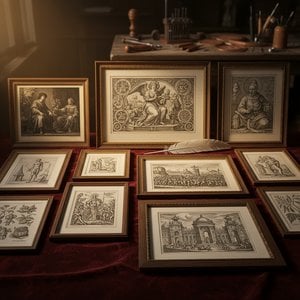
Hogarth’s artistieke stijl was een unieke synthese van diverse invloeden. Hij bewonderde de realisme en narratieve detail die te vinden zijn in het werk van Nederlandse genre schilders zoals Pieter de Hooch, wat zichtbaar is in zijn zorgvuldige weergave van interieurs en alledaagse leven. Ook de satirische prints uit Frankrijk speelden een rol bij het vormen van zijn benadering van sociale commentaar. Echter, Hogarth was niet alleen imitator van deze bronnen; hij verwerkte ze tot iets geheel nieuws en uniek voor hemzelf. Zijn techniek kenmerkt zich door een meesterlijke beheersing van lijn en schaduw, wat duidelijk is in zijn gravures. Hij gebruikte een kenmerkende kruisgravuretechniek die diepte en textuur creëerde, waardoor zijn scènes tot leven kwamen met aanzienlijke helderheid. Ook bezat hij een uitzonderlijk oog voor compositie, waarbij hij figuren en objecten in de kader plaatste om dynamische en boeiende verhalen te creëren. Naast kunst was Hogarth beïnvloed door literaire werken, met name die van Jonathan Swift en Henry Fielding, wiens satirische humor zijn eigen sociale observaties vormgaven. Hij geloofde dat kunst niet alleen mooi maar ook een morele functie moest vervullen, kijkers uitdaagend om kritisch na te denken over de wereld om hen heen en hun plaats daarin.
Hij streefde ernaar om een spiegel op te houden aan de natuur, zowel haar schoonheid als haar lelijkheid met onverbogen eerlijkheid.
Erfgoed en Duurzaam Impact
Hogarth’s impact strekt zich ver buiten het domein van de kunst uit de 18e eeuw. Zijn werk werd enorm populair dankzij de massaproductie van gravures op basis van zijn schilderijen, waardoor zijn satirische commentaar toegankelijk werd voor een breder publiek dan ooit tevoren. Hij wordt algemeen beschouwd als een voorganger van politieke karikatuur en stripverhalen, waardoor de weg vrijkwam voor visuele storytelling in populaire cultuur. Kunstenaars zoals James Gillray en George Cruikshank werden direct beïnvloed door zijn stijl, waarbij hij zijn traditie van sociale satire voortzette. Zelfs Charles Lamb, de beroemde essayist, merkte op dat Hogarth’s beelden “zoals boeken waren om te lezen in plaats van alleen maar naar te kijken”.
- Hogarth vestigde een unieke Britse artistieke identiteit.
- Zijn werk biedt onschatbare inzichten in de Engelse samenleving van de 18e eeuw.
- Hij heeft generaties kunstenaars en satirici beïnvloed.
William Hogarth overleed in 1764, waarbij hij een nalatenschap achterliet die nog steeds resoneert vandaag de dag. Hij blijft een sleutelfiguur in de geschiedenis van de Britse kunst, geëerd om zijn innovatieve benadering van storytelling, zijn onverbogen sociale commentaar en zijn vermogen om de complexiteit van het menselijk leven vast te leggen. Zijn schilderijen en gravures zijn niet alleen historische artefacten; ze zijn levendige vensters naar een verleden tijd, die tijdloze inzichten bieden in de dwaasheid en de gebreken van de mensheid.



 Bekijk op ware grootte
 Schakel over naar print
 Verstuur
 Delen
Delen
 Details bekijken
 Gids voor studentenkunstwerken

 Download
 Vergelijkbare items
 Röntgenonderzoek
 Diavoorstelling
 Statistieken

 Lees meer






































 De optie voor glas is alleen beschikbaar bij een formaat kleiner dan 110 cm.